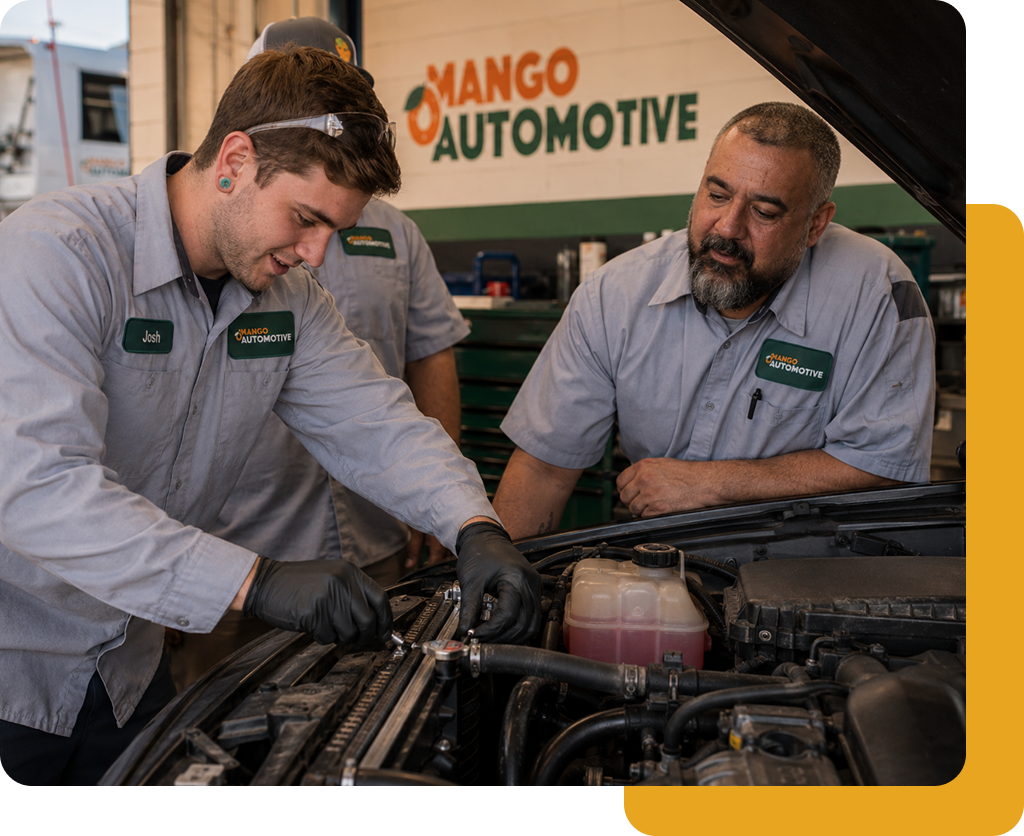
Desert Climate Car Maintenance: Recommendations from a Trusted Auto Repair Shop in Yuma, AZ
Yuma, Arizona, ranks among the hottest cities in the United States. Summer temperatures routinely push past 110°F, fine desert dust stays airborne year-round, and UV exposure beats down on vehicles with no seasonal relief. Most manufacturer service intervals are calibrated for moderate climates, which means Yuma drivers who follow them without adjustment are routinely the ones dealing with premature failures, unexpected breakdowns, and auto repairs that could have been avoided. Your vehicle is not failing because it is old. It is failing because the schedule you are following was never written for where you drive.
That is the problem
Mango Automotive & Diesel was built to solve. As a trusted auto repair shop serving Yuma, AZ, and nearby areas, we provide full-service maintenance and repair for cars, trucks, SUVs, RVs, and heavy-duty diesel vehicles, with service recommendations built around desert conditions, not national averages. Our
car repair shop
pairs experienced technicians with a VIP Membership program designed to keep your vehicle on the right schedule automatically, so nothing slips through the cracks. This guide covers what extreme heat does to each major vehicle system, how those systems connect to one another, and how staying ahead of each one protects your vehicle for the long run.

Why Desert Driving Demands a Different Maintenance Approach
Every vehicle system degrades faster under sustained extreme heat. The problem is that these systems do not fail in isolation. Heat accelerates oil breakdown, which increases engine friction. Increased friction generates more heat, which overloads the cooling system. Dust clogs filters, which reduces engine efficiency and strains fuel delivery. The failure of one system quietly puts pressure on every other. For Yuma drivers, this chain reaction runs longer and harder than in most of the country, because the heat season here is not a few weeks; it is the better part of the year.
Staying ahead of these failures requires adjusted service intervals and a clear understanding of which systems are most vulnerable in desert conditions. The answer is not reactive repair. It is structured preventive maintenance that reflects where you actually drive.
Engine Oil: The First System Under Pressure
Engine oil serves four functions at the same time. It lubricates metal surfaces to prevent friction damage, draws heat away from internal components, suspends and removes contaminants, and seals small gaps between moving parts such as piston rings and cylinder walls.
Desert heat and dust in Yuma break down engine oil faster than standard service intervals account for.
Desert dust enters the engine through the air intake even when filters are clean. That particulate contamination shortens oil life by accelerating additive breakdown. Sustained heat further thins the oil, which reduces the protective film between metal surfaces. Together, these two factors mean the oil reaches the end of its useful life well before standard mileage milestones.
Choosing the Right Oil and Interval
For vehicles using conventional oil, a 3,000-mile change interval is the practical target in desert conditions rather than the standard 5,000 miles. Full synthetic oil holds up better in extreme heat, but should still be changed at 4,000 to 5,000 miles in Yuma rather than the commonly promoted 7,500-mile cycle. A reliable car repair shop will recommend the right oil type and interval based on your specific vehicle and how you drive it.
Higher-viscosity oil is also worth discussing with a technician. Viscosity refers to the oil's thickness and resistance to flow under heat. A higher-viscosity rating helps maintain the protective film between metal surfaces when temperatures climb. Each oil change should also include a filter replacement, since a saturated filter can no longer trap contaminants effectively.
Cooling System: Running at Full Load All Summer
The cooling system keeps the engine from overheating by circulating coolant through the engine block and out to the radiator, where heat transfers to the outside air. Coolant is a mixture of antifreeze and water. In Yuma's summer, this system runs near its operational capacity for months without a break. A cooling system that falls behind on maintenance does not provide much warning before it fails.
Radiator hoses are made of rubber and become brittle under prolonged heat exposure. Cracked or swollen hoses are a frequent cause of sudden overheating. The thermostat (valve that regulates coolant flow between the engine and radiator) can stick in the closed position and cut off circulation entirely. When that happens, engine temperatures climb rapidly, which warps cylinder heads and causes head gasket failures. These are among the most involved engine repairs a vehicle can require.
What a Cooling System Inspection Covers
A professional inspection at a mechanic shop near you should address the following:
- Coolant concentration - The antifreeze-to-water ratio should hold at 50/50. Diluted coolant loses its heat-transfer capacity and stops protecting internal components from corrosion.
- Hose integrity - Soft spots, swelling, or surface cracking indicate hoses that are near the point of failure.
- Thermostat function - A stuck thermostat creates rapid overheating with no early warning symptoms.
- Radiator condition - Dust and road debris accumulate in the fins and reduce the radiator's ability to release heat to the outside air.
- Water pump operation - The pump drives coolant circulation and is a common wear item in vehicles that have logged high mileage under sustained desert heat.
Flushing and replacing the fluid per the manufacturer's recommendation keeps the system working as it should and helps prevent major
auto repairs
down the line.
Battery: Heat Is the Greater Threat
Most drivers associate battery failure with cold weather. In Yuma, the more pressing concern is sustained heat. A car battery operates through a chemical reaction between lead plates and a liquid electrolyte. High temperatures accelerate that internal chemistry, which causes the electrolyte to evaporate, increases corrosion on the internal plates, and shortens the battery's usable life.
Car batteries in Arizona typically last up to
3 years,
compared to 4 to 5 years in cooler climates. Battery failure in a desert climate often arrives without a clear warning. A battery can produce adequate voltage on a basic test one week and fail to start the vehicle the next, particularly on a hot afternoon when the air conditioning system is already placing a high electrical demand on the vehicle.
Practical Battery Maintenance for Yuma Drivers
Battery testing should include a load test, which measures how the battery performs under the actual electrical draw of starting the engine rather than resting voltage alone. Testing should happen every six months in desert climates, ideally before and after peak summer, rather than only once a year.
Terminal inspection matters equally. Corrosion on the battery posts reduces electrical conductivity and is a common cause of hard starts and erratic electrical behavior that drivers often attribute to other problems. Batteries approaching two years of age should be load-tested before summer. Proactive replacement before failure is far less disruptive than a breakdown in triple-digit heat.
Air Filters: Why Yuma's Desert Dust Shortens Their Life
The engine air filter prevents dust, sand, and airborne particulate from entering the combustion chamber. A clean filter delivers the correct air volume to the engine for combustion. A clogged filter restricts airflow, reduces fuel efficiency, and in severe cases allows abrasive particles to reach internal engine components. Standard 12,000 to 15,000-mile replacement intervals are not appropriate for Yuma's dusty environment.
Visual inspection at every oil change is the practical approach. If the filter appears gray, packed with debris, or visibly restricted, it needs replacement regardless of mileage. Any mechanic shop near you should flag this at every visit, because waiting for a standard mileage milestone while driving daily on Yuma roads is how preventable engine wear develops quietly over time.
Cabin Air Filter: The Overlooked Second Filter
The cabin air filter cleans the air entering the vehicle interior through the HVAC system. It clogs faster in desert conditions, just like the engine filter does. A restricted cabin filter reduces interior airflow and places additional strain on the blower motor, which directly affects A/C performance. Ask about the cabin filter condition at your next visit to a car repair shop to confirm it is not working against your cooling system.
Tires: Pressure, Heat, and Pavement Temperature
Tire pressure rises as ambient temperature increases, at approximately 1 PSI (pounds per square inch) for every 10°F gain. A tire inflated correctly in the early morning can be overinflated by midday in Yuma's summer. Tire pressure should be checked monthly at a minimum in desert climates, and ideally at every fuel stop during summer.
Rotation and Sidewall Inspection
Tire rotation distributes wear evenly across all four tires by moving them from one wheel position to another on a scheduled basis. In desert driving conditions, where road surface temperatures can exceed 150°F, even wear distribution extends tire life considerably. Rotation should occur every 5,000 to 7,500 miles, which aligns conveniently with oil change visits.
During each rotation, a technician should also inspect for sidewall cracking, bulges, and uneven tread patterns. Sidewall cracking is common in desert climates because UV exposure and sustained heat dry out rubber compounds over time. A cracked sidewall is a structural risk that warrants prompt replacement.
Air Conditioning: A Safety System, Not a Comfort Feature
In Yuma, air conditioning is not optional equipment. Vehicle interior temperatures in direct sun can exceed 130°F within minutes of parking. Driving without functional A/C during peak summer months carries real health consequences, particularly in stop-and-go traffic or on longer routes without shade.
The A/C system in a desert climate runs continuously rather than cycling on and off, which accelerates wear across every component.
The system cycles refrigerant (a chemical compound that transitions between liquid and gas states to transfer heat) through a compressor, condenser, and evaporator. The compressor pressurizes the refrigerant. The condenser, mounted in front of the radiator, releases heat to the outside air. The evaporator, located inside the dashboard, absorbs heat from the cabin.
Auto repair shops in Yuma, AZ, see A/C failures spike every summer for the same reasons. Refrigerant leaks through degraded seals and hoses, compressors wear from sustained operation at high load, and condensers become blocked from accumulated road dust. Annual inspection before peak summer allows a technician to identify low refrigerant, worn belts, or early compressor strain before they result in full system failure. Do not wait for warm air from the vents to schedule that visit. By that point, the damage is already done.
Additional Fluids That Degrade Faster in the Desert
Transmission fluid lubricates and cools the internal gears and clutches inside the transmission. High heat accelerates its breakdown, and degraded fluid contributes to slipping gears, rough shifting, and internal wear that builds gradually before becoming a significant repair.
Brake fluid also degrades under repeated heat cycling. In Yuma's extreme temperatures, that process happens under greater thermal stress than in moderate climates, which lowers the fluid's boiling point and reduces braking effectiveness over time. A two-year replacement interval is a reasonable target for desert vehicles.
Both fluids should be inspected at every scheduled service. Most auto repair shops in Yuma, AZ, include fluid checks as part of a routine multi-point inspection, and catching degraded fluid early costs far less than the repairs it prevents.
The Mango VIP Membership: Preventive Maintenance Without the Guesswork
One of the reasons vehicles fall behind on maintenance is the practical difficulty of tracking multiple service intervals across a busy schedule. The Mango Automotive & Diesel VIP Membership program is built to solve exactly that problem.
As a VIP member, you receive a preventive maintenance program with automated service alerts built around your vehicle and your schedule. Rather than relying on memory or a manually maintained log, you get custom reminders when it is time for oil changes, inspections, or other scheduled services. In a climate where falling behind on even one interval carries real consequences, that system keeps you on track without adding anything to your to-do list.
Full List of VIP Membership Benefits
- Automated preventive maintenance alerts - Custom reminders keep vehicles on the correct desert-adjusted schedule without requiring drivers to track intervals themselves.
- Priority scheduling - Members receive prompt appointment availability, which matters when A/C failures and battery issues tend to spike simultaneously across the driver population during the same weeks each summer.
- Complimentary biannual oil changes - Two covered oil changes per year align directly with the shortened intervals that desert driving demands.
- Unlimited fluid top-offs - Coolant, brake fluid, transmission fluid, and other critical fluids stay at proper levels between scheduled services, supporting the between-visit maintenance that desert heat makes especially important.
- Free car pickup and towing within 10 miles - Service pickup removes the logistical friction of getting a vehicle to the shop, particularly useful for drivers without a second vehicle available during the day.
- Lifelong 5% discount on all services and parts - Applied to every visit, this benefit adds up across the increased service frequency that desert driving requires.
- Referral reward - Members receive a free oil change for every customer they refer.
The VIP Membership at Mango Automotive & Diesel turns consistent preventive maintenance from something that is easy to delay into an automated, managed process. For any driver looking for a
mechanic shop near you that does more than just fix what is already broken, that is exactly what we are built to do.
Schedule Your Service at Mango Automotive & Diesel
Most vehicle failures in Yuma are not sudden. They are the result of intervals missed, fluids left unchecked, and systems pushed past the point where early intervention was still straightforward. The gap between a minor service and a major repair is usually just a matter of timing.
Mango Automotive & Diesel helps Yuma drivers close that gap with service recommendations built around this climate, not around the conditions your owner's manual was written for. Among auto repair shops in Yuma, AZ, we take a proactive approach that keeps vehicles on the road longer and repairs less frequent. Call Mango Automotive & Diesel today at
(928) 344-3771
to schedule your service or ask about the VIP Membership.