Suspension and Alignment Service in Albuquerque, NM | Road Damage Solutions
How Albuquerque's Roads Cause Suspension and Alignment Issues (And What to Do About It)
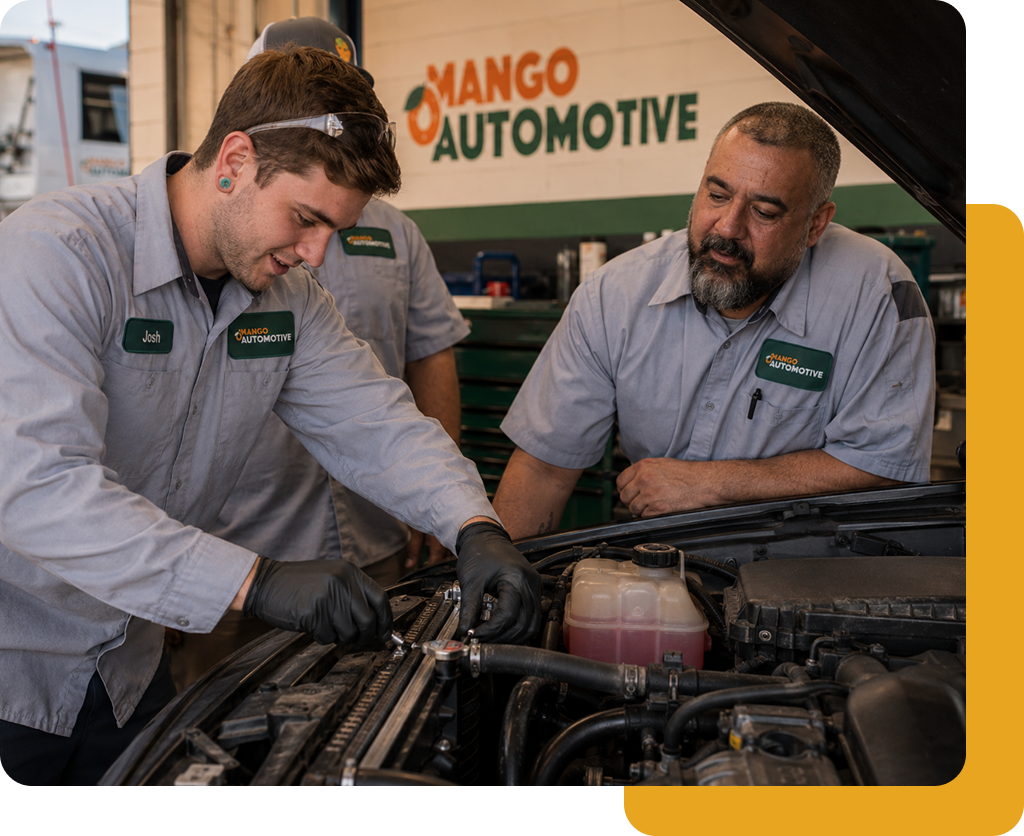
Albuquerque drivers deal with tough road conditions every day, and those conditions can take a serious toll on vehicle alignment. From potholes and expanding construction zones to pavement damaged by desert temperature swings, local streets put constant stress on suspension systems. What may seem like a minor pull to the left is often a sign that something is already out of alignment, and delaying repairs can lead to higher costs over time. Mango Automotive (The Valley) provides
automotive repair services in Albuquerque, NM, including suspension and alignment care that helps protect tires, improve handling, and keep vehicles safer on demanding roads.

Albuquerque's Road Infrastructure and Your Vehicle's Alignment
Albuquerque's road conditions create a perfect storm for alignment problems. The city's infrastructure faces constant assault from temperature extremes that range from below freezing in winter to over 100°F in summer, causing pavement expansion and contraction that creates cracks and uneven surfaces. Freeze-thaw cycles during winter months allow water to seep into pavement cracks, freeze, expand, and break apart the road surface -- leaving behind the potholes that damage your suspension system.
The Valley area, along with other established Albuquerque neighborhoods, experiences particularly challenging road conditions due to aging infrastructure that hasn't kept pace with maintenance needs. High-traffic corridors like Central Avenue, Coors Boulevard, and the I-25 frontage roads show accelerated deterioration from constant vehicle weight and weather exposure.
According to data from the New Mexico Department of Transportation reported by the Albuquerque Journal, New Mexico residents pay about $2,000 per year in costs related to deteriorated roads. The percentage of acceptable roads in New Mexico decreased from 75% in 2011 to 69% in 2023, reflecting the ongoing infrastructure challenges that affect your vehicle's alignment daily.
Monsoon season adds another layer of road damage. Heavy summer rains wash out road shoulders, create potholes overnight, and leave debris that forces sudden steering corrections -- all of which stress your alignment. Road construction projects, while necessary for long-term infrastructure improvement, create temporary hazards with uneven lane transitions, steel plates, and rough detours that jar suspension components out of specification.
Common Albuquerque Road Hazards:
- Pothole clusters from freeze-thaw damage (especially in February-March)
- Uneven pavement at construction zone transitions
- Cracked and deteriorating asphalt on older neighborhood streets
- Railroad crossing impacts (particularly rough in industrial areas)
- Road crown deterioration causing water pooling and pavement failure
- Speed bump and dip combinations that stress suspension
How Albuquerque Roads Damage Your Suspension and Alignment
Your vehicle's suspension and alignment work together as a precision system. The suspension -- including control arms, tie rods, struts, springs, and ball joints -- keeps your tires in contact with the road while absorbing impacts. Alignment refers to the specific angles at which your wheels point: camber (inward/outward tilt), caster (forward/backward angle), and toe (whether wheels point toward or away from each other).
Single Impact Damage
When you hit a pothole hard enough to feel the impact through your steering wheel, the force travels through your tire into the suspension components.
A single severe impact can:
- Bend a control arm, permanently altering wheel positioning
- Shift a tie rod out of adjustment
- Compress a strut beyond its design limits
- Instantly change your wheel angles by fractions of a degree
While that might not sound like much, even a quarter-degree change in toe angle can cause noticeable tire wear within a few thousand miles.
Cumulative Wear from Daily Driving
The cumulative effect matters just as much as individual impacts. Daily driving on Albuquerque's rough roads creates constant micro-adjustments in your suspension bushings and mounting points. These small shifts add up over time, gradually moving your wheels out of their proper alignment. You might not notice the change happening, but your tires feel it every mile -- wearing unevenly and reducing your vehicle's handling precision.
Common Road Hazards That Damage Alignment
Speed bumps and railroad crossings present their own challenges. When approached too quickly, these obstacles create vertical forces that compress your suspension beyond its normal travel range.
The sudden compression and rebound can:
- Loosen mounting hardware over time
- Wear bushings prematurely
- Shift alignment angles out of specification
- Create handling issues that worsen gradually
Curb strikes -- whether from parking mishaps or avoiding road hazards -- deliver lateral forces that suspension systems aren't designed to handle, often bending components or shifting alignment immediately.
Alignment Problems vs. Suspension Damage
The difference between alignment problems and suspension damage matters for repair planning:
- Alignment Issues: Your wheel angles are wrong, but components remain intact; technicians can adjust them back to specification through suspension and alignment service in Albuquerque, NM.
- Suspension Damage: Components are bent, worn, or broken; these parts require replacement before alignment becomes possible.
Both often occur together after significant road impacts, which is why Mango Automotive (The Valley) performs thorough inspections before any alignment work.
Recognizing Alignment Problems Before They Become Expensive
Your vehicle communicates alignment problems through several clear signals. The most obvious: your car pulls to one side while driving on a straight, level road. If you have to constantly correct the steering to maintain a straight line, your alignment is off. This pull might be subtle at first, but it typically worsens over time.
Check your steering wheel position while driving straight. If the wheel sits at an angle rather than perfectly centered, alignment problems exist even if the vehicle tracks straight. This misalignment puts uneven stress on your tires and indicates that your wheel angles don't match what they should.
Tire wear patterns reveal alignment issues before you feel handling problems.
Examine your tires for these warning signs:
- Inner or outer edge wear: Indicates camber misalignment (wheel tilts too far in or out)
- Feathering across the tread: Suggests toe misalignment (wheels point inward or outward)
- One-sided wear on front tires: Often accompanies pulling to one side
- Cupping or scalloping: Can indicate both alignment and suspension problems
Steering wheel vibration at highway speeds sometimes indicates alignment problems, though it can also signal tire balance issues or suspension wear. The vibration typically worsens as speed increases and may improve during turns. If your vehicle feels loose or unstable, like it's wandering within the lane rather than tracking precisely, alignment problems are likely contributing to reduced handling confidence.
Squealing tires during normal turns (not aggressive cornering) often means severe toe misalignment. The tires are being dragged sideways rather than rolling freely, creating both noise and rapid wear. This condition demands immediate attention to prevent complete tire destruction.
The True Cost of Ignoring Alignment Problems
Delaying alignment service seems like saving money until you calculate what it actually costs. Consider the numbers: a typical mid-range passenger car tire costs $120-180. With proper alignment, these tires should last 50,000-60,000 miles under normal driving. Misalignment can cut that lifespan to 30,000-35,000 miles, forcing you to buy new tires 20,000 miles sooner than necessary.
Beyond tire replacement, misalignment increases fuel consumption by creating additional rolling resistance. According to the U.S. Department of Energy, proper tire maintenance, including alignment, can improve gas mileage by up to 3%, with more severe misalignment cases reducing fuel efficiency by up to 10%. Even a 3% reduction in fuel efficiency costs an additional $60-90 annually for average drivers.
Alignment problems accelerate wear on expensive suspension components. Ball joints, control arm bushings, and struts experience uneven stress when wheels don't track properly, reducing their service life by thousands of miles. What should be 80,000-mile components might fail at 50,000 miles, creating $400-800 repair bills that proper alignment would have prevented.
Safety implications matter more than money. Misaligned wheels reduce your vehicle's ability to respond predictably during emergency maneuvers. Braking distances increase when tires don't maintain optimal road contact, and stability during sudden lane changes diminishes. These handling compromises might not affect routine driving, but they absolutely matter when you need maximum control to avoid an accident.
Vehicle resale value suffers from deferred alignment maintenance. Buyers and dealers inspect tire wear patterns and test drive handling. Uneven tires, pulling steering, and worn suspension components signal neglected maintenance -- reducing your vehicle's value and making it harder to sell.
Professional Suspension and Alignment Service: What to Expect
Modern alignment service uses computerized systems that measure wheel angles to within hundredths of a degree. When you bring your vehicle to our shop, whether you found us through a search for "automotive repair near me" or through a referral, our technicians at Mango Automotive (The Valley) begin with a thorough pre-alignment inspection that checks suspension components, tire condition, and vehicle ride height. We can't properly align wheels if suspension parts are worn or damaged, those repairs must happen before alignment adjustment.
The Alignment Process
The alignment process starts by mounting precision sensors to each wheel. These sensors communicate with a computer system that measures current wheel angles and compares them to manufacturer specifications for your specific vehicle. The system displays real-time measurements as technicians make adjustments, showing exactly how far out of specification each angle sits and when it returns to the proper range.
Vehicle-Specific Adjustments
Adjustment procedures vary by vehicle design:
- Passenger cars: Some vehicles offer adjustment points for all alignment angles, while others have limited adjustability built into their suspension design
- Front-wheel-drive vehicles: Typically receive front-end alignment since the rear isn't adjustable, though four-wheel alignment is recommended when available
- Trucks, SUVs, and RVs: Often require specialized equipment to handle their weight and suspension configurations
Customized Alignment Specifications
The alignment specifications your vehicle needs depend on several factors: manufacturer recommendations, vehicle weight distribution, tire size, and intended use. A loaded work truck requires different settings than an unloaded pickup. Performance vehicles sometimes benefit from alignment adjustments beyond standard specs to improve handling characteristics.
Post-Alignment Verification
After completing adjustments, technicians perform a test drive to verify proper steering response, straight-line tracking, and steering wheel centering. You receive documentation showing before and after measurements for each wheel angle, providing concrete evidence of the work performed and your vehicle's current alignment status.
How Often Should Albuquerque Drivers Check Alignment?
Most manufacturers recommend alignment checks every 12,000-15,000 miles or annually. However, Albuquerque's rough road conditions justify more frequent inspections, particularly after:
- Significant pothole impacts or curb strikes
- New tire installation (to protect your investment)
- Suspension component replacement
- Notable changes in vehicle handling or tire wear
- Seasonal transitions when road conditions worsen
Protecting Your Investment: Alignment Maintenance for Albuquerque Drivers
- Proactive alignment maintenance saves money compared to reactive repairs. Schedule alignment checks at regular service intervals rather than waiting for symptoms to appear. Catching small alignment deviations early prevents the tire wear and suspension damage that develops when problems go unaddressed.
- Driving strategies can minimize alignment damage, though you can't avoid every road hazard in Albuquerque. Slow down for potholes when you see them in time, take speed bumps and dips slowly, and avoid aggressive curb contact when parking. Stay alert in construction zones where temporary pavement transitions create sudden elevation changes.
- Request an alignment inspection immediately after hitting a significant pothole or curb. Even if your vehicle seems to drive normally, the impact may have shifted alignment angles enough to start premature tire wear. A quick inspection costs far less than replacing tires that wore out early from undetected misalignment.
- Coordinate alignment service with your tire rotation schedule. Since technicians remove wheels for rotation anyway, adding alignment inspection makes sense. This approach catches problems before they cause noticeable tire wear and keeps your maintenance schedule efficient.
- Proper alignment delivers measurable returns on investment. Tires last their full rated mileage, fuel efficiency remains at designed levels, suspension components reach their intended service life, and your vehicle handles predictably in all driving conditions. These benefits compound over time, creating thousands of dollars in savings over your vehicle's lifespan.
Mango Automotive (The Valley) helps local drivers protect their vehicles from Albuquerque's challenging road conditions through proactive maintenance that addresses problems before they become expensive. Our approach combines industry expertise with an understanding of the specific challenges The Valley residents face on neighborhood streets and major thoroughfares throughout the metro area.

Expert Suspension and Alignment Service in Albuquerque
Albuquerque's roads don't give your vehicle's alignment any breaks -- but we do. At Mango Automotive (The Valley), our technicians understand exactly how local road conditions affect suspension systems and alignment angles because we service hundreds of vehicles facing the same challenges your car encounters every day. Our advanced computerized alignment equipment provides the precision measurements necessary to return your wheels to exact manufacturer specifications, protecting your tires and restoring proper handling.
We begin every alignment service with a thorough suspension inspection, identifying worn or damaged components that need attention before alignment becomes possible. Our team services all vehicle types -- from compact cars navigating The Valley's neighborhood streets to heavy-duty trucks working Albuquerque's construction zones and RVs preparing for cross-country travel.
Our automotive repairs are backed by an industry-leading warranty: 60 months/60,000 miles total coverage (36 months/36,000 miles nationwide plus an additional 24 months/24,000 miles at Mango Automotive (The Valley)). While alignment services themselves are excluded from warranty coverage per our warranty terms, any suspension component repairs performed during the alignment process receive full warranty protection, giving you confidence in the quality of our work.
Visit our convenient Valley location or schedule your appointment online. Call (505) 242-3401 to speak with our service team about your vehicle's alignment needs. Stop letting Albuquerque's rough roads destroy your tires and compromise your safety–professional automotive repair services in Albuquerque, NM start with proper suspension and alignment service in Albuquerque, NM that protects your investment mile after mile.