How Can You Spot a Radiator Failure Near Downtown Albuquerque?
Radiator failure rarely happens all at once. Most of the time, your vehicle gives you clear signals well before things get serious. The problem is knowing what those signals mean and acting on them before a manageable repair turns into a major one.
Drivers looking for auto repair in Downtown Albuquerque should pay close attention. Albuquerque's desert climate accelerates radiator wear in ways that catch many vehicle owners off guard.
What Are the Early Signs of Radiator Failure?
A failing radiator shows up in several ways. According to AutoZone's cooling system guide, these are the symptoms most drivers miss until the damage is done:
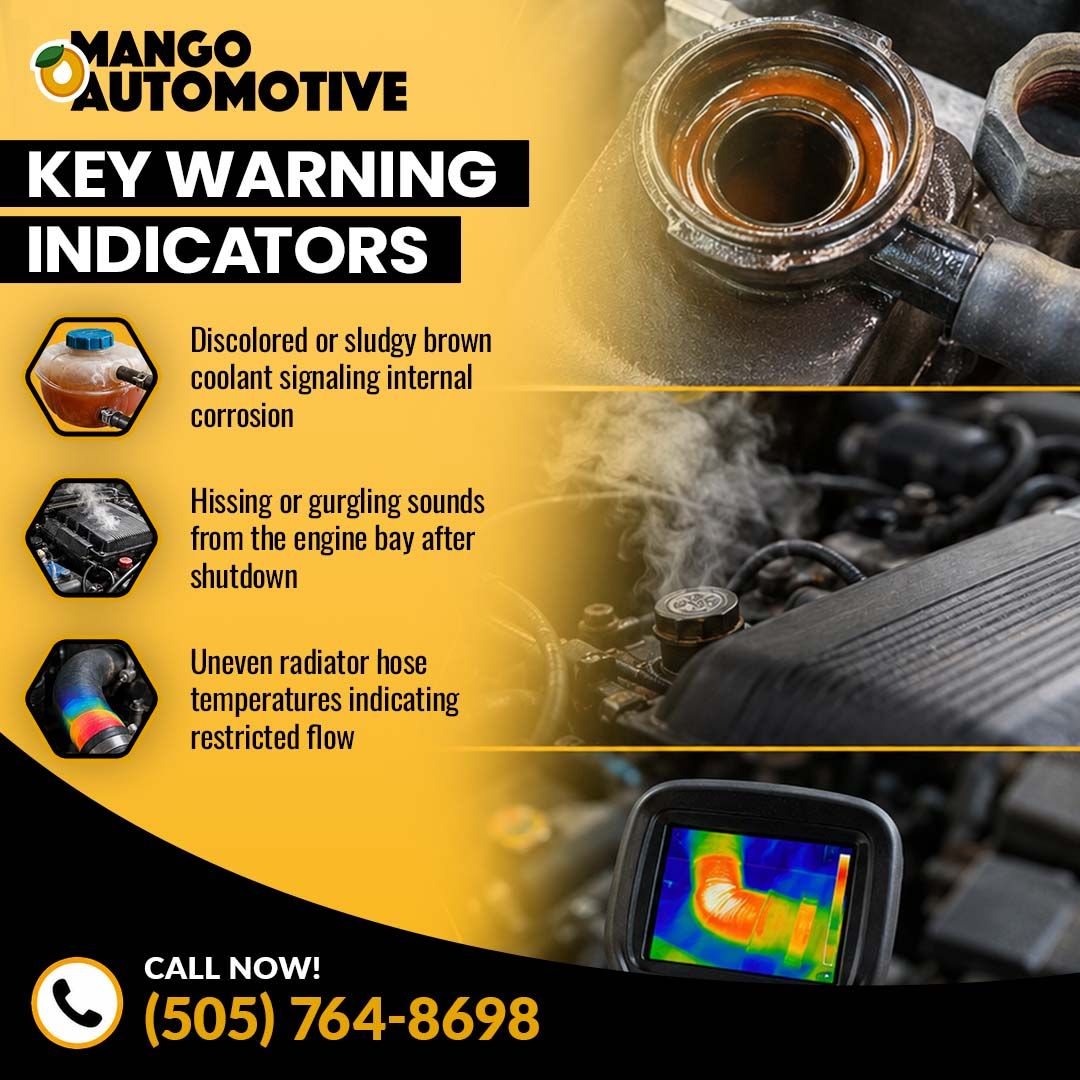
- Sludgy or discolored coolant: Thick, brown, or rust-colored fluid in the reservoir signals corrosion or chemical breakdown inside the radiator.
- Coolant loss without a visible leak: If you keep topping off coolant but can't find where it's going, the radiator may have hairline cracks or be burning coolant off slowly.
- Upper hose hot, lower hose cool: After driving, if the upper radiator hose is hot but the lower one stays cool, coolant is not circulating properly through the core.
- Check engine light with code P0217: This code specifically signals that the engine is running too hot.
- Unusual noises: Hissing, gurgling, or bubbling sounds from the engine bay suggest air trapped in the cooling system or coolant beginning to boil.
How Do You Tell It's the Radiator and Not Another Component?
This is where many drivers, and even some auto repair shops, get it wrong. Several cooling system parts produce overlapping symptoms.
| Symptom | Most Likely Cause |
|---|---|
| Overheats at idle or in slow traffic | Radiator clog or cooling fan failure |
| Overheats at highway speed | Water pump or thermostat failure |
| Brown sludge in the coolant reservoir | Radiator corrosion or incompatible fluids |
| Coolant loss, no visible puddle | Hairline crack in radiator core |
| Hissing after the engine shuts off | Pressure escaping from a failing radiator cap |
Getting the right diagnosis upfront saves money. Replacing a thermostat when the radiator is the actual problem means the issue comes right back.
What Does It Cost If You Wait?
Cooling system failures are one of the most common causes of roadside breakdowns nationwide, and repair costs climb fast the longer a problem goes unaddressed.
- Radiator flush or minor repair:$100–$300
- Full radiator replacement:$300–$800
- Head gasket damage from sustained overheating:$1,500–$3,000+
Early diagnosis is always the cheaper outcome.
Get a Diagnosis at a Downtown Albuquerque Auto Shop
Not every shop has hands-on experience with what Albuquerque's climate does to a cooling system. For drivers who need car repair in Downtown Albuquerque, that local knowledge makes a real difference.
At Mango Automotive (Downtown), we have been servicing vehicles in this environment since 2021. We understand how desert heat, high elevation, and urban driving wear on radiators faster than standard maintenance intervals account for.
We back qualifying repairs with a 60-month/60,000-mile warranty (36 months/36,000 miles nationwide, plus 24 months/24,000 miles at Mango Automotive). Exclusions apply. See full warranty terms for details.
Call Mango Automotive at (505) 764-8698 or stop by our downtown Albuquerque auto shop. Don't wait for a small cooling system issue to turn into a costly engine repair.
Frequently Asked Questions
Can a radiator fail even if my temperature gauge looks normal?
Yes. A slow coolant leak or early-stage corrosion can exist without immediately triggering the temperature gauge. That's why discolored coolant and unexplained fluid loss are worth taking seriously, even when the gauge reads fine.
Is brown coolant always a radiator problem?
Not always, but it is always a problem. Contaminated coolant can come from the radiator, a failing head gasket, or old fluid that has broken down. A technician can identify the source quickly with a pressure test and visual inspection.
How long does a cooling system inspection take?
A basic inspection typically takes 30 minutes or less. A pressure test to check for leaks may add a little time, but it is fast compared to dealing with the damage a missed leak can cause.