Why Is My Car Overheating in The Valley? What Older Vehicles Need Before Albuquerque Summer Hits

Jesse Jackson • June 23, 2026

When Albuquerque temperatures climb past 95°F and pavement temperatures push well above 140°F, a car's cooling system stops being background maintenance and becomes a front-burner problem. For drivers in the North Valley with older or high-mileage vehicles, the risk runs higher – cooling system components wear gradually, and summer heat is usually what exposes the weakness. Mango Automotive (The Valley) regularly sees older vehicles come in after an overheating event that could have been caught weeks earlier with a straightforward inspection. If you've been searching for a car mechanic near you for older vehicle repair in The Valley, NM, understanding why engines overheat in desert heat, and which components fail most often in high-mileage vehicles, gives you the knowledge to act before a minor problem turns into a major engine repair. 

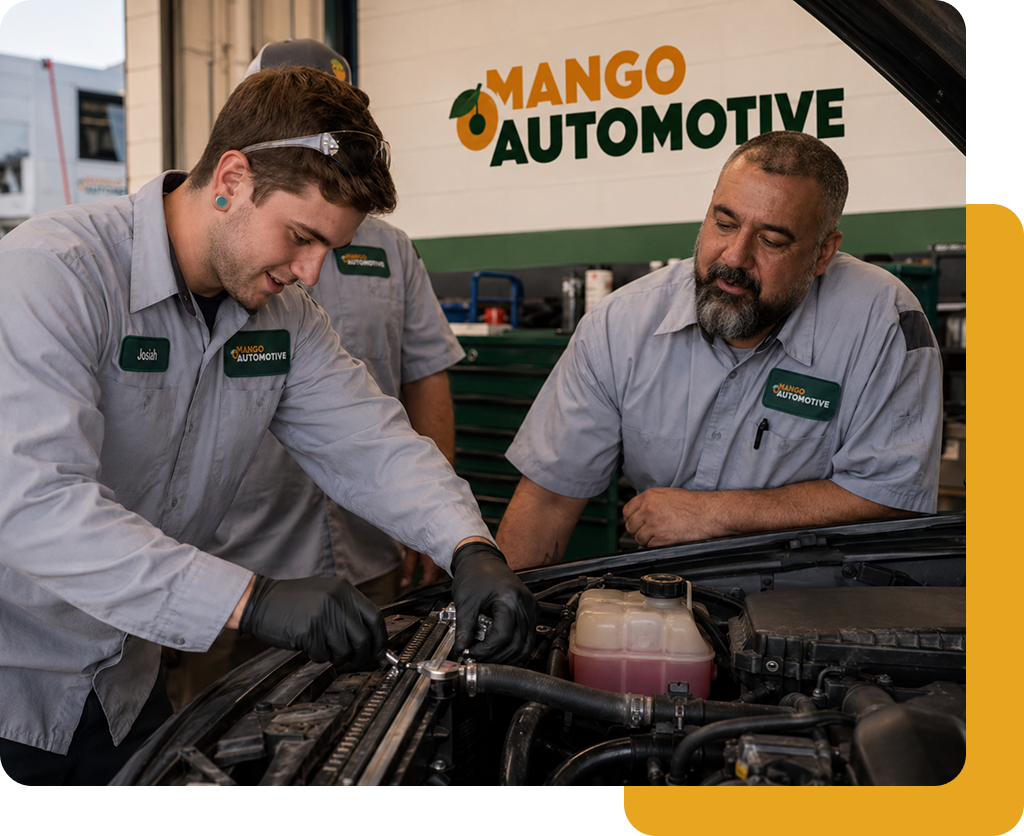
prevent summer overheating with cooling system repairs

Why Desert Heat and Altitude Make Overheating More Likely in Older Vehicles

All vehicles generate more heat under load in summer. But older vehicles face a compounding problem: cooling system components that have already logged tens of thousands of miles of thermal cycling are closer to the point of failure. The wear adds up in ways that aren't always visible:


  • Hoses soften and stiffen with repeated heat cycles, weakening from the inside out
  • Clamps loosen gradually from the constant expansion and contraction of heating and cooling
  • Water pump impellers corrode or crack with mileage, reducing coolant circulation
  • Coolant degrades chemically over time, losing its heat transfer capacity and corrosion inhibitors


By the time a vehicle has 100,000+ miles on it, the cooling system is working with parts that have very little margin left.


Albuquerque's elevation adds another layer that drivers moving here from lower altitudes often don't account for. The city sits at roughly 5,300 feet above sea level. At that altitude, atmospheric pressure is measurably lower, and lower pressure reduces the boiling point of liquids. Water boils at 212°F at sea level, but at 5,000 feet it boils closer to 202°F. Engine coolant raises that boiling point considerably – one of its three primary jobs alongside freeze protection and corrosion prevention – but a cooling system running degraded coolant, low coolant, or a failing pressure cap has less buffer at altitude than it would at sea level.


The practical result:

  • A vehicle with marginal coolant concentration that runs fine in mild weather shows heat stress on I-25 in July
  • A weak radiator cap that holds pressure adequately in winter may not maintain proper system pressure at peak summer temperatures
  • Stop-and-go traffic on Paseo del Norte or 4th Street NW in 98°F heat pushes a marginal cooling system past what it can handle


Engine overheating is one of the leading causes of severe engine damage, including head gasket failure, warped cylinder heads, and internal engine component damage. For older vehicles, verifying cooling system health before summer heat arrives is one of the most important preventive maintenance steps. 


What Causes an Engine to Overheat – The Most Common Culprits

According to AAA, the most common causes of engine overheating are low coolant, a faulty thermostat, a damaged radiator, a broken water pump, and cooling fan failure – all of which become more likely as vehicle mileage climbs.


Low or Degraded Coolant

Coolant does three jobs: it transfers heat from the engine to the radiator, it raises the boiling point of the liquid in the system, and it prevents internal corrosion. Over time, coolant degrades chemically even without a visible leak – the additives that prevent corrosion break down, and the fluid becomes less effective at heat transfer. On older vehicles, coolant that hasn't been flushed in several years may look acceptable, but no longer protects the system adequately.


Coolant leaks are also common on older vehicles – hoses that have softened internally, a weeping water pump seal, or a radiator that has developed a pinhole. Small leaks don't always show up as a puddle under the car. Pressure testing the cooling system is the only reliable way to find them before they become a roadside problem on a summer afternoon.


Thermostat Failure

The thermostat regulates when coolant flows from the engine to the radiator. When the thermostat fails in the closed position, coolant cannot circulate to the radiator, and the engine overheats rapidly. On older vehicles, thermostat failure is one of the most common and least expensive causes of overheating – and one of the easiest to prevent. Thermostats on high-mileage vehicles cost very little to replace proactively. Waiting until one fails costs significantly more.


Water Pump Wear

The water pump moves coolant through the entire system. On older vehicles, the impeller – the internal component that creates coolant flow – can corrode, crack, or loosen on its shaft, reducing circulation without triggering an obvious warning. A water pump can also develop a shaft seal leak that shows up as coolant weeping from behind the pulley. Most water pumps last between 60,000 and 100,000 miles, which means any vehicle past that range is running a pump already beyond its typical service window.


Radiator Condition

In North Valley and Los Ranchos, vehicles that see agricultural roads, dirt driveways, or regular I-25 driving accumulate dust and debris in radiator fins quickly. A radiator clogged externally reduces airflow and heat dissipation. A radiator with internal deposits – rust and scale from degraded coolant – restricts flow through the tubes. Either condition makes overheating more likely when summer heat peaks. Radiator flushing and external cleaning address both problems before they compound into a failure.


Cooling Fan Problems

Electric cooling fans maintain airflow through the radiator when the vehicle is stopped or moving slowly – exactly the conditions that occur most in Albuquerque's stop-and-go summer traffic on Paseo del Norte or 4th Street NW. A fan motor that's weakening may keep up at highway speed but fail to prevent overheating at a red light on a 100°F afternoon. This is a particularly deceptive failure pattern on older vehicles because the symptom only shows up in specific conditions.

The Head Gasket Problem: Why Overheating Gets Expensive Fast

The head gasket sits between the engine block and cylinder head, sealing the combustion chambers and keeping oil and coolant in their separate passages. It operates under extreme temperature and pressure – and it has very little tolerance for being pushed past its design limits.


When an engine overheats, even once, the aluminum cylinder head expands at a different rate than the cast iron or steel block beneath it. That differential expansion warps the mating surfaces and can breach the head gasket seal. Driving with the coolant temperature warning light on risks blown head gaskets, cracked cylinder heads, and warped engine components – the kind of damage that can total an older vehicle entirely if repair costs exceed its value.


On high-mileage vehicles, the head gasket is already under more stress than on a newer engine. Metal fatigue, minor coolant seepage, and carbon deposits all reduce its margin for error. A single overheat event that a newer vehicle might survive without lasting damage can push an older engine past the threshold. Signs of a compromised head gasket include white smoke from the exhaust, milky or foamy oil on the dipstick, unexplained coolant loss without visible leaks, and bubbling in the coolant reservoir. Any of these symptoms in an older vehicle warrants immediate diagnosis – not a wait-and-see approach.


The cost difference is stark. Automotive repair services in The Valley, NM for a cooling system pressure test and thermostat replacement are straightforward services. A head gasket replacement on a four-cylinder engine typically runs $1,200–$2,000 in parts and labor. On a V6 or V8, that number climbs higher. For older vehicles, prevention is not optional – it's the only financially sensible approach. 


Warning Signs North Valley Drivers Should Know

Overheating rarely happens without warning. A temperature gauge climbing into the upper range, a sweet smell from the engine bay, steam rising from under the hood, or a lit coolant warning light on the dashboard are all signals that the cooling system is struggling.


If a vehicle starts running hot during a summer afternoon in traffic, here's what to do:

  • Turn off the A/C immediately to reduce engine load
  • Turn on the heater – it draws heat away from the engine through the heater core
  • Pull over safely and turn the engine off
  • Wait at least 30 minutes before checking coolant levels – never open the radiator cap on a hot pressurized system
  • If the temperature gauge red-lines or steam appears, do not continue driving; towing is cheaper than a head gasket


These steps can mean the difference between a service appointment and an engine replacement.


How Engine Repair and Tune-Up Work Reduces Overheating Risk 

An engine that's running rough, misfiring, or burning oil puts more heat into the system than a well-tuned engine. For older vehicles, engine repair and tune-up service addresses the components that contribute most directly to elevated operating temperatures: 


Worn Spark Plugs. Spark plugs cause incomplete combustion when past their service life, generating excess heat inside the combustion chamber. Most manufacturers recommend replacing spark plugs every 20,000 to 100,000 miles, depending on plug type, with copper plugs wearing fastest and iridium plugs lasting longest. On a vehicle with 120,000 miles and original plugs, this is a straightforward fix with a direct effect on operating temperature.


Clogged Air Filter. A restricted air filter reduces airflow into the engine, which affects combustion efficiency and raises operating temperatures. Manufacturers typically recommend engine air filter replacement every 15,000 to 30,000 miles, with shorter intervals for vehicles driven in dusty conditions – which describes North Valley roads in summer. Annual filter inspection is a practical minimum for older vehicles in this corridor.

address cooling system issues before they lead to engine damage

Older Vehicle Repair and Engine Service in The Valley

At Mango Automotive (The Valley), older and high-mileage vehicle care is a real part of the auto service and repair in Albuquerque's North Valley that we handle every week on Griegos Rd. North Valley drivers keep vehicles running longer than the regional average – multi-generational trucks, early-2000s domestics, and work vehicles with well over 100,000 miles are a regular part of our service mix. North Valley drivers keep vehicles running longer than the regional average — and that takes a car mechanic near you who understands what high-mileage vehicles actually need, not just what the service interval sticker says. 


For cooling system service, our process covers pressure testing for leaks, coolant condition and concentration testing, thermostat function, water pump inspection, radiator condition inside and out, and fan operation under load. For engine repair and tune-up work on older vehicles, we address the components that drive up operating temperatures – plugs, filters, ignition timing, and any diagnostic codes pointing to combustion issues. 


If your vehicle is running warmer than usual, or if it hasn't had a cooling system inspection in the last two years, summer is the wrong time to wait. Call us at (505) 242-3401 – we're at 301 Griegos Rd NW in the North Valley. For automotive repair services in The Valley, NM that go beyond the basics, Mango Automotive gives you straight answers on what your older vehicle needs before the heat puts it on the side of I-25. Visit our website to schedule your appointment.


By Jesse Jackson June 23, 2026
Your transmission is one of the most complex and important systems in your vehicle. When it starts showing signs of trouble, acting quickly can mean the difference between a straightforward repair and a complete replacement. In North Valley, where stop-and-go traffic along Griegos Rd and daily commutes to Los Ranchos put extra stress on your drivetrain, recognizing transmission problems early matters. This guide walks you through the warning signs that indicate your transmission needs professional attention, explains how local driving conditions affect transmission health, and helps you understand the diagnostic process. Whether you drive an older diesel truck or a newer family vehicle, knowing when to seek transmission diagnostics and repair in The Valley, NM , can save you time, money, and the frustration of being stranded. At Mango Automotive (The Valley), we've diagnosed thousands of transmission issues for North Valley drivers and understand the unique challenges local driving conditions create for your vehicle's drivetrain.
By Jesse Jackson June 23, 2026
The cooling fan clutch controls how much air the radiator fan pulls through the engine bay based on temperature and load. When it fails, the cooling system loses a primary mechanism for managing heat. In Yuma, AZ, where summer temperatures regularly exceed 110°F from June through August, that loss creates conditions for serious and avoidable engine damage. Understanding how the fan clutch works, why it fails faster in desert climates, and what warning signs to watch for gives diesel truck owners, fleet operators, and RV drivers a clearer picture of what their cooling system actually needs. At Mango Automotive & Diesel , we work with commercial trucks, fleet vehicles, and RVs facing these exact conditions every day. We tailor every cooling system evaluation to how each vehicle is actually used in Arizona's climate, not around generic mileage averages. This guide draws on that experience to walk through the fan clutch from the ground up, covering function, failure modes, symptoms, and what an accurate diagnosis looks like at a qualified diesel repair shop.
By Jesse Jackson June 23, 2026
Transmission fluid is one of the most overlooked maintenance items on a diesel truck, and one of the most consequential to neglect. The life of a diesel engine depends on every system receiving proper care at the right intervals. The transmission is no exception. Deferred fluid service does not just reduce performance. It accelerates internal wear on components that are expensive to repair and difficult to replace while keeping a working truck in service. At Mango Automotive & Diesel , we work with truck owners, fleet operators, and RV drivers who depend on their vehicles year-round. As a full-service diesel repair shop in Yuma, AZ , we built this business around the real needs of drivers in this region. That includes the kind of preventive maintenance that keeps a transmission running well through Arizona's demanding conditions. This article covers what transmission fluid does, how Yuma's climate shortens fluid life, how to read the warning signs, and what proper service actually involves.
By Mango Automotive June 22, 2026
Discover expert oil change services in New Mexico & Arizona with Mango Automotive. Enhance your vehicle's performance. Visit us today!
Precision alignment services- Mango Automotive Ward
By Jesse Jackson June 19, 2026
Rough Eastside roads wrecking your alignment? Mango Automotive on Pellicano Dr offers expert wheel alignment in East El Paso.
Early warning signs- Mango Automotive Ward
By Jesse Jackson June 19, 2026
Learn the common signs of transmission problems, including slipping gears, rough shifting, leaks, and overheating before costly repairs develop.
By Jesse Jackson June 16, 2026
Glow plugs are small electrical heating elements installed in each cylinder of a diesel engine. They preheat the combustion chamber before startup, creating the temperature needed for diesel fuel to ignite reliably. When they fail, drivers experience hard starts, rough idling, power loss, and increased emissions. For diesel drivers in Las Cruces, glow plug problems can develop gradually and are often difficult to detect without professional diagnostics. At Mango Automotive & Diesel , our diesel mechanics evaluate glow plug faults as part of a full engine health assessment, addressing the root cause rather than surface-level symptoms.
desert heat
By Jesse Jackson June 16, 2026
Learn how extreme heat causes vehicle fluid leaks and how to prevent breakdowns. Expert tips from Mango Automotive & Diesel in Las Cruces, NM.
Proactive cooling system inspections
By Jesse Jackson June 16, 2026
Keep your EV running in Albuquerque's heat. Mango Automotive in Eagle Ranch offers expert EV diagnostics, battery service, and seasonal maintenance.
By Jesse Jackson June 16, 2026
Albuquerque's desert climate creates conditions that push performance vehicles harder than most drivers realize. Elevation above 5,000 feet reduces air density, summer temperatures regularly exceed 95°F, and fine desert dust works its way into filters, sensors, and seals year-round. For performance cars built with tighter tolerances and higher output demands, those factors compound quickly. Standard maintenance schedules are not designed for these conditions, and following them without adjustment leaves your vehicle underserviced. Mango Automotive (Downtown) serves performance vehicle owners throughout Downtown Albuquerque with honest, fast, and dependable automotive care. Our ASE-certified mechanics on Central Ave, Albuquerque , bring hands-on experience with high-output engines, modified drivetrains, and performance-grade components across all makes and models. The sections below will help you understand exactly what your vehicle needs in this climate.
More Posts