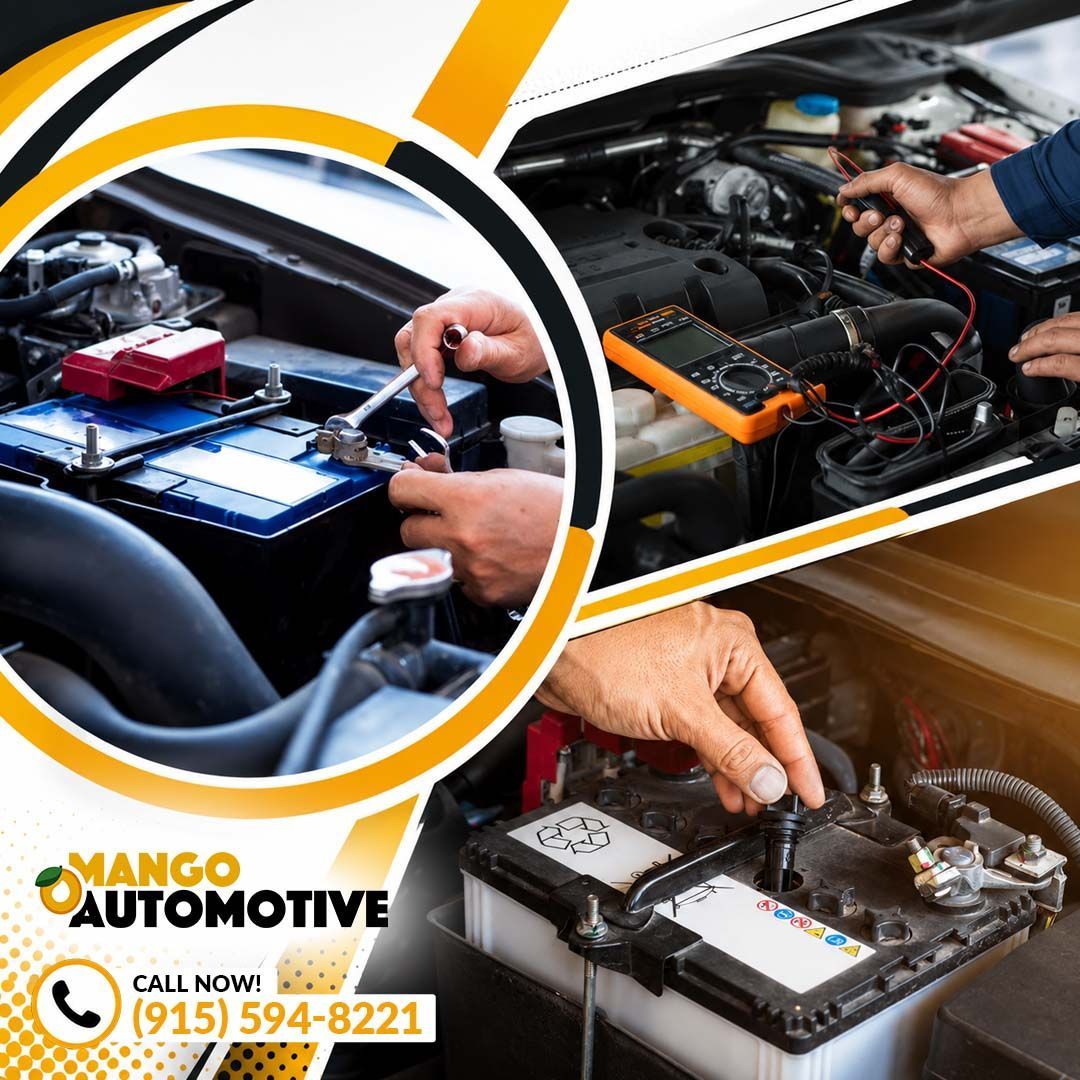
Engine Performance Issues? How Computer Diagnostics Save Time in Engine Repair and Tune-up in Albuquerque, NM
Your engine isn't running right. Maybe it's hesitating when you accelerate, idling rough at stoplights, or burning through gas faster than usual. You know something's wrong, but figuring out exactly what can feel like solving a puzzle with missing pieces. Here's the good news: modern computer diagnostics take the guesswork out of engine problems. Instead of spending hours or days tracking down issues through trial and error, professional diagnostic equipment pinpoints the exact problem in minutes, making it easier to plan the right auto body repair and maintenance steps and get back on the road with.
At Mango Automotive (The Valley), we use advanced diagnostic technology to identify engine issues quickly and accurately, getting you back on the road without wasting your time or money on unnecessary repairs. Whether you're dealing with a check engine light or mysterious performance problems, computerized diagnostics provide clear answers that lead to effective solutions.

How Modern Computer Diagnostics Work in Today's Vehicles
Think of your vehicle's computer system as a health monitoring network that constantly checks every function. Your car's on-board diagnostics system (OBD-II) has been standard in vehicles since 1996, and it's become increasingly sophisticated over the years.
Here's how it works: dozens of sensors throughout your engine and emission systems monitor everything from oxygen levels in your exhaust to the temperature of your coolant. These sensors continuously send data to your vehicle's engine control module (ECM), essentially the brain of your car. When something operates outside normal parameters, the system generates a diagnostic trouble code (DTC) and stores it in the computer's memory.
Professional diagnostic equipment connects directly to your vehicle's computer through the OBD-II port, typically located under the dashboard. This connection allows technicians to:
- Retrieve stored trouble codes from the vehicle's history
- View live sensor data in real time
- Monitor system performance under various conditions
- Access manufacturer-specific codes beyond generic DTCs
- Perform component tests through the vehicle's computer
While you can buy basic code readers at auto parts stores, professional-grade diagnostic tools provide much deeper information. The difference between a $30 code reader and professional diagnostic equipment is like comparing a thermometer to a full medical imaging suite. Both tell you something's wrong, but only one shows you exactly what and why.
Common Engine Performance Problems That Computer Diagnostics Identify
Engine problems rarely announce themselves clearly. You might notice symptoms, but understanding what's causing them requires looking beneath the surface. Computer diagnostics excel at connecting symptoms to their root causes.
Symptom
Common Diagnostic Codes
Typical Cause
Rough idling or stalling
P0300-P0308
Misfiring cylinders, faulty ignition coils
Poor acceleration
P0171, P0174
Fuel system issues, vacuum leaks
Reduced fuel efficiency
P0420, P0430
Oxygen sensor failure, catalytic converter problems
Check engine light (solid)
P0128, P0401
Thermostat malfunction, EGR system issues
Check engine light (flashing)
P0300 series
Active misfire causing potential damage
According to
CarMD's 2019 Vehicle Health Index, oxygen sensor replacements and ignition coil/spark plug replacements tied as the most common check engine light repairs, each accounting for approximately 5.8% of all diagnostics. Catalytic converter issues and loose or faulty gas caps also ranked among the top problems. These problems often create similar symptoms: rough running, poor fuel economy, or reduced power, making computer diagnostics necessary for accurate identification.
Rough idling happens when your engine can't maintain steady RPMs at a stop. Diagnostics can reveal whether you're dealing with ignition system problems, fuel delivery issues, or air intake complications. Poor acceleration might stem from dozens of potential causes, but diagnostic scans quickly narrow the possibilities by showing which sensors are reporting abnormal readings.
According to EPA energy efficiency data, fixing a faulty oxygen sensor can improve gas mileage by as much as 40 percent. Computer diagnostics identify failing sensors before they create noticeable performance changes, preventing both wasted fuel and potential damage to other emission system components.
The Diagnostic Process at Professional Automotive Repair Shops
Walking into an auto repair shop with engine problems shouldn't feel intimidating. Being aware of the diagnostic process helps you know what to expect and why it's worth the investment.
The process usually starts with a conversation. A good technician asks about your symptoms: When did they start? Do they happen constantly or intermittently? Have you noticed any patterns? This information guides the diagnostic approach and helps technicians know what to look for beyond the basic code scan.
Next comes the visual inspection. Before connecting any diagnostic equipment, experienced technicians look for obvious problems: damaged hoses, loose connections, visible leaks, or worn components. Sometimes the issue is right there in plain sight, saving you diagnostic fees for problems that don't require computer analysis.
Then we connect the diagnostic scanner. At Mango Automotive (The Valley), our technicians retrieve all stored trouble codes and review the freeze frame data: a snapshot of sensor readings captured when the code was initially triggered. This historical data provides context that current readings can't show.
But here's where professional diagnostics separate from DIY code reading: retrieving codes is just the beginning. The complete diagnostic process includes:
- Analyzing live data streams while the engine runs
- Test driving the vehicle while monitoring sensor responses
- Watching how systems perform under actual driving conditions
- Commanding specific components to activate for testing
- Verifying that all systems respond correctly to computer commands
Component testing validates what the codes suggest. Many diagnostic systems allow technicians to command specific components to activate, testing whether they respond correctly. We might cycle your purge valve, command your cooling fans to run, or adjust your fuel trim to verify that systems respond as designed.
The result is a detailed diagnostic report that explains not just what codes appeared, but what they mean, what's causing them, and what needs repair. Good automotive repair services take time to walk you through findings, explaining the problem in terms you can understand and showing you why the recommended repairs will solve it.
Time and Money Saved Through Accurate Engine Diagnostics
Here's something most people don't realize: the diagnostic fee you pay often saves you hundreds of dollars compared to the alternative.
Traditional troubleshooting without diagnostics means educated guessing. A technician might suspect your rough idle comes from spark plugs, so you replace them. Still rough? Maybe it's the ignition coils. Replace those. Still rough? Could be fuel injectors. You see where this goes. Each guess costs you parts and labor, with no certainty that you're addressing the actual problem.
Computer diagnostics eliminate this expensive guessing game. A scan that takes fifteen minutes might reveal a vacuum leak that would have taken hours to locate manually. Or it might show a failing mass airflow sensor that you'd never identify through visual inspection alone.
According to the 2017 AAA survey, the average cost of unexpected vehicle repairs reaches approximately $500-$600 per incident when problems aren't diagnosed accurately on the first visit. That number includes return visits, additional parts, and extended labor. Proper diagnostic scanning typically costs between $100-$150: a small investment that prevents those costly repair loops.
Diagnostics also catch related problems you haven't noticed yet. Maybe you came in for a check engine light, but the scan reveals your oxygen sensors are failing too. Addressing both issues together prevents a return visit next month when the second problem finally triggers a warning light.
Early detection prevents cascade failures. An engine running too rich (too much fuel) due to a faulty oxygen sensor will eventually damage your catalytic converter, turning a $150 sensor replacement into a $1,200+ repair. Computer diagnostics identify the sensor failure before expensive secondary damage occurs.
When Your Vehicle Needs Professional Diagnostic Services
Not every engine hiccup requires professional diagnostics, but certain situations definitely do. You should schedule a diagnostic service when you experience:
- A solid check engine light - Your vehicle's computer detected a problem affecting emissions or performance
- A flashing check engine light - Indicates an active misfire that requires immediate attention to prevent catalytic converter damage
- Persistent problems without obvious causes - When your engine runs rough, but visual inspection reveals nothing wrong
- Failed emissions testing - Something's wrong with your emission control systems, and diagnostics identify which components need repair
- Intermittent issues - Problems that come and go, making them difficult to diagnose without recorded data
- Confusing DIY code reader results - When your basic scanner raises more questions than it answers
Before buying a used vehicle, engine diagnostic scanning reveals hidden problems that aren't obvious during test drives. Stored trouble codes tell you about past issues, even if the seller cleared the check engine light before showing the car.
DIY code readers give you basic information, but they often raise more questions than they answer. When your $30 scanner shows "P0171 - System Too Lean," what does that actually mean? Which of the dozen potential causes is affecting your specific vehicle? Professional diagnostics provide those answers.
Understanding Your Diagnostic Results and Repair Options
A good diagnostic report does more than list codes; it explains what's wrong, why it matters, and what fixing it involves.
When technicians explain findings, they should translate technical language into everyday terms. "Your mass airflow sensor is reading outside normal parameters" becomes "This sensor tells your engine how much air is coming in, and it's giving incorrect information, so your engine can't adjust the fuel mixture properly."
Repairs typically fall into three priority levels:
- Safety-related issues - Need immediate attention; problems that could leave you stranded or create dangerous driving conditions
- Performance issues - Affect how your vehicle runs, but won't necessarily cause immediate breakdowns
- Preventive repairs - Address components showing early warning signs before they fail
Cost estimates should be transparent and detailed. For engine repair and tune-up in Albuquerque, NM, you deserve to know not just the total cost but what it includes: parts, labor hours, any additional diagnostics needed, and any related services recommended based on the findings.
Timelines matter, too. Some repairs take an hour; others require ordering parts and dedicating a full day to service. Knowing the schedule helps you plan around your vehicle being in the shop.
Warranty coverage makes a difference in your decision-making. At Mango Automotive (The Valley), we back our repairs with 60 months or 60,000 miles of coverage; that's 36 months/36,000 miles nationwide, plus an additional 24 months/24,000 miles at our location. Knowing your repair is covered for that long gives you confidence in moving forward.
Ask questions about your diagnostic report. Why did this fail? Will fixing it prevent other problems? Are there related components we should inspect? How long should the repair last? Good technicians welcome these questions and take time to answer them thoroughly.

This is paragraph text. Click it or hit the Manage Text button to change the font, color, size, format, and more. To set up site-wide paragraph and title styles, go to Site Theme.