What to Do When Your Car Won’t Start but the Lights Still Work: Guidance From Mango Automotive & Diesel
When a car won’t start, but the lights still work, most drivers assume the problem is minor. In reality, this situation often points to a failure within the starting or electrical system that can leave a vehicle stranded without warning. In Yuma, where daily commutes, work schedules, and long-distance driving are common, a no-start issue can quickly disrupt plans and create safety concerns. Vehicles in this condition still show electrical activity, which leads many drivers to misjudge the severity of the problem and delay proper repair. That delay can result in repeated breakdowns, additional electrical damage, or higher repair costs once the issue escalates.
For drivers searching for
auto repair near you, understanding why this situation occurs is the first step toward avoiding unnecessary stress and downtime. At
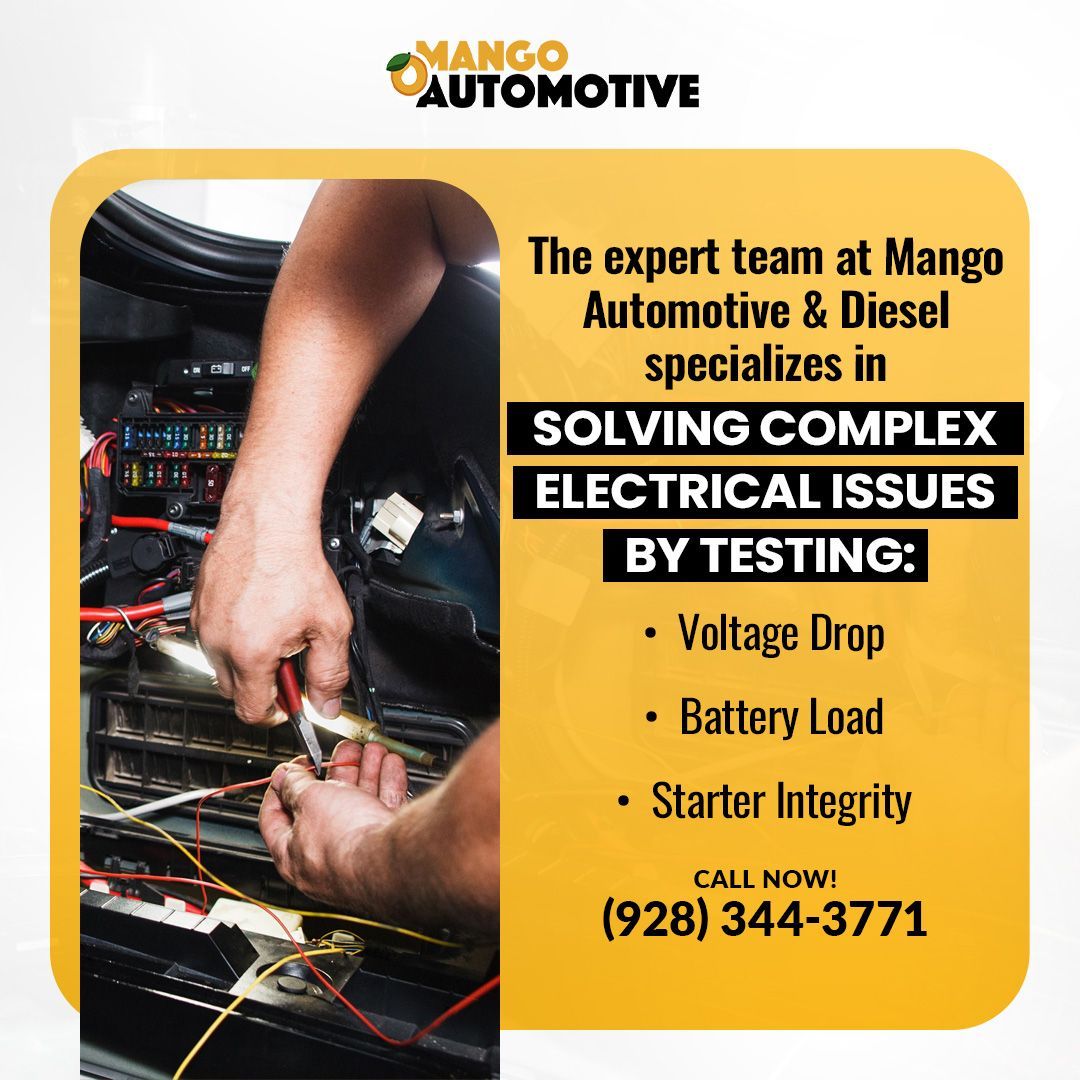
Mango Automotive & Diesel in Yuma, we address starting problems by testing for faults in the battery, starter motor, ignition components, or electrical connections that may be operating outside normal limits. Yuma’s high temperatures increase strain on these systems, making an accurate diagnosis essential. Early service helps restore dependable vehicle operation, reduces the risk of being stranded, and protects the long-term condition of the vehicle.
Why This Situation Creates Uncertainty for Drivers
This situation creates uncertainty because visible electrical power gives a false sense of normal operation. Drivers see dashboard lights, hear chimes, or use power accessories, which leads them to assume the vehicle should start. When the engine does nothing, the cause feels unclear and unpredictable. This confusion often results in delayed repairs.
Many drivers continue attempting to start the vehicle or rely on jump-starts, which can worsen electrical damage. Heat-related wear on batteries and cables increases the likelihood of sudden failure, even when the vehicle appeared reliable days earlier.
Why Visible Power Does Not Tell the Full Story
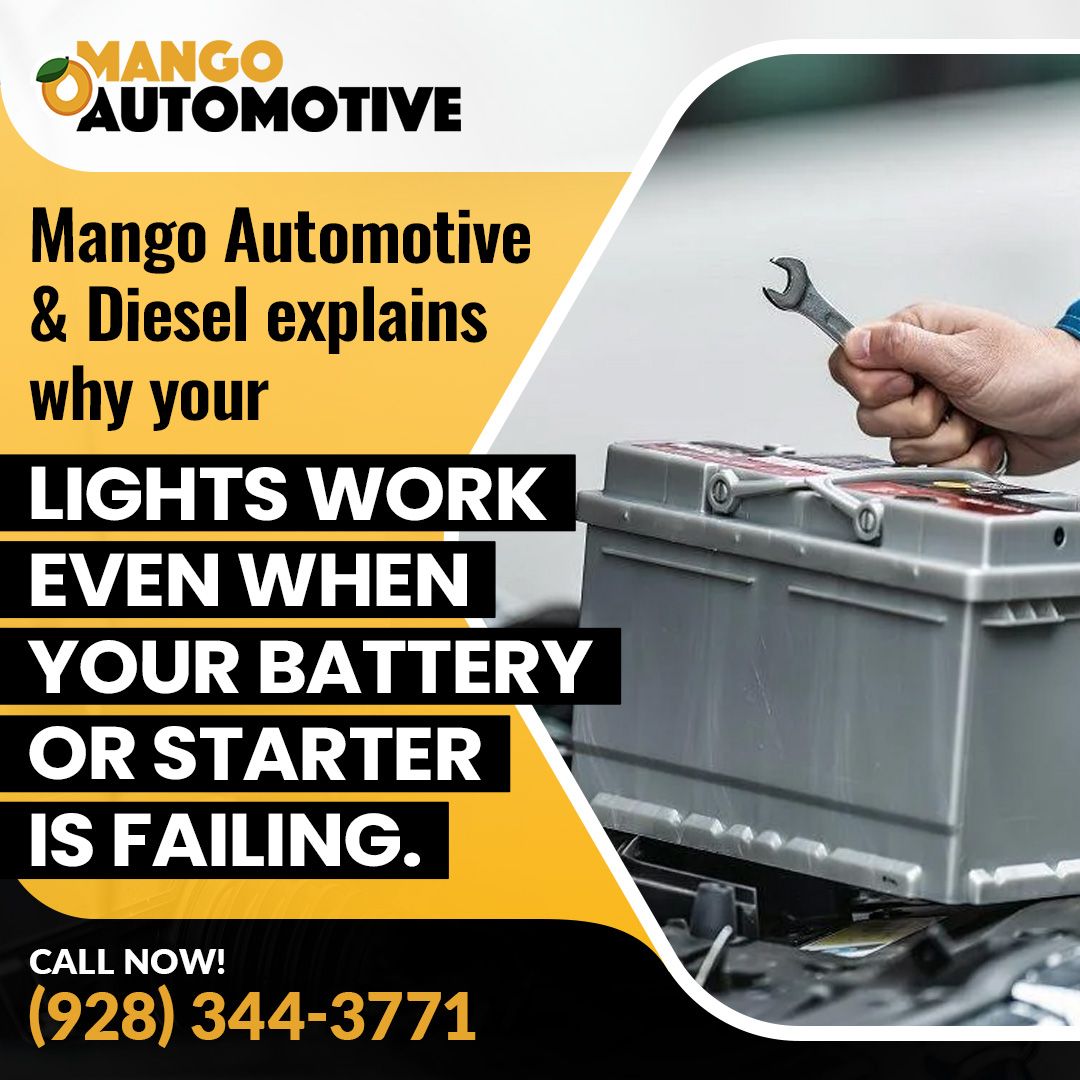
Visible power only confirms that the battery can support low-demand electrical systems. Interior lights, radios, and dashboards require a small, steady current. These systems can function even when the battery cannot supply the surge needed to start the engine.
For example, a battery with reduced capacity may still power headlights, unlock doors, and display warning lights. That same battery may fail when asked to support the starter motor. Corroded terminals or worn cables can also allow partial power flow while blocking high-current delivery.
How Starting an Engine Places High Demand on the Electrical System
Starting an engine requires a short burst of very high electrical current. Most starter motors draw between 150 and 300 amps during cranking. This demand immediately exposes weak batteries, failing starters, or high-resistance connections.
In hot climates like Yuma, battery plates degrade faster, and cable resistance increases. These conditions allow low-demand systems to work while preventing successful engine cranking. This is why professional auto repair shops in Yuma, AZ, test electrical systems under load, not just for surface-level power.
What Happens Inside the Vehicle During a Start
Starting a vehicle activates multiple electrical and mechanical systems at the same time. The battery, starter, wiring, and control circuits must work together within seconds. If one part underperforms, the engine will not crank even when the lights function. This process links directly to battery condition, electrical resistance, and starter health. A failure in any one area can stop the sequence before the engine turns.
Battery Function During Engine Cranking
The battery supplies the high current needed to turn the engine over, which places immediate stress on its internal components. In Yuma’s heat, battery efficiency declines faster than in moderate climates. Battery life can be reduced in high-temperature conditions, increasing starting failures even when accessories continue to operate normally.
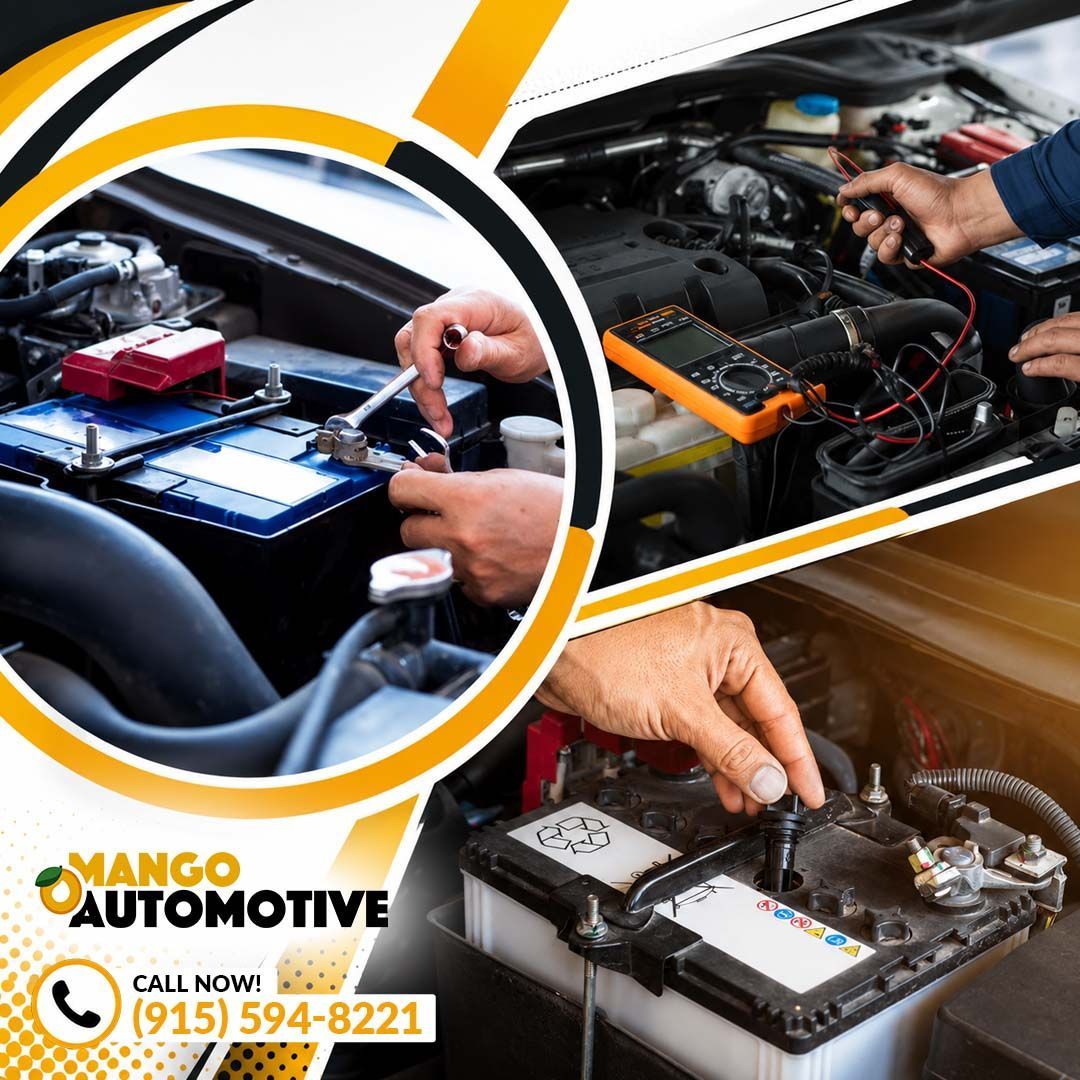
Battery condition must be evaluated based on usable output, not stored voltage alone. A battery may appear healthy at rest, showing around 12.6 volts, and still power headlights or interior electronics. During engine cranking, internal resistance can cause the voltage to drop below 9.6 volts, preventing the starter from engaging. This difference explains why a vehicle may show electrical power yet fail to start and directly connect battery health to starting reliability.
How the Starter Transfers Electrical Energy Into Motion
The starter converts electrical energy into mechanical force to rotate the engine by using a high-torque electric motor and a gear assembly that engages the engine’s flywheel. Starter motors are designed for short, controlled use. Repeated failed start attempts cause heat buildup and internal wear, which explains why some vehicles start intermittently before failing completely. This pattern can be diagnosed at a car repair shop near you.
Before mechanical engagement occurs, electrical signals must activate a series of relays. When the key is turned or the start button is pressed, power is sent through a relay to the starter solenoid. The solenoid then moves the starter gear into position so the engine can turn. If a relay fails, wiring develops resistance, or the solenoid sticks, the starter will not engage. This is why professional automotive repair services evaluate both electrical signals and mechanical components together during diagnosis.
Conditions Where Electrical Power Exists but the Engine Will Not Turn
This condition occurs when electrical systems function but cannot support engine cranking. Lights and accessories rely on low current, while starting requires high current and uninterrupted electrical flow. Weak components fail under this demand. These failures are among the most common reasons drivers seek automotive repair services, especially in hot regions like Yuma.
Battery Output That Drops Under Load
During cranking, voltage must stay above 9.6 volts. Batteries with internal wear often drop below this threshold under load. This explains why a battery can appear functional yet still fail. Internal plate degradation, sulfation, or heat damage reduces usable output. According to industry data, batteries exposed to sustained heat can lose cranking capacity before showing visible warning signs.
Starter Motors That Stop Responding
A starter motor can fail suddenly even when electrical power is present. The motor relies on internal windings, brushes, and bearings that wear over time. Heat and repeated start attempts speed up this wear.
Internal electrical breakdown may prevent the motor from rotating, while mechanical wear can stop gear engagement. This often leads to clicking sounds or silence during start attempts, a frequent diagnosis at mechanic shops in Yuma.
Electrical Paths That Cannot Deliver Full Current
Electrical paths may allow partial power while blocking high-current flow. Battery cables and terminals must carry hundreds of amps during cranking. Any added resistance limits current delivery.
Resistance caused by cable corrosion or loose terminals allows lights to work but prevents starting. Even a small increase in resistance can reduce starter current, linking electrical condition directly to starting reliability.
Systems That Prevent Engine Operation
Some systems are designed to block engine cranking when faults are detected. These controls protect the vehicle but can stop starting without an obvious warning.
Ignition switch failure may interrupt power between the battery and starter circuit. Safety interlocks, such as neutral safety switches or clutch switches, prevent starting unless conditions are correct. When these components fail, the engine remains inactive despite visible power.
Signs That Help Narrow Down the Cause
Specific symptoms during a failed start often point to the system at fault. Sounds, warning indicators, and recent vehicle behavior help technicians reduce diagnostic time and avoid unnecessary repairs. These signs connect directly to battery condition, starter performance, and electrical signal delivery. Common signs include:
Clicking sounds during start attempts: A single click often points to starter solenoid issues. Rapid clicking usually indicates low battery voltage. Repeated clicking with working lights commonly links to battery output dropping under load.
No sound when turning the key or pressing start: Complete silence may indicate ignition switch failure, relay problems, or safety interlock issues. These conditions can be identified during diagnostics at a car repair shop near you.
Battery, immobilizer, or engine warning lights: Dashboard indicators often reflect voltage irregularities or communication faults. Many no-start conditions store fault codes even when the engine does not crank, guiding accurate automotive repair services.
Slower or inconsistent cranking before failure: Gradual changes such as delayed starts or uneven cranking suggest declining battery capacity or starter wear.
Dimming lights during startup attempts: This behavior points to a voltage drop under load, often caused by weakened batteries or increased cable resistance.
Increased reliance on jump-starts: Frequent jump-starts signal that the starting system can no longer sustain normal operation.
Drivers in Yuma often report these signs during hotter months, as heat accelerates battery degradation and cable wear. Early inspection at a trusted mechanic shop in Yuma helps prevent complete no-start failures and added repair costs.
Common Reactions That Can Worsen the Problem
Certain driver responses can increase electrical damage and raise repair costs. When a vehicle fails to start, repeated actions without diagnosis often stress components already operating outside normal limits.
Repeated Start Attempts and Electrical Overload
Repeated start attempts place excessive strain on the battery and starter motor. Each attempt draws high current, which accelerates battery depletion and overheats starter components. Multiple failed cranking attempts can raise starter temperatures beyond safe limits within minutes. This links repeated attempts directly to premature starter failure and wiring damage.
Jump-Starting Without Identifying the Root Cause
Jump-starting masks the problem without fixing it. While it may temporarily restore power, it does not address failing batteries, corroded cables, or starter issues. For example, a weak battery may accept surface charge and start once, then fail again shortly after. Improper jump-starting can also damage control modules.
Ignoring Intermittent Starting Issues
Intermittent starting problems are early warnings of system failure. Vehicles that start inconsistently often have declining battery capacity, failing starters, or rising electrical resistance. Many complete no-start failures are preceded by intermittent symptoms such as slow cranking or hesitation. Addressing these signs early at a mechanic shop in Yuma can reduce breakdown risk and repair expense.
Why No-Start Problems Require Proper Testing
No-start problems require proper testing because surface symptoms rarely reveal the actual failure point. Electrical and starting systems depend on precise voltage, current flow, and signal timing that cannot be confirmed through observation alone.
Why Visual Checks Are Often Not Enough
Visual checks cannot measure electrical performance under load. A battery can look clean, cables can appear secure, and fuses can remain intact while voltage drops occur during cranking.
For example, corrosion inside battery cables or internal battery damage is not visible. Load testing is required to confirm whether components can deliver the current needed to start the engine. This limitation explains why you may need to visit a car repair shop near you after basic checks fail.
How Modern Vehicles Rely on Precise Electrical Signals
Modern vehicles depend on exact electrical signals to allow engine cranking. Control modules monitor voltage levels, switch positions, and sensor input before permitting the starter to engage.
A voltage drop as small as 0.5 volts can interrupt communication between modules. This links battery health, wiring condition, and control systems into a single starting sequence. Expert mechanic shops in Yuma, like Mango Automotive & Diesel, use diagnostic tools to confirm these signals meet required thresholds before repairs begin.
How Mango Automotive & Diesel Handles No-Start Problems
At Mango Automotive & Diesel, we address no-start problems through structured testing and verified repair procedures. We focus on identifying the exact failure point before recommending any repair, which reduces repeat visits and unnecessary costs. This approach aligns electrical testing, starting system diagnostics, and vehicle-specific requirements into a single service process.
Diagnostic Process Used to Identify Electrical and Starting Issues
Diagnosis begins with confirming whether power delivery meets starting requirements. Our technicians test battery voltage at rest and under load, inspect starter circuit continuity, and verify signal flow from the ignition system. This process links battery condition, starter response, and control signals.
We never replace parts without confirmed test results. We complete load testing, voltage drop testing, and signal verification first to isolate the fault. Testing prevents unnecessary part replacement and keeps repair costs predictable.
Experience With Electrical Systems Across Vehicle Types
Different vehicle types require different diagnostic thresholds and repair strategies. Electrical systems in passenger cars differ considerably from those in diesel trucks and RVs, particularly in starter draw and battery capacity.
Passenger vehicles typically draw 150–300 amps during cranking, while diesel trucks and RVs may exceed 400 amps. Fleet vehicles often experience higher electrical wear due to frequent starts. We apply vehicle-specific testing standards to account for these differences, allowing accurate diagnosis and reliable repair when you are looking for auto repair near you.
Repair Standards and Warranty Coverage
We follow documented repair procedures and complete verified performance checks on every starting system repair. Once repairs are completed, we retest the system under load to confirm proper operation before releasing the vehicle. This process confirms that the starting system meets operational requirements, not just basic functionality, which is a standard we maintain among auto repair shops in Yuma, AZ.
We support qualified repairs with extended warranty coverage. Mango Automotive & Diesel offers up to 60 months or 60,000 miles of protection on eligible repairs, with specific terms for heavy-duty vehicles. This coverage provides long-term confidence for customers who depend on consistent vehicle operation in Yuma’s demanding driving conditions.
Getting Reliable Help for a No-Start Issue in Yuma
Reliable help comes from a local repair shop that can diagnose and resolve starting issues in a single visit. Proper testing allows technicians to evaluate the battery, starter, ignition circuit, and electrical connections together, rather than treating symptoms separately. This approach shortens repair time and reduces repeat failures for drivers who depend on their vehicles daily. At Mango Automotive & Diesel, we apply this local experience to restore dependable starting performance and help drivers avoid future no-start situations.
If your car won’t start but the lights still work, don’t wait for the problem to worsen. Call
(928) 344-3771 to schedule service with Mango Automotive & Diesel, one of the most trusted auto repair shops in Yuma, AZ. Our team is ready to help you get back on the road safely and with confidence.