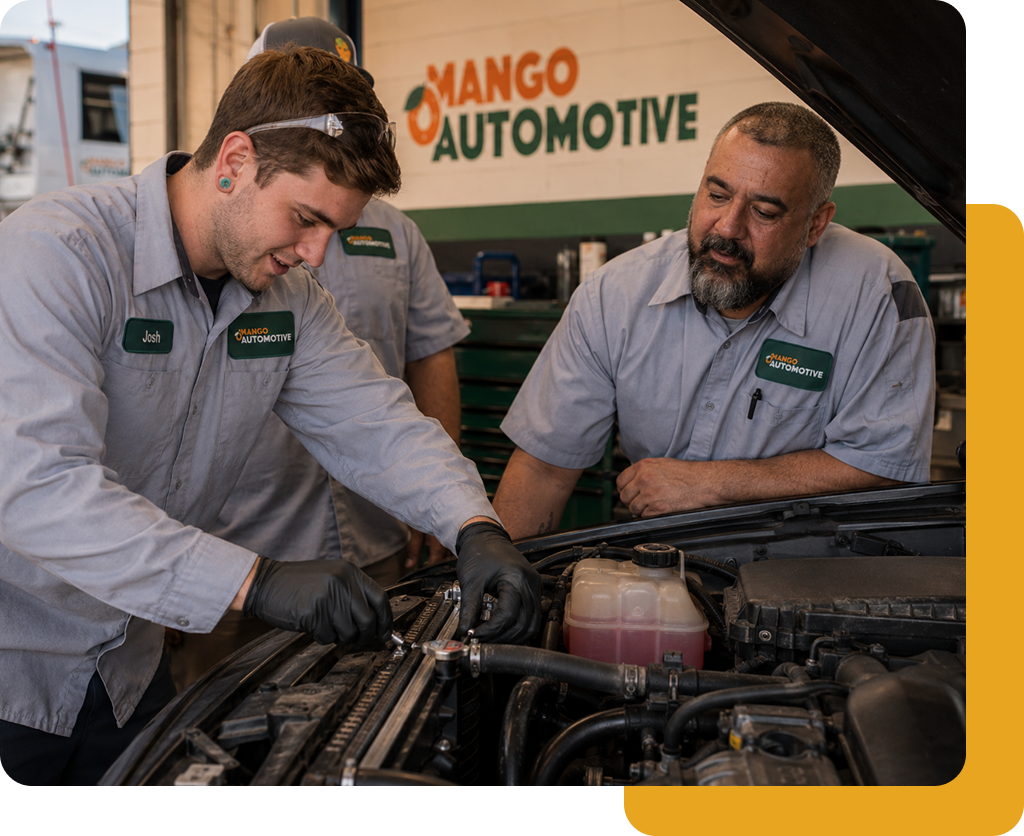

Before the Heat Hits: Car Mechanic's AC System Maintenance Guide for The Valley Drivers
Desert summers in The Valley don't mess around. When temperatures regularly climb past 100°F, your vehicle's air conditioning system becomes more than a comfort feature—it's a safety necessity. Understanding what goes into proper AC Maintenance in Albuquerque helps you avoid breakdowns during the hottest months and keeps repair costs manageable. Whether you're searching for reliable auto service and repair in The Valley, NM, or trying to understand why your cooling system needs attention before summer arrives, this guide walks through the inspection points, common failure modes, and maintenance timeline professionals follow to keep your cooling system running strong. At
Mango Automotive (The Valley), we've seen firsthand how early preparation prevents the frustration of a failed AC system during Albuquerque's most brutal weather.

Why Desert Heat Demands Proactive AC Service
Albuquerque's extreme temperature swings create unique challenges for vehicle cooling systems. Winter nights can drop to 40°F, while summer days routinely exceed 105°F. This 65-degree temperature range puts constant stress on AC components that moderate climates simply don't experience.
Your AC system operates on a pressure-temperature relationship. When ambient temperatures soar, the refrigerant in your system must work at higher pressures to produce cold air. In The Valley's desert environment, your compressor runs harder, your condenser faces more thermal stress, and every seal and hose endures greater expansion and contraction cycles than vehicles in milder regions.
According to AAA, it handled over 27 million emergency roadside service calls in 2024, and the organization warns that summer heat can significantly increase breakdown risk, especially from battery, tire, and overheating issues. The pattern is clear: most AC failures occur in late May and early June, right as temperatures begin their climb toward triple digits but before drivers have addressed underlying issues.
Most drivers don't start searching “auto repair near me” until their AC completely fails. By then, what could have been a $150 service becomes an emergency $1,500 repair. Here's why waiting costs more than prevention:

When you wait until your AC blows warm air, the damage has often progressed beyond a simple fix. Low refrigerant doesn't just reduce cooling; it allows moisture and contaminants into your system, damaging the compressor and other expensive components.
What Your Car Mechanic Checks During an AC System Inspection
A thorough AC inspection goes far beyond adding refrigerant. If you've been searching online for "car mechanic near me" to handle your AC issues, here's what a professional evaluation actually involves:
- Refrigerant Level and Pressure Testing
Technicians connect diagnostic gauges to your system's high and low-pressure ports. Proper refrigerant charge produces specific pressure readings that vary with ambient temperature. Low pressure indicates leaks; high pressure suggests blockages or condenser problems. Mechanics use electronic leak detectors and UV dye to pinpoint refrigerant loss before it causes system failure.
- Compressor Function Assessment
The compressor is your AC system's heart. Mechanics inspect the drive belt for cracks, glazing, and proper tension. They listen for bearing noise that signals internal wear and verify that the compressor clutch engages smoothly when you activate the AC. A failing compressor bearing sounds like a grinding or squealing noise that worsens with AC operation.
- Condenser Examination
Your condenser sits in front of the radiator, directly behind the grille. Road debris, rocks, and insects damage the thin aluminum fins, reducing heat dissipation efficiency. Mechanics check for bent fins, blockages, and physical damage. In desert environments, dust accumulation between the condenser and radiator creates an insulating barrier that dramatically reduces cooling capacity.
- Evaporator Core Evaluation
Hidden behind your dashboard, the evaporator core is where cold actually happens. Technicians look for signs of corrosion (common in humid climates but less frequent in The Valley), refrigerant leaks indicated by oily residue, and proper condensate drainage. A clogged evaporator drain causes water to back up into your cabin, creating musty odors and potential mold growth.
- Blower Motor and Cabin Air Filter Status
Weak airflow often gets mistaken for refrigerant problems. A clogged cabin air filter restricts airflow by 50% or more, making your AC seem less effective even when the refrigerant charge is perfect. Mechanics test the blower motor function at all speed settings and inspect the cabin filter for dust, leaves, and debris accumulation.
- Electrical Connections and Sensors
Modern AC systems rely on temperature sensors, pressure switches, and control modules to regulate operation. Corroded connectors or failed sensors prevent the compressor from engaging, even when all mechanical components are sound. Technicians verify proper voltage, test relay function, and check sensor readings against specifications.
- Hose and Seal Integrity
Desert heat accelerates rubber deterioration. AC hoses develop surface cracks that eventually penetrate through to the refrigerant line. O-rings and seals at connection points harden and shrink, creating leak paths. Visual inspection catches these age-related failures before they strand you in summer traffic.
Common AC Problems Desert Drivers Face (And How to Spot Them Early)
Understanding symptoms helps you identify issues before they escalate:
- Weak Airflow Despite Cold Temperature – When your vents produce cold air but at reduced volume, you're likely dealing with a blower motor issue or a severely clogged cabin filter. This problem worsens gradually, so many drivers don't notice until airflow becomes obviously inadequate. Check your cabin filter every 12,000 miles in dusty desert conditions—twice the frequency recommended for moderate climates.
- Intermittent Cooling – AC that works sometimes but not others points to electrical problems, borderline-low refrigerant, or a failing compressor clutch. Low refrigerant causes the system to cycle on and off rapidly as pressure drops below the minimum threshold. A worn clutch slips under load, engaging inconsistently. Both issues worsen with heat and engine speed.
- Strange Odors When AC Runs – Musty smells indicate mold growth on the evaporator core or in the ventilation ducts. This happens when condensate doesn't drain properly, leaving moisture in the system. A sweet, chemical odor suggests refrigerant leaking into the cabin—a serious issue requiring immediate attention. Neither problem relates to outside temperatures, but both worsen with AC use.
- Unusual Noises – Grinding or squealing when you turn on the AC indicates compressor bearing failure. Rattling suggests debris in the blower motor housing. Belt squeal points to a loose or worn serpentine belt. These sounds tell you exactly which component needs attention before it fails completely.
- Moisture or Condensation Inside Cabin – Water on the passenger floor or windshield fogging that doesn't clear indicates a clogged evaporator drain tube. This $30 repair becomes a $500 problem when trapped moisture causes electrical issues or mold contamination.
The Real Cost of Delayed AC Maintenance in Albuquerque's Climate
Numbers tell the story better than warnings. Industry estimates suggest that car A/C diagnosis and recharge commonly cost a few hundred dollars, while A/C compressor replacement averages about $1,000–$1,400, including parts and labor. When contamination damages multiple A/C components, full-system repairs can climb into the $1,500–$3,000+ range, depending on the vehicle and parts affected.
Small refrigerant leaks become expensive when moisture and air enter the system. Refrigerant acts as a lubricant for the compressor's internal parts. When refrigerant levels drop, lubrication fails, metal-on-metal contact occurs, and metal particles circulate through your system. These contaminants destroy the expansion valve, clog the orifice tube, and damage seals throughout the system. What started as a $75 leak repair became a complete system overhaul.
According to NHTSA, a parked vehicle’s interior temperature can rise nearly 20°F within the first 10 minutes, and even outside temperatures in the mid-60s can push the inside of a vehicle above 110°F. Your dashboard can exceed these temperatures even more. This extreme heat damages electronics, warps plastic trim, fades upholstery, and deteriorates adhesives holding interior components together. Vehicles without functioning AC suffer accelerated interior aging that reduces resale value by 10–15% according to automotive appraisal data.
Health risks are real. Heat exhaustion develops when your core body temperature rises above 100°F. In stop-and-go traffic without AC, interior temperatures create dangerous conditions, particularly for children, elderly passengers, and anyone with cardiovascular conditions.
Pre-Summer AC Maintenance Timeline and Service Intervals
Mango Automotive (The Valley) understands that timing matters in desert climates:
Schedule Your Inspection Now—Before the Rush
We're in the critical window right now. May and June are when A/C systems fail most often, and that's exactly when repair shops get slammed with emergency calls. Drivers search "auto repair near me" in panic mode when their cooling quits in triple-digit heat, only to find week-long wait times. If your A/C hasn't been serviced yet this year, schedule your appointment now while shops still have availability and can get you in within days, not weeks.
Annual Inspection Regardless of Performance
Even if your AC seems fine, an annual inspection catches developing problems. Refrigerant levels drop 2–3% per year through normal permeation; not a leak, just physics. After three years without service, your system runs 6–9% low, reducing efficiency and increasing compressor wear. Annual checks prevent this gradual degradation.
High-Mileage Vehicle Considerations
Vehicles with 100,000+ miles or those older than 7 years need more frequent attention. Rubber components deteriorate with age regardless of mileage. If your vehicle sits outside year-round in The Valley's sun, UV exposure accelerates hose and seal aging. Consider bi-annual checks for high-mileage or older vehicles.
Warning Signs Requiring Immediate Service
Don't wait for your scheduled maintenance if you notice:
- Visible refrigerant oil around fittings or on the compressor
- Dashboard warning lights related to AC operation
- Sudden performance drop (cooling that worked yesterday doesn't work today)
- Loud noises when engaging the AC
- Burning smells from vents
Preparing for Your Service Appointment
Document symptoms before your visit. Note when issues occur: at startup, after running for a while, only at idle, only at highway speed. Temperature affects symptoms, so mention if problems are worse in the morning coolness or the afternoon heat. This information helps technicians diagnose issues faster and more accurately.
What to Expect from Professional Auto Service and Repair in The Valley, NM
Understanding the service process for auto body repair and maintenance removes uncertainty when you choose automotive repair services in The Valley, NM:
Diagnostic Process
Professional diagnosis starts with visual inspection of accessible components: belts, hoses, and the condenser condition. Technicians then connect manifold gauges to measure high and low-side pressures. These readings, combined with ambient temperature, tell experienced mechanics whether refrigerant charge is correct, if blockages exist, or if the compressor is failing.
Electronic refrigerant detectors identify leak locations by sensing refrigerant molecules in the air. For elusive leaks, UV dye injected into the system glows under black light, pinpointing even tiny leak paths invisible to the naked eye.
Refrigerant Recovery and Recharge Procedures
Federal law requires proper refrigerant recovery; releasing refrigerant to the atmosphere is illegal and damages the environment. Technicians use recovery machines that capture existing refrigerant, pull a vacuum on the system to remove air and moisture, and then inject the precise refrigerant amount specified by your vehicle manufacturer. Too little reduces cooling; too much increases compressor pressure and shortens component life.
Component Replacement Standards
Quality matters in AC parts. OEM (Original Equipment Manufacturer) compressors are manufactured to the same specifications as your original part. Aftermarket compressors vary in quality—some match OEM standards, others fail within months. Reputable shops explain part options and warranty coverage before installation.
Labor Time Expectations
AC repairs vary in complexity:
- Refrigerant recharge: 1 hour
- Condenser replacement: 2–3 hours
- Compressor replacement: 3–5 hours
- Evaporator core replacement: 6–8 hours (requires dashboard removal)
Understanding labor requirements helps you plan your day and assess whether quoted prices align with industry standards.
Post-Repair Performance Verification
After repairs, technicians verify proper operation by measuring vent temperature, confirming pressure readings, and running the system through multiple cycles. Proper AC output should produce vent temperatures between 38–42°F at idle with 95°F+ ambient temperature.
Warranty Coverage
Quality shops stand behind their work. At Mango Automotive (The Valley), we back our repairs with a 60-month/60,000-mile warranty (36 months/36,000 miles nationwide + 24 months/24,000 miles exclusively at Mango Automotive). This coverage reflects our confidence in workmanship and parts quality.
Always ask about warranty terms before authorizing repairs. They indicate the shop's commitment to customer satisfaction.
Schedule Your Pre-Summer AC Check Today
May and June are peak months for AC failures in The Valley. Shops book solid, parts back-order, and you wait days or weeks for service while temperatures climb past 100°F. Scheduling your inspection before these months avoids these delays and gets your vehicle ready before the heat becomes unbearable.
Our technicians understand desert-specific vehicle challenges. We've diagnosed AC systems in everything from daily commuters to heavy-duty diesel trucks to RVs preparing for summer travel. Whether you need routine auto body repair and maintenance or specialized cooling system work, our facility offers comfortable waiting areas, high-speed WiFi, and complimentary shuttle service within 3 miles—because we know your time matters.
Modern diagnostic equipment for auto service and repair in The Valley, NM, identifies problems other shops miss. We don't guess; we test, measure, and verify before recommending repairs. You receive clear explanations of what's wrong, why it happened, and what's required to fix it properly.
Don't wait until your AC fails and you're searching “car mechanic near me” on your phone in 100°F heat. When you need reliable automotive repair services in The Valley, NM, call Mango Automotive (The Valley)
(505) 242-3401, or visit our website to schedule your pre-summer AC system inspection. Beat the rush, avoid the heat, and drive with confidence knowing your cooling system is ready for whatever Albuquerque's summer throws at it.


Brake Fade and Its Effect on Stopping Power at High Speeds: Auto Repair Shop in Albuquerque Explains