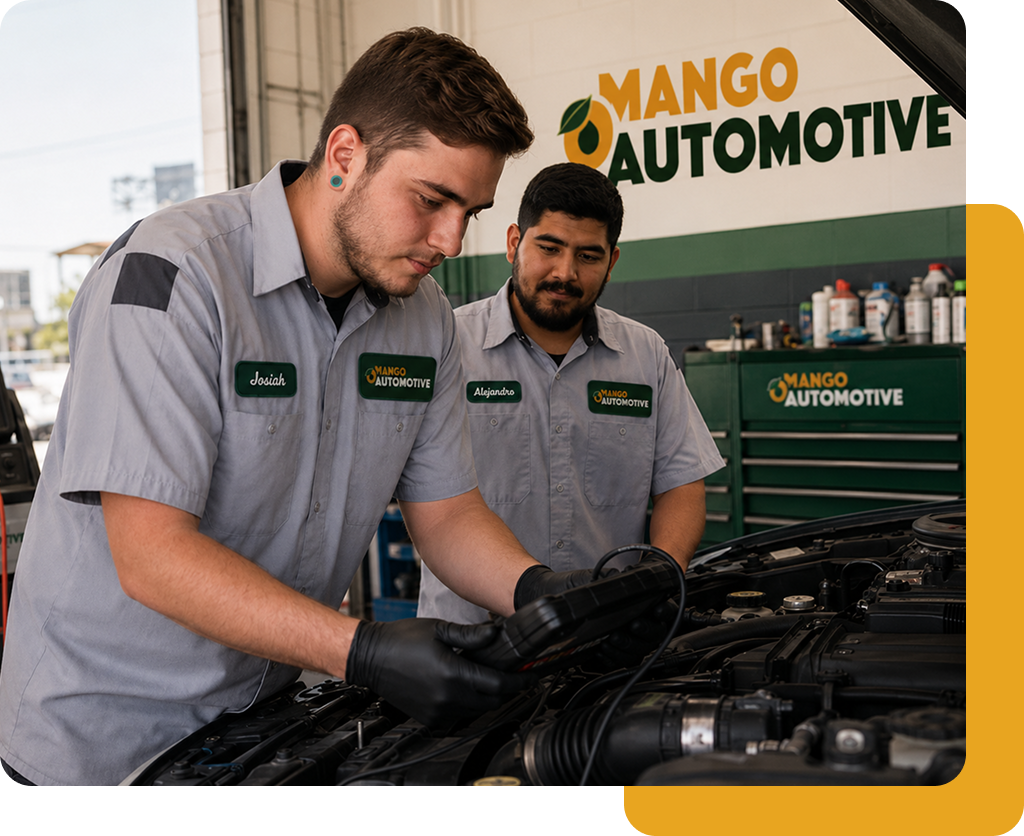
Check Engine Light and Professional Diagnosis: How a Mechanic Shop Near You Can Help

Jesse Jackson • May 26, 2026

A check engine light does not always mean something catastrophic, but it never means something that should be ignored. Every time that warning activates, your vehicle's computer has already detected a fault and is waiting for a response. The longer that response is delayed, the more opportunity there is for a manageable issue to affect connected systems.


At
Mango Automotive (Downtown), our ASE-certified mechanics bring the training, tools, and hands-on experience needed to diagnose check engine light faults accurately across all makes and models. Our team is ready to identify the root cause and walk you through exactly what your vehicle needs, with honest communication from start to finish.

Finding cause of vehicle fault in Downtown Albuquerque

What the Check Engine Light Is Telling You

The check engine light activates when your vehicle's onboard computer detects a fault in the engine, emissions system, or a related component. It signals that a problem exists. It does not identify what the problem is. Research from Reviews.com found that only 36% of drivers get their check engine light inspected within the first week of it turning on, which allows minor faults to develop into more involved repairs over time.


Modern vehicles use a system called OBD-II, or On-Board Diagnostics II. This is the standardized vehicle self-monitoring system required in all U.S. cars since 1996. When sensors detect readings outside normal operating ranges, the Engine Control Module (ECM), which is the vehicle's central computer, stores a Diagnostic Trouble Code (DTC) and triggers the warning light.


There are hundreds of possible DTCs. A single illuminated light could correspond to a loose gas cap, a failing oxygen sensor, a misfiring engine, or a deteriorating catalytic converter. Without professional diagnostic equipment and a trained mechanic to interpret the data, there is no reliable way to determine which one.


Steady Light vs. Flashing Light

The behavior of the check engine light provides an important first indication of severity. Knowing the difference helps drivers respond appropriately.


A steady check engine light indicates a fault that needs attention soon, but does not require an immediate stop
. Common causes include a faulty oxygen sensor, an EVAP (Evaporative Emission Control System) leak, or a failing mass airflow sensor. The vehicle may still drive normally, but the fault is active and should be diagnosed promptly.


A flashing check engine light requires immediate action.
According to the U.S. Environmental Protection Agency (EPA), a flashing light typically signals a severe engine misfire that sends unburned fuel into the exhaust system. This can rapidly damage the catalytic converter, which is one of the more involved components to repair or replace.


If the check engine light is flashing, drivers should reduce speed, minimize engine load, and reach a mechanic shop near you as soon as possible. Continuing to drive under these conditions risks compounding damage across multiple systems.


Professional Diagnosis Beyond the Code Reader

A trouble code points to a system, not a specific cause. Identifying the correct root cause requires live data analysis, component testing, and technical expertise.


Free code scans are available at many auto parts retailers. They retrieve the stored DTC and print a basic report. Consumer Reports recommends professional evaluation for complex faults, as a basic scan report alone is rarely sufficient to confirm the actual source of the problem.


The following examples illustrate how a single code can point in multiple directions:


  • Code P0171 - System Too Lean, Bank 1. This code could result from a vacuum leak, a failing mass airflow sensor, a clogged fuel injector, or a faulty oxygen sensor. The code identifies a symptom, not its source.


  • Code P0300 - Random or Multiple Cylinder Misfire. This could stem from worn spark plugs, a defective ignition coil, low fuel pressure, or a compression issue. Replacing one component without testing related systems may leave the actual cause unresolved.


  • Code P0420 - Catalyst System Efficiency Below Threshold. This code often appears after prolonged ignition or oxygen sensor issues have gone unaddressed, damaging the catalytic converter over time. The repair may require tracing back through two or three interconnected systems.


Clearing codes without resolving the underlying fault only turns off the light temporarily. The fault condition remains, the light returns, and the damage continues to progress. Accurate repairs depend on accurate diagnosis, and that requires the tools, data, and expertise that go beyond what a basic code scan can provide.


Common Causes and How They Interconnect

Several faults frequently trigger the check engine light. Understanding how they connect helps explain why early professional diagnosis protects against compounding damage.


Oxygen Sensor Failure

Oxygen sensors monitor the level of unburned oxygen in the exhaust to help the engine maintain the correct air-to-fuel ratio. A failing sensor causes the engine to run rich (too much fuel) or lean (too little fuel). Both conditions reduce efficiency and increase emissions.


If left unresolved, a faulty oxygen sensor accelerates wear on the catalytic converter. What begins as a sensor fault can progress into a catalytic converter issue that is far more involved to address.


Spark Plug and Ignition Coil Faults

Worn spark plugs cause engine misfires. Each misfire sends unburned fuel into the exhaust system, which creates excess heat that damages the catalytic converter. Modern vehicles use one ignition coil per cylinder, so a single failed coil eliminates an entire cylinder from the combustion cycle.


The ripple effect is direct. A worn spark plug left unaddressed can lead to catalytic converter damage if the misfire is severe. Early ignition system diagnosis stops this progression before it reaches connected components.


Mass Airflow Sensor Problems

The mass airflow (MAF) sensor measures the volume and density of air entering the engine. The ECM uses this data to calculate the correct fuel delivery. A malfunctioning MAF sensor causes the computer to miscalculate, resulting in rough idling, poor acceleration, and reduced fuel efficiency.


Because the MAF sensor feeds data to multiple systems, its failure can generate codes across engine performance, fuel, and emissions categories at the same time. Diagnosing a MAF sensor fault requires reviewing how the entire air-fuel management system is responding, not just reading a single code.


EVAP System Leaks

The EVAP system captures fuel vapors before they escape into the atmosphere. A loose gas cap, cracked hose, or faulty purge valve can all trigger a check engine light through EVAP-related codes.


While a loose gas cap is one of the simplest corrections possible, an EVAP fault code alone does not confirm the gas cap is the cause. A professional smoke test, which is a diagnostic procedure that pressurizes the EVAP system with inert smoke to locate leaks, is the reliable method for identifying the exact failure point.


Each of these faults requires a systematic diagnostic approach, making it important to find a reliable
mechanic shop near you before a single system fault affects others.


Professional Diagnostic Process

A professional check engine light diagnosis follows a structured process. Each step builds on the previous one, moving from stored data to live system analysis to component-level confirmation.


Visual and Physical Inspection

Before connecting any diagnostic equipment, a technician inspects the vehicle visually. Disconnected sensors, deteriorated wiring, fluid leaks, or visible component damage are identified at this stage. This step frequently reveals issues that generate codes but may not be immediately apparent from data alone.


OBD-II Scanning

The technician connects professional-grade diagnostic equipment to the vehicle's OBD-II port and retrieves stored DTCs, freeze frame data, and any pending codes that have not yet triggered the light. Freeze frame data captures the sensor readings recorded at the exact moment the fault was detected, providing important context for diagnosis. This data provides the starting point, not the conclusion.


Live Data Analysis

Professional diagnostic tools allow technicians to monitor live sensor readings in real time, including during a test drive under changing load conditions. This step is important for identifying intermittent faults, which are problems that do not always generate stored codes but still affect vehicle performance and reliability.


Component-Level Testing

Targeted tests confirm whether specific components are functioning within manufacturer specifications. An oxygen sensor code, for example, leads to testing fuel trim data, exhaust conditions, and related sensors rather than simply replacing the sensor. This step separates an accurate diagnosis from a parts-replacement approach that may not resolve the actual fault.


Repair Plan and Communication

A clear explanation of the confirmed fault and the recommended repair is provided before any work begins. Communicating findings accurately and plainly is as important as the diagnosis itself. Drivers should leave this conversation with a complete understanding of what triggered the light and what the correct course of action is.


This is the standard our
mechanics in Downtown Albuquerque hold to on every vehicle that comes through Mango Automotive, regardless of make, model, or the complexity of the fault.


Mango Automotive: Professional Check Engine Light Diagnosis in Downtown Albuquerque

Resolving a check engine light fault correctly starts with choosing a shop equipped to diagnose it accurately. Mango Automotive brings together certified technicians, advanced diagnostic tools, and a service approach built around the driver.


ASE-Certified Mechanics

ASE-certified technicians have passed independent testing across all major vehicle systems and hold verified credentials recognized throughout the automotive service industry.


ASE stands for the National Institute for Automotive Service Excellence, an independent nonprofit organization that tests and certifies automotive technicians. Certification requires both documented work experience and passing written exams. Technicians must recertify every five years to maintain their credentials.


At Mango Automotive, our technicians hold ASE certification and receive ongoing training as vehicle technology continues to advance. This keeps our diagnostic capabilities aligned with the systems found in both older and newer vehicles across all makes and models. Choosing an ASE-certified mechanic means choosing someone with verified, real-world diagnostic knowledge across engine systems, electrical diagnosis, fuel systems, and emissions.


Repairs Performed After Diagnosis

A confirmed diagnosis leads directly to a targeted repair. Rather than replacing parts based on a code alone, repairs at Mango Automotive are performed only after the root cause has been verified through the full diagnostic process.


Common check engine light repairs include oxygen sensor replacement, spark plug and ignition coil service, mass airflow sensor correction, fuel injector cleaning or replacement, and EVAP system repairs. Each of these is addressed based on confirmed diagnostic findings, not assumptions.


Service Built Around the Driver

Mango Automotive was founded on a straightforward principle: quality repair service should come with an equally quality customer experience. That commitment extends to every interaction, from the initial diagnostic to the final repair.


Accurate diagnosis, honest communication, and fair pricing define every visit. Our mechanics in Downtown Albuquerque are committed to delivering the same standard of service to every driver, regardless of the make, model, or complexity of the fault.


check engine light diagnosis in Downtown Albuquerque

Address the Warning Light Early

A check engine light that goes unaddressed does not resolve on its own. The fault condition continues, related systems experience additional strain, and what starts as a straightforward repair becomes more involved over time.


Do not wait for a minor fault to become a major repair. Call Mango Automotive at
(505) 764-8698 to schedule a professional diagnostic. Our mechanics in Downtown Albuquerque are ready to diagnose your vehicle accurately and get you back on the road with confidence.

By Jesse Jackson May 26, 2026
Driving at high speeds puts every vehicle system under pressure, and the brake system feels it most. When brakes are applied repeatedly or held under sustained load, heat builds faster than it can escape. For anyone navigating the elevation changes and highway speeds common around Albuquerque, understanding this risk is a practical part of staying safe on the road. Mango Automotive (Downtown) has been providing auto repair in Downtown Albuquerque since 2021, with a team built around straightforward service and skilled technicians committed to getting every vehicle back on the road in safe condition. Highly trained technicians at our auto shop bring the same standard of care to every vehicle, whether it comes in for a quick inspection or a full brake service.
By Jesse Jackson May 26, 2026
If you drive an electric vehicle in Albuquerque, summer heat is one of the biggest threats to your battery's health. Temperatures in The Heights and across the city regularly climb past 90°F, with afternoon highs exceeding 100°F from late spring through September. That kind of sustained heat puts real stress on your EV's cooling system, the component responsible for keeping your battery at a safe operating temperature. When that system starts to fail, the effects show up as reduced range, slower charging speeds, and warning lights that seem to come out of nowhere. That is where having a trusted mechanic shop near you makes all the difference. At Mango Automotive , our mechanics are trained to diagnose and service EV thermal management systems. We have built a reputation as the best mechanic in The Heights for electric vehicle owners who want honest service backed by real technical expertise. From cooling system inspections to full thermal diagnostics, we are here to keep your EV running reliably through every New Mexico summer.
By Jesse Jackson May 26, 2026
Most major vehicle repairs do not start as major problems. They start as a noise, a warning light, or a fluid spot that gets put off one week, then another, until a manageable issue becomes a costly one. The right move is not to wait until something breaks down completely. Catching a problem early and bringing it to a qualified auto repair shop is always the lower-cost, lower-risk decision. Mango Automotive has served Albuquerque drivers since 2021, built around one simple principle: honest, quality auto repair that puts the customer first. Our technicians are trained to catch developing issues early, communicate findings clearly, and complete repairs that last. For drivers in The Heights and surrounding areas, we are the auto repair shop that treats every vehicle with the same level of care and attention, regardless of the size of the job.
By Jesse Jackson May 26, 2026
Diesel engines generate more combustion heat than gasoline engines due to their higher compression ratios. Those same ratios that give diesel vehicles their power and torque place continuous thermal demand on the cooling system with every drive. When cooling components begin to wear down, the engine is at risk of overheating, one of the most damaging mechanical failures a diesel vehicle can experience. Truck owners and fleet operators across Las Cruces know that a diesel engine is only as dependable as the systems that support it. At Mango Automotive & Diesel , our team has built a reputation for helping drivers stay ahead of the failures that come from deferred maintenance. Through years of hands-on diesel repair experience, we have seen cooling system neglect take engines from a minor service need to a full breakdown. This guide walks through how heat affects each major cooling component, what symptoms deserve immediate attention, and how staying ahead of wear protects the engine long term.
By Jesse Jackson May 26, 2026
Brake rotors and pads are vital parts of a vehicle’s braking system. Regular maintenance helps your car stop safely and can prevent costly repairs. Inspections catch wear early, keeping you and your passengers protected on the road. Mango Automotive , a trusted auto repair shop in El Paso, provides professional brake services for local drivers. If you are looking for reliable auto repair near you , our certified technicians can inspect, repair, and replace brake components efficiently. Proper care keeps your brakes performing well and lasting longer.
By Mango Automotive May 25, 2026
Discover expert oil change services at Mango Automotive in New Mexico & Arizona. Ensure optimal engine performance with our skilled technicians. Schedule an online appointment now!
By Jesse Jackson May 25, 2026
Brake rotors and pads are vital parts of a vehicle’s braking system. Regular maintenance helps your car stop safely and can prevent costly repairs. Inspections catch wear early, keeping you and your passengers protected on the road. Mango Automotive , a trusted auto repair shop in El Paso, provides professional brake services for local drivers. If you are looking for reliable auto repair near you , our certified technicians can inspect, repair, and replace brake components efficiently. Proper care keeps your brakes performing well and lasting longer.
By Jesse Jackson May 25, 2026
Small noises from your car can often be overlooked. What seems minor may be an early warning of a bigger mechanical problem. These sounds can appear while braking, accelerating, or turning, and each may point to a specific issue. Ignoring them can lead to costly repairs, longer downtime, and potential safety risks. At Mango Automotive , a trusted mechanical shop in El Paso, our team helps drivers identify and address these issues before they escalate. This shop provides precise diagnostics and reliable repairs to protect your vehicle’s performance. Working with a skilled mechanic in El Paso, TX, ensures small problems are handled promptly, preventing major breakdowns.
By Jesse Jackson May 20, 2026
Diesel engines are built to last. With a typical lifespan of 400,000 to 1,000,000 miles, they outlast most gasoline engines by a wide margin. But as diesel engines age, fuel economy tends to slip. Whether you're hauling freight, towing equipment, or logging long desert highway miles in and around Yuma, an older diesel that is burning more fuel than it used to is costing you in ways that add up fast. At Mango Automotive & Diesel in Yuma, we work with truck owners, fleet operators, and RV drivers who want to get the most out of their engines without cutting corners on quality. Our diesel repair shop brings certified expertise, advanced diagnostic equipment, and a genuine understanding of how Arizona's desert climate affects diesel performance. If your older diesel is not delivering the fuel economy it once did, here is what is likely behind it and what actually works to bring it back.
By Jesse Jackson May 20, 2026
Yuma, Arizona, ranks among the hottest cities in the United States. Summer temperatures routinely push past 110°F, fine desert dust stays airborne year-round, and UV exposure beats down on vehicles with no seasonal relief. Most manufacturer service intervals are calibrated for moderate climates, which means Yuma drivers who follow them without adjustment are routinely the ones dealing with premature failures, unexpected breakdowns, and auto repairs that could have been avoided. Your vehicle is not failing because it is old. It is failing because the schedule you are following was never written for where you drive. That is the problem Mango Automotive & Diesel was built to solve. As a trusted auto repair shop serving Yuma, AZ, and nearby areas, we provide full-service maintenance and repair for cars, trucks, SUVs, RVs, and heavy-duty diesel vehicles, with service recommendations built around desert conditions, not national averages. Our car repair shop pairs experienced technicians with a VIP Membership program designed to keep your vehicle on the right schedule automatically, so nothing slips through the cracks. This guide covers what extreme heat does to each major vehicle system, how those systems connect to one another, and how staying ahead of each one protects your vehicle for the long run.
More Posts