A/C Recharge or A/C Repair: Getting the Right Auto Repair Service in Albuquerque
Summer in Albuquerque is hard on vehicles. Temperatures push past 90 degrees, dust fills the air, and the A/C runs almost constantly. When the system stops blowing cold, it is easy to assume a recharge will fix it. But that quick assumption, without a proper inspection, often results in a temporary fix, a return visit, and a larger repair bill than necessary.
Mango Automotive
is a trusted
auto repair shop in Albuquerque
built around one standard: fix the actual problem, not just the symptom. Our team serves drivers throughout the Eagle Ranch and Westside areas with accurate diagnostics, experienced technicians, and repairs backed by industry-leading warranty coverage. That commitment to accuracy is what sets a reliable A/C service apart from a temporary fix, and it is the standard every driver deserves when bringing their vehicle in for care.

Difference Between an A/C Recharge and an A/C Repair
These two services are frequently confused because they both relate to A/C performance. However, they address different problems and follow different procedures.
What a Recharge Does
An A/C recharge restores refrigerant levels in a vehicle's air conditioning system. Refrigerant is the chemical compound that absorbs heat from the cabin and releases it outside. When levels drop, the system loses its ability to cool effectively.
A recharge is appropriate when the system is mechanically sound, and the refrigerant is the only variable that has changed. A properly sealed
A/C system is designed to hold its refrigerant charge for the lifetime of the vehicle. If a vehicle needs recharging frequently, a leak or component failure is almost certainly present.
What a Repair Involves
An A/C repair addresses a failed or damaged component inside the air conditioning system. It goes beyond adding refrigerant by identifying what caused the problem and replacing or restoring the part responsible.
A vehicle's A/C system is a closed loop. Refrigerant cycles continuously through the compressor, condenser, expansion valve, and evaporator without being consumed. If levels are low, something in that loop has developed a failure. Recharging the system without finding and fixing that failure delivers only a temporary result. In most cases where a vehicle needs repeated recharging, the actual solution is a repair, not another top-off.
Common A/C Repairs
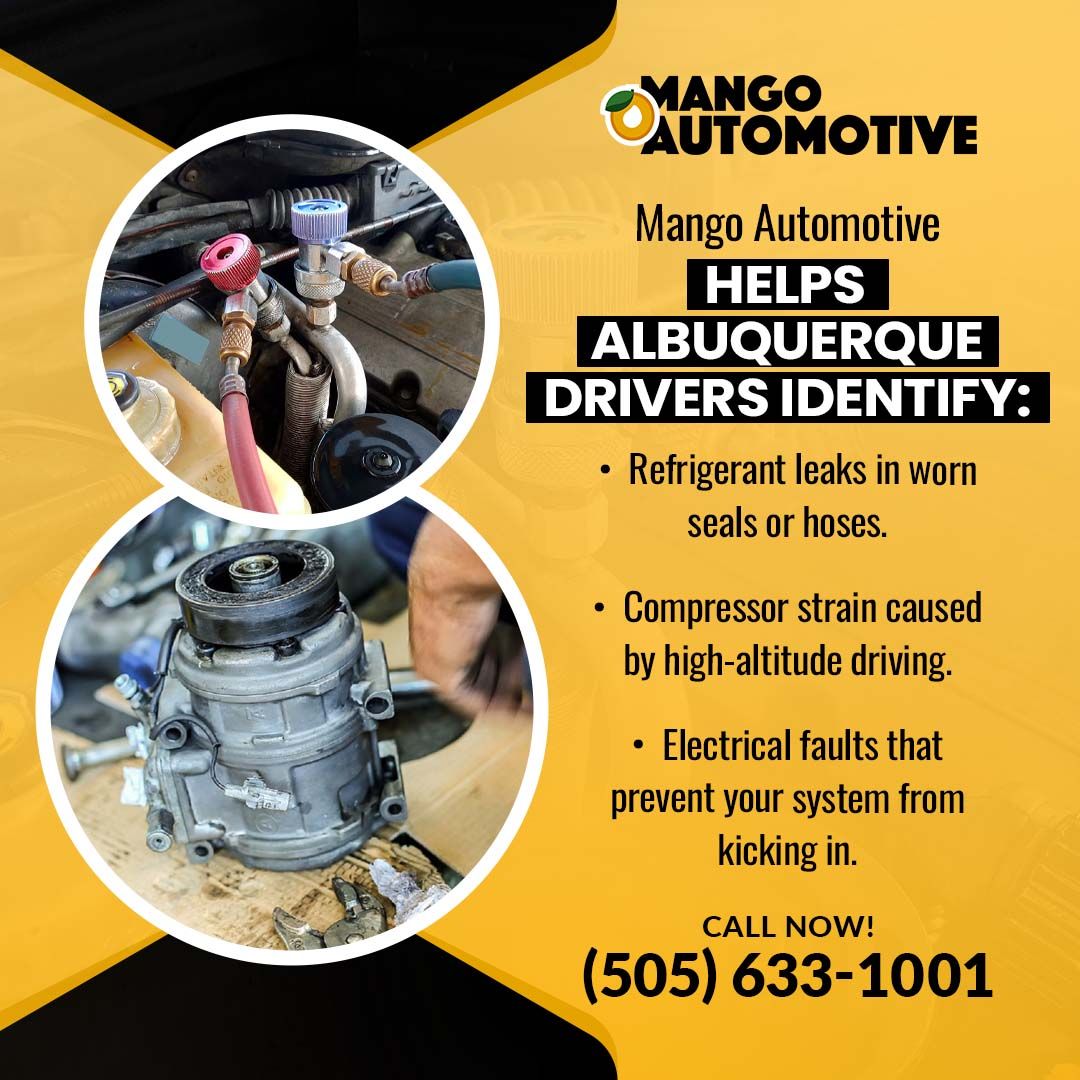
- Leak repair - sealing or replacing a cracked hose, damaged o-ring, or corroded fitting.
- Compressor replacement - rebuilding or replacing the component that pressurizes and circulates refrigerant
- Condenser or evaporator replacement - addressing cracks or damage in heat exchange components
- Electrical repair - replacing blown fuses, damaged relays, or faulty sensors
- Cabin air filter replacement - restoring airflow restricted by a clogged filter
- Evaporator drain cleaning - clearing blockages that cause moisture buildup and odor
When selecting a car repair shop near you, the most important question to ask is whether they perform a diagnostic inspection before recommending any service, because the right diagnosis determines whether a recharge or a repair is the solution.
The Correct Order of Service
Performing a recharge without diagnosing and repairing a leak first delivers only a short-term result. Understanding why this matters helps drivers make better decisions at the auto repair shop.
Why Recharging a Leaking System Fails
When a recharge is performed on a leaking system, the refrigerant escapes again, sometimes within days or weeks. The driver returns for another recharge, the underlying fault remains, and the total cost continues to rise.
The correct sequence is: diagnose first, repair the source of the failure, then recharge the system.
Every A/C service at Mango Automotive begins with a full diagnostic inspection before any refrigerant is added. We identify the actual cause of the problem rather than masking it with a temporary refrigerant top-off. Our goal is to send you home with a repaired system, not a patched one.
Reading Symptoms: When Each Service Applies
The symptoms a vehicle shows often point toward which service is needed. Being able to describe the symptoms accurately when you call a car repair shop near you helps the technician prioritize the right diagnostic steps from the start. The following patterns are among the most common.
Gradual Loss of Cooling
Cooling that weakens gradually over weeks or months typically indicates a slow refrigerant leak. The system may blow cold air in the morning, but struggle in the afternoon heat. No unusual sounds or smells are present, and the A/C cycles on and off normally. A diagnostic inspection confirms whether a leak is present. If one is found, the repair is completed first, followed by a recharge.
Sudden and Complete A/C Failure
An A/C that stops working abruptly typically points to compressor failure or an electrical fault. When pressure drops to a critically low level, the system shuts down automatically to protect the compressor. A recharge alone will not restore function when the underlying component has failed.
Clicking or Grinding Sounds at Startup
Unusual sounds when the A/C activates indicate compressor or clutch problems. These are mechanical issues that require component inspection and repair. Adding refrigerant will not resolve a mechanical noise.
Musty Odor From the Vents
A musty smell from the vents indicates moisture and bacterial growth inside the evaporator core, the component that cools air before it enters the cabin. When the drain line becomes blocked, condensation builds up and promotes mold growth. This requires evaporator cleaning and drain line clearing. Refrigerant levels are not involved in this symptom.
Warm Air Shortly After a Recharge
If warm air returns within days or weeks of a recharge, refrigerant has escaped through an unrepaired fault. This is one of the clearest signs that a repair should have preceded the recharge.
How Albuquerque's Climate Affects A/C Systems
Vehicle A/C systems behave differently depending on the climate. Albuquerque's environment places above-average stress on cooling components, and understanding those stresses helps drivers anticipate service needs.
Elevation, Heat, and Component Wear
Albuquerque sits at 5,312 feet above sea level, and summer temperatures regularly exceed 90 degrees. The A/C system runs at high capacity for more of the year than in moderate climates. This sustained load accelerates wear on the compressor, hoses, and seals.
Extreme heat also causes rubber components to expand and contract repeatedly. Over time, this leads to cracking and small leaks, a risk that increases steadily as a vehicle ages and accumulates mileage. These are the conditions Mango Automotive’s
Eagle Ranch auto repair
team works with daily. They shape how we approach diagnostics differently from a shop that does not account for Albuquerque's specific environment.
Dust, Filtration, and Electrical Stress
Dust storms and dry road conditions clog cabin air filters faster than in most other regions. Most manufacturers recommend replacement every 12,000 to 15,000 miles, but in New Mexico, that interval may need to be shorter depending on driving conditions.
Under-hood heat cycling also degrades wiring insulation and connector integrity over time. This contributes to intermittent A/C failures that have nothing to do with refrigerant levels and require electrical diagnostics rather than a recharge.
What a Diagnostic Inspection Covers
A proper A/C inspection establishes the actual cause of a problem before any work is recommended. These steps represent the diagnostic standard that any reputable auto repair shop in Albuquerque should follow before recommending a recharge or a repair.
System Pressure Testing
Technicians measure high-side and low-side pressure readings to assess refrigerant level and identify abnormal patterns that indicate component failure. Pressure readings reveal problems that visual inspection alone cannot detect.
Leak Detection
UV dye or an electronic refrigerant leak detector pinpoints the exact location of any leak. Since refrigerant is transparent and odorless, it escapes without any visible residue in many cases. Dye testing under UV light is one of the most reliable methods for finding small or slow leaks.
Compressor Clutch and Electrical Checks
The compressor clutch is checked to confirm it engages and disengages correctly. A clutch that fails to engage may point to low pressure, an electrical fault, or internal compressor damage.
Manufacturer-specific diagnostic software tests circuit performance, blower motor voltage, relay function, and sensor output. Electrical faults that prevent A/C operation do not appear during a visual inspection and require software-based testing to identify.
Cabin Air Filter and Evaporator Inspection
The cabin air filter is checked and replaced if restricted. The evaporator housing is inspected for moisture accumulation, and the drain line is verified to be clear. Both of these checks affect airflow and A/C output independent of refrigerant levels.
A Closer Look at Compressor Replacement
Compressor failure is one of the more involved A/C repairs. It is also one of the most commonly mishandled.
Risk of Skipping System Flush
The compressor pressurizes refrigerant and drives it through the entire A/C system. When it fails, the system stops cooling immediately. A failed compressor can also send metal debris through the A/C lines. If those contaminants reach a replacement unit without the system being properly flushed, the new compressor will fail prematurely, resulting in a second repair on top of the first.
Full Replacement Procedure
A correct compressor replacement includes the following steps:
- Evacuating all refrigerant from the system
- Removing the failed compressor
- Flushing the A/C lines to clear metal debris
- Replacing the receiver-drier or accumulator
- Installing the replacement compressor
- Recharging with the manufacturer-specified refrigerant type and quantity
- Testing system pressure and output temperature
Each step is necessary to protect the new part and the rest of the system. For high-mileage trucks, SUVs, and vehicles used in demanding conditions around Albuquerque, this procedure is what determines whether a compressor repair lasts or fails again, and it is the standard to expect from any
car repair shop near you.
A/C Service Done Right at Mango Automotive
Mango Automotive was built on the belief that drivers deserve more than a quick fix. From the moment a vehicle comes in, our focus is on accuracy, speed, and service that holds up long after the appointment is done.
Diligent Service on Every Visit
Every A/C service at Mango Automotive begins with a thorough diagnostic inspection before any work is recommended. Our technicians work on all makes and models, domestic, import, and high-mileage vehicles alike, and approach each vehicle with the same level of attention regardless of age or mileage.
Fast Turnaround Without Cutting Corners
We understand that your vehicle is central to your daily routine. Our Eagle Ranch auto repair team is structured to deliver accurate repairs quickly, without skipping the steps that protect your A/C system long term. Drivers throughout the Eagle Ranch and Westside areas count on us to get them back on the road without unnecessary delays.
Reliable Repairs Backed by Warranty
Reliability is not just a value we talk about. It is reflected in the warranty coverage behind every repair we complete. Our A/C repairs are backed by a 60-month/60,000-mile warranty that includes 36 months/36,000 miles of nationwide coverage plus an additional 24 months/24,000 miles at our locations.
Exclusions include brake pads, rotors, tires, control modules, and alignments. Parts warranty follows the manufacturer's policy. The warranty begins at the initial repair date and does not reset for warrantied parts or labor. No warranty applies to used parts.
Schedule Car A/C Repair in Albuquerque
Albuquerque summers place real demands on vehicle A/C systems. A refrigerant leak addressed early is far less costly than a compressor failure left unattended. The right diagnosis at the right time makes all the difference.
Mango Automotive is a trusted auto repair shop in Albuquerque serving the Eagle Ranch and Westside areas. Our team is trained to identify the specific failure points common in Albuquerque's desert climate, not just the most obvious one. We work on all makes and models, and the repairs are backed by industry-leading warranty coverage.
Call Mango Automotive at
(505) 633-1001
to schedule your A/C service today. Our Eagle Ranch auto repair team is available year-round to handle A/C diagnostics, leak repairs, compressor replacements, and everything in between. If your vehicle is not cooling the way it should, we are the team to call.