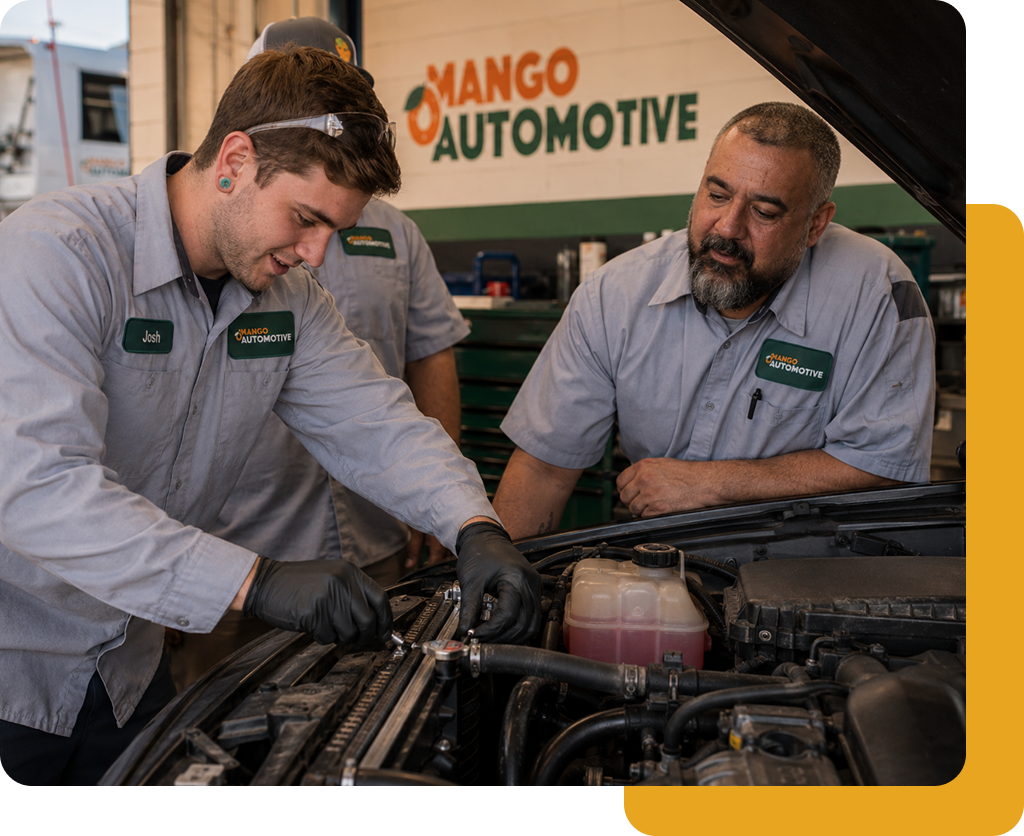
Cooling System Checks Before Arizona Road Trips: What to Expect from an Auto Repair Shop in Yuma, AZ
A cooling system check before taking a road trip in Arizona protects your engine from heat-related failure and reduces the risk of a breakdown in a remote desert location. Yuma's summer temperatures regularly exceed 110°F, and that sustained heat accelerates wear on coolant fluid, rubber hoses, and radiator components faster than in mild climates.
Getting your vehicle inspected at one of the trusted
auto repair shops in Yuma, AZ, before a desert road trip is a straightforward step that can prevent serious engine trouble on the road. At
Mango Automotive & Diesel, our team prepares cars, trucks, diesel vehicles, and RVs for Arizona's roads every day. The sections below walk through what the cooling system does, how the desert climate affects it, and the warning signs no driver should ignore before heading out.

Role of the Cooling System in Engine Health
The cooling system keeps engine temperatures within a safe operating range by circulating coolant through the engine block, absorbing heat, and releasing it through the radiator.
Coolant, also called antifreeze, is a mixture of water and chemical additives formulated to resist boiling within the engine's cooling circuit during high heat conditions. Without it, internal engine temperatures can reach damaging levels within minutes of operation.
The system relies on several components working together:
- Radiator: Receives hot coolant from the engine and dissipates heat through its fins using airflow.
- Water pump: Drives coolant circulation continuously while the engine runs. It is the mechanical core of the entire system.
- Thermostat: A valve that regulates coolant flow based on engine temperature. It stays closed when the engine is cold and opens once the normal operating temperature is reached.
- Radiator hoses: Flexible tubes that carry coolant between the engine, radiator, and heater core.
- Cooling fan: Draws air through the radiator at low speeds or when the vehicle is stationary, compensating for reduced natural airflow.
- Coolant reservoir: Holds overflow fluid and maintains system pressure at the correct level.
Each component depends on the others. A failing thermostat prevents the water pump from circulating coolant to the radiator. A cracked hose can drain the entire system within minutes of a failure. When one part fails, the rest follow, making a thorough inspection at a car repair shop far more reliable than a quick fluid top-off before any desert drive.
How Arizona's Desert Climate Affects Cooling System Components
Arizona's extreme heat forces the cooling system to work at full capacity for longer periods, accelerating wear on coolant fluid, rubber parts, and mechanical components alike.
According to the
Arizona Department of Transportation, temperatures in Arizona can reach or exceed 100°F every day during the summer months, with heat persisting well into the nighttime. For vehicles operating in and around Yuma, that sustained exposure creates several specific problems.
Coolant Breakdown
Fresh coolant is formulated to resist boiling and protect internal metal surfaces from corrosion. In extreme heat, the fluid breaks down faster than in moderate climates, losing its protective properties and heat-transfer capacity. Vehicles driven primarily in desert conditions may reach their coolant replacement interval sooner than the manufacturer's general guidance suggests.
Rubber Component Deterioration
Radiator hoses and gaskets are made from rubber compounds that dry out and become brittle when exposed to prolonged high temperatures. Low humidity in the Yuma area compounds this effect. A hose that appears intact during a casual inspection can still fail under system pressure at operating temperature, which is why hands-on testing matters more than a visual check alone.
Radiator Airflow Restriction
Arizona's dusty roads push fine particulates into radiator fins, restricting airflow and reducing the system's ability to cool circulating fluid. A partially blocked radiator forces the cooling fan to work harder, placing extra load on the electrical system and the battery over time.
Secondary Effects on the Cooling Fan
Extreme heat shortens battery life. A weakened battery can affect the performance of the electric cooling fan, which draws air through the radiator during stop-and-go driving. If the fan fails to activate at low speeds, the radiator loses airflow precisely when it is needed most.
The desert does not give vehicles much margin for error. Having your cooling system inspected at a
mechanic shop near you before a road trip is the most reliable way to stay ahead of these conditions.
What a Thorough Cooling System Inspection Covers
A proper pre-trip cooling system inspection tests each component under pressure and at operating conditions to identify problems that visual checks miss.
Coolant Level and Fluid Condition
A technician checks both the level in the reservoir and the condition of the fluid itself. Coolant that appears dark, rusty, or contaminated has lost its corrosion inhibitors and needs to be flushed and replaced. Fresh coolant should appear bright green, orange, pink, or blue, depending on the formulation, and it must match the vehicle manufacturer's specification. Mixing incompatible coolant types can create sludge that blocks narrow passages in the radiator and heater core.
Radiator Hose Integrity
Each hose is checked for visible cracks, soft spots, swelling near clamps, and firmness at connection points. A hose that feels noticeably soft when squeezed at operating temperature is approaching the end of its service life and can rupture under load. A hose that appears externally intact but has experienced internal electrochemical degradation may collapse at highway speed, cutting off coolant flow entirely. Both conditions require hands-on inspection from a trained technician at a qualified auto repair shop.
Pressure Testing
The cooling system is a closed, pressurized circuit. A pressure test involves attaching a hand pump to the system and holding it at the radiator cap's rated pressure for several minutes. Any drop indicates a leak. This step identifies leaks in locations that produce no visible staining, including internal head gasket seepage and pinhole radiator leaks that only appear under load.
Thermostat Verification
A thermostat that sticks closed prevents coolant from reaching the radiator, causing the engine to overheat rapidly. One that sticks open causes the engine to run below its operating temperature, reducing fuel efficiency and increasing wear on internal components. Neither failure mode is detectable from the driver's seat during routine local driving. Both are identified during a full inspection using temperature diagnostics.
Water Pump Assessment
Technicians listen for bearing noise from the water pump, check for coolant seeping from the pump housing weep hole (a sign of internal seal failure), and check shaft play when the pump is accessible. A failing water pump that goes undetected during local driving can fail completely on a highway segment, stopping coolant circulation instantly.
Cooling Fan Operation
The electric cooling fan is controlled by a temperature sensor. A technician confirms that the fan activates at the correct threshold and runs at full capacity. This check matters most for road trips that include city driving, congested stretches, or idling in traffic, where low vehicle speed limits natural airflow through the radiator.
Radiator Condition and Airflow
A hands-on check covers the radiator fins for bent sections, debris buildup, and corrosion. Bent fins reduce the surface area available for heat transfer. In Yuma, dust and insects commonly pack into fin channels, restricting airflow enough to affect cooling performance even at highway speeds.
Covering all of these points requires equipment, training, and time that goes beyond a self-check in a parking lot. Finding a mechanic shop near you that runs through each item systematically is the most reliable way to know your vehicle is ready before the trip begins.
Warning Signs That Point to Cooling System Problems
If any of the following conditions are present, schedule a visit to a car repair shop before your departure date. Drivers should watch for:
- The temperature gauge reading above the midpoint during normal driving.
- Coolant warning light or check engine light activation.
- A sweet, faintly syrup-like smell from the engine bay, which is the characteristic odor of leaking ethylene glycol antifreeze.
- Puddles of colored fluid (green, yellow, orange, or pink) beneath the parked vehicle.
- Steam or vapor rising from under the hood after driving.
- A heater that produces less heat than expected at full output, which can indicate low coolant or a partially blocked heater core.
Two scenarios where these signs are easy to overlook: a small coolant leak that only appears after the vehicle has been parked overnight, and a thermostat that functions adequately during short local drives but fails under sustained highway load. Visiting a car repair shop before your trip addresses both issues before they become roadside problems.
Cooling System Service for Diesel Trucks and RVs
Diesel engines and recreational vehicles (RVs) place greater thermal demands on the cooling system and require inspection protocols specific to their design.
Diesel engines run at higher compression ratios than gasoline engines and generate more heat per combustion cycle. Cooling systems on diesel trucks are larger and more complex, with additional components like an engine oil cooler and transmission fluid cooler integrated into the circuit. A failing oil cooler can push contaminated fluid into the coolant, causing damage across multiple systems at once.
RVs present similar demands. The added vehicle weight, roof-mounted air conditioning systems, and generator loads increase overall thermal output during travel. Cooling systems on motorhomes and travel vehicles towing additional loads need inspection of both the primary radiator circuit and the transmission cooler before any extended desert trip.
At Mango Automotive & Diesel, our team services cars, trucks, diesel vehicles, and RVs from our Yuma location. Each vehicle type receives a service protocol appropriate to its cooling system design and workload. If you are looking for a mechanic shop near you that handles both diesel and RV cooling systems, we are equipped to help.
Pre-Trip Cooling System Service at Mango Automotive & Diesel
Mango Automotive & Diesel has been serving Yuma since 2021 as one of the full-service auto repair shops in Yuma, AZ, committed to delivering quality repairs in an environment that respects your time and your schedule. Our location handles everything from routine maintenance to complex repairs for cars, trucks, diesel vehicles, and RVs. For drivers preparing for a road trip, we offer:
- Full-service cooling system inspection and repair. Our technicians perform pressure tests, coolant flushes, hose replacements, thermostat checks, and radiator cleaning for all vehicle makes and models. All parts meet manufacturer specifications.
- A waiting environment built around your schedule. Our shop provides high-speed Wi-Fi, comfortable seating, and complimentary refreshments while your vehicle is being serviced. A complimentary shuttle service is available within 3 miles for drivers who need to keep moving.
- Key drop for early morning and after-hours availability. Our secure key drop allows you to leave your vehicle before shop hours. Your car is stored in a fenced, secure lot until our team begins work.
- 6-month SAC financing. Financing is available to help manage auto repair costs without delaying necessary service before a trip.
- Warranty coverage on completed repairs. Repairs at Mango Automotive & Diesel are backed by a 60-month/60,000-mile warranty, which includes 36 months/36,000 miles of nationwide coverage and an additional 24 months/24,000 miles of local coverage at our Yuma location. For heavy-duty vehicles, warranty terms are 24 months/24,000 miles locally. Exclusions apply, so contact our team for full details on coverage terms.

Schedule Your Inspection Before the Trip
A cooling system check is a direct investment in your engine, your passengers, and your travel plans. Routine auto repair costs far less than the damage that follows an overheated engine on a remote highway. Drivers throughout Yuma and nearby areas trust Mango Automotive & Diesel for the kind of thorough, honest service that keeps vehicles ready for whatever the road ahead demands.
Call Mango Automotive & Diesel at
(928) 344-3771 to schedule your cooling system inspection. We are one of the auto repair shops in Yuma, AZ, serving cars, trucks, diesel vehicles, and RVs with full-service care before and after every trip.