Is Running Your AC All Day Actually Hurting Your Engine?
Mango Automotive (The Valley) | Auto Maintenance and Oil Change, North Valley Albuquerque
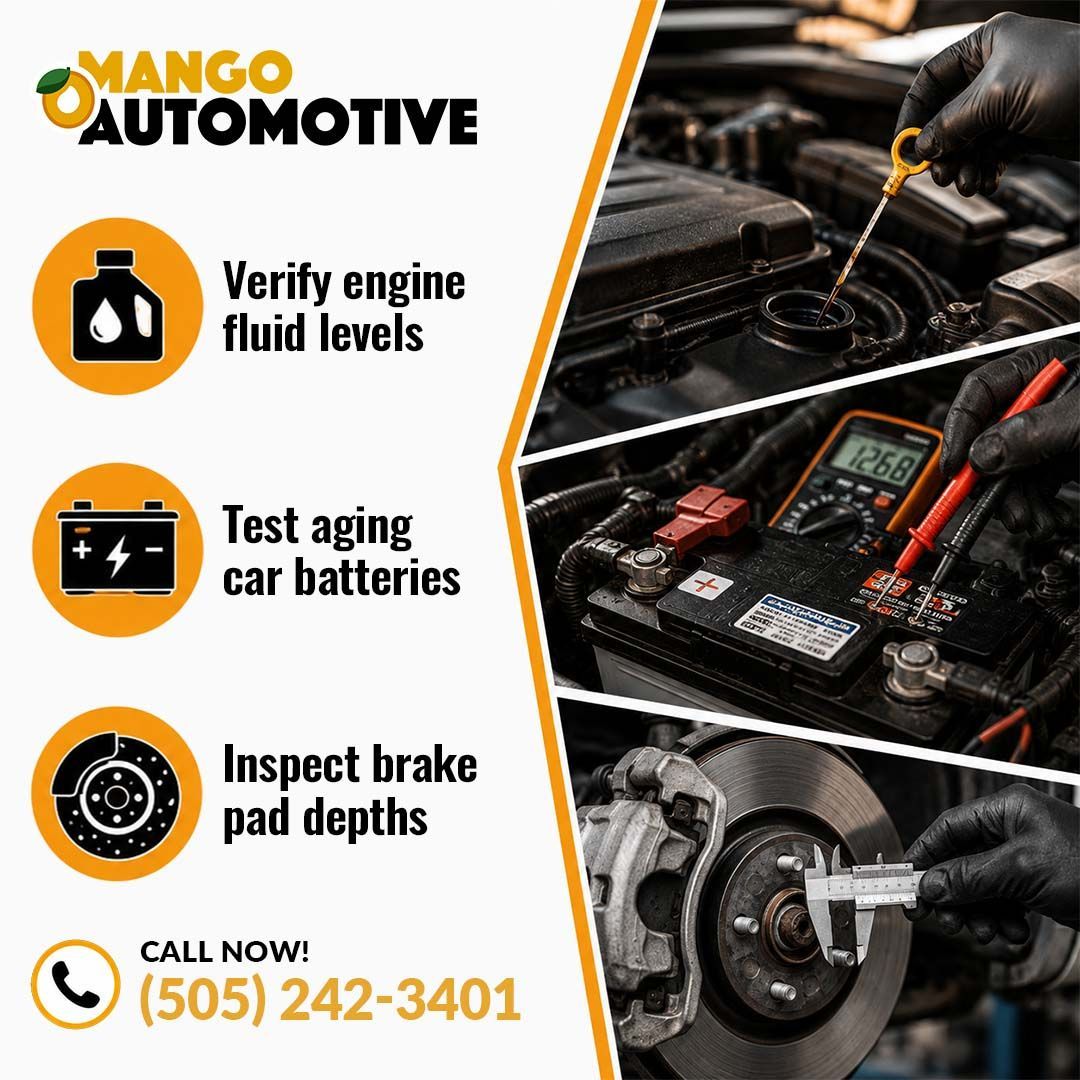
Yes – but the risk is manageable. Running AC in extreme heat adds compressor load to your engine, accelerates oil breakdown, and raises cooling system demand all at once. Three maintenance items address the bulk of that risk: oil change with the right viscosity, coolant condition, and a radiator cap pressure test.
Key Takeaways
- AC compressor load draws 4–8 horsepower from your engine, while ambient heat is already at its peak.
- Oil viscosity choice matters most for high-mileage and older vehicles running through Albuquerque summers.
- Coolant condition is the most commonly skipped item—and the one most likely to turn into a repair bill by fall.
What Does Your AC Actually Do to Your Engine in 100°F+ Heat?
An AC compressor pulls mechanical power from your engine's crankshaft—typically 4 to 8 horsepower, depending on system size and cabin heat load. At temperatures above 100°F, the compressor cycles more often and sustains higher refrigerant pressure, pushing that draw toward the top of its range.
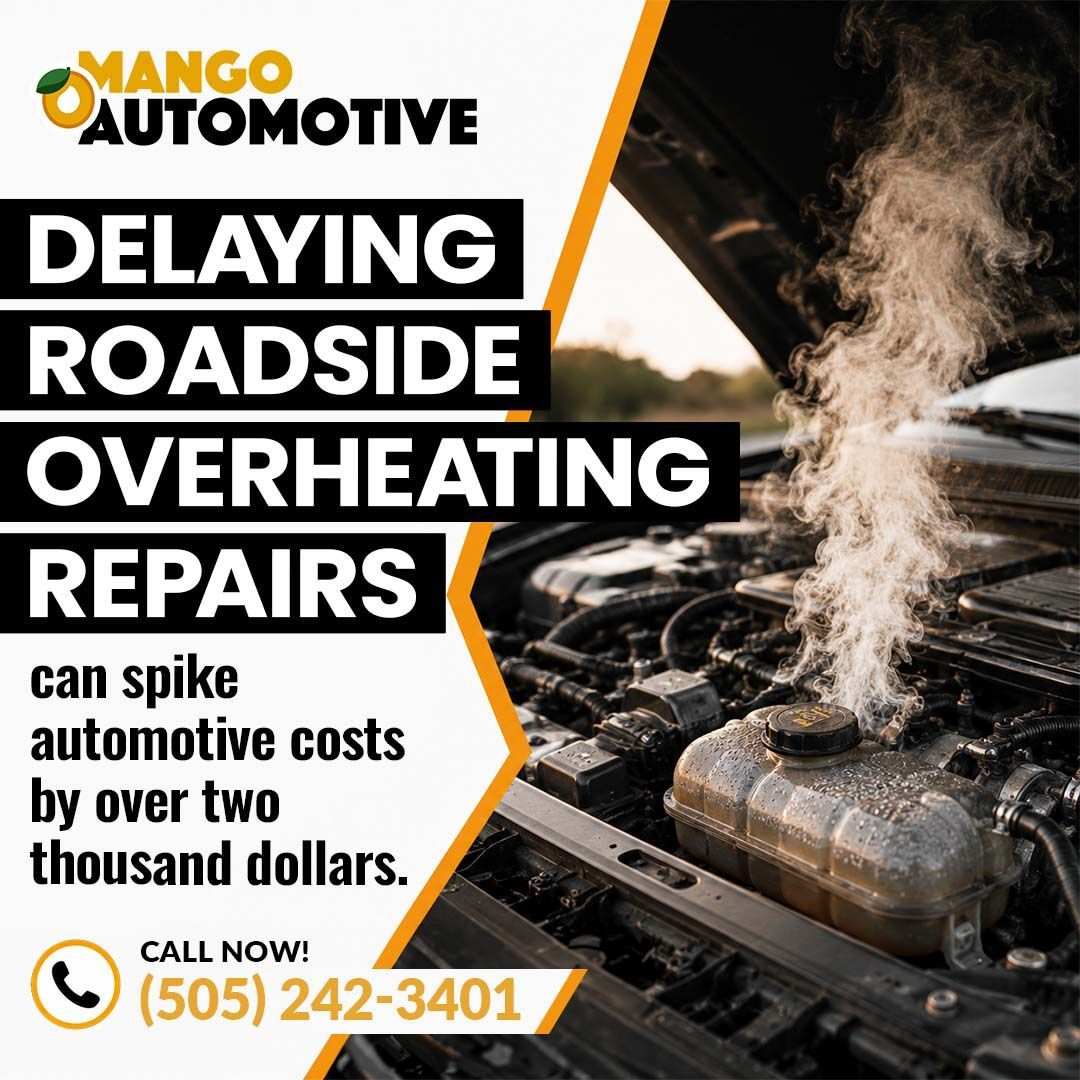
That added load raises engine operating temperature at the exact moment the engine is already working harder to shed heat into air that is itself already hot.
Oil Takes the Hit First
Engine oil loses protective viscosity as heat builds. According to AAA, heat-driven thermal breakdown causes oil to thicken over time, lose consistent viscosity, and eventually stop protecting engine components—a process that worsens the longer an oil change is deferred.
Older and high-mileage vehicles in the North Valley are more exposed. Worn rings, aging gaskets, and partially blocked oil passages give the same summer conditions less margin to work with than a newer engine has.
Which Maintenance Items Protect Your Engine Most in Summer?
| Maintenance Item | Desert Heat Recommendation |
|---|---|
| Oil and filter | At the lower end of the manufacturer's service interval; consider a viscosity upgrade for older engines. |
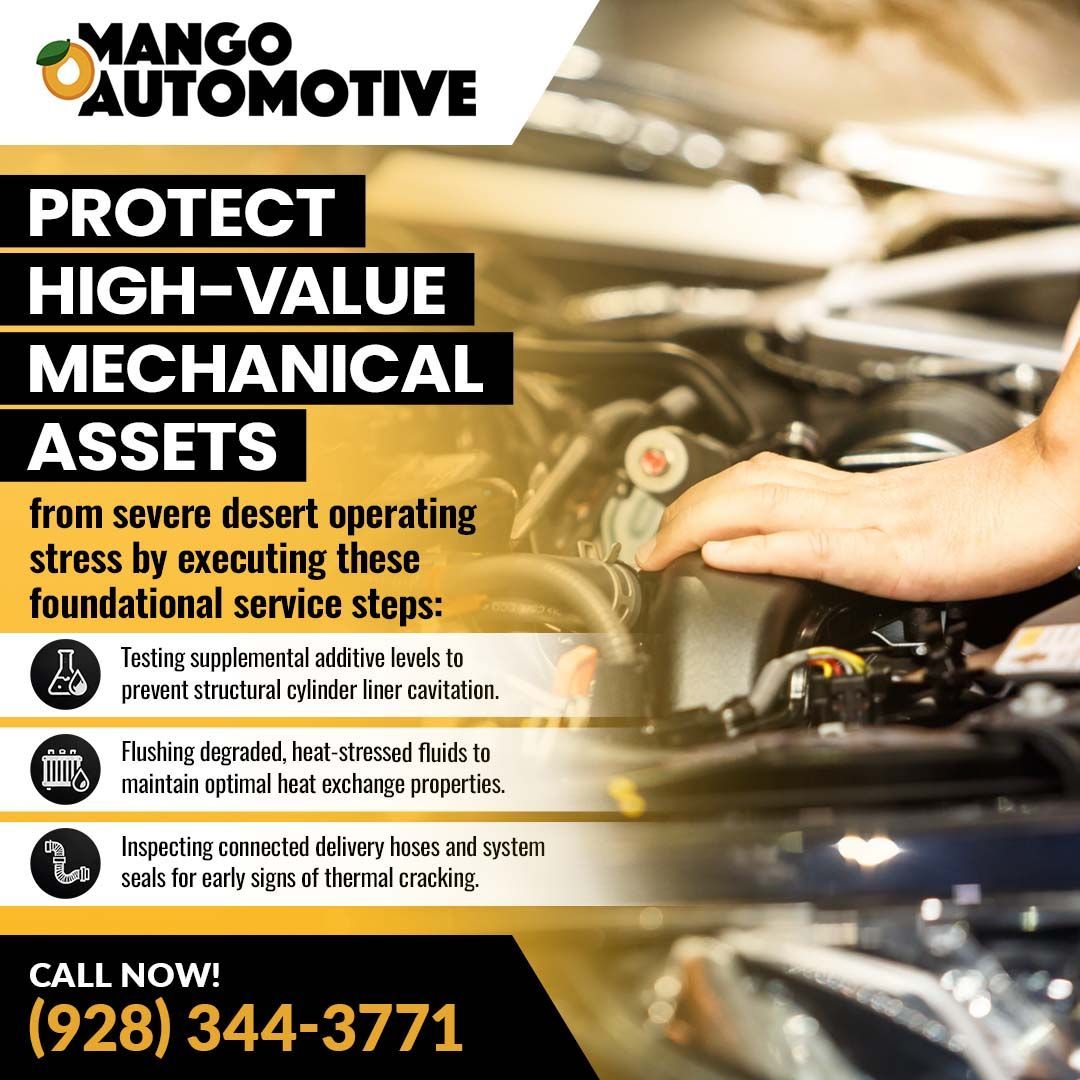
| Coolant flush | Test coolant concentration annually; flush if inhibitors are depleted or the fluid is discolored. |
| Radiator cap | Pressure-test during every cooling system service. It is commonly skipped but inexpensive to check. |
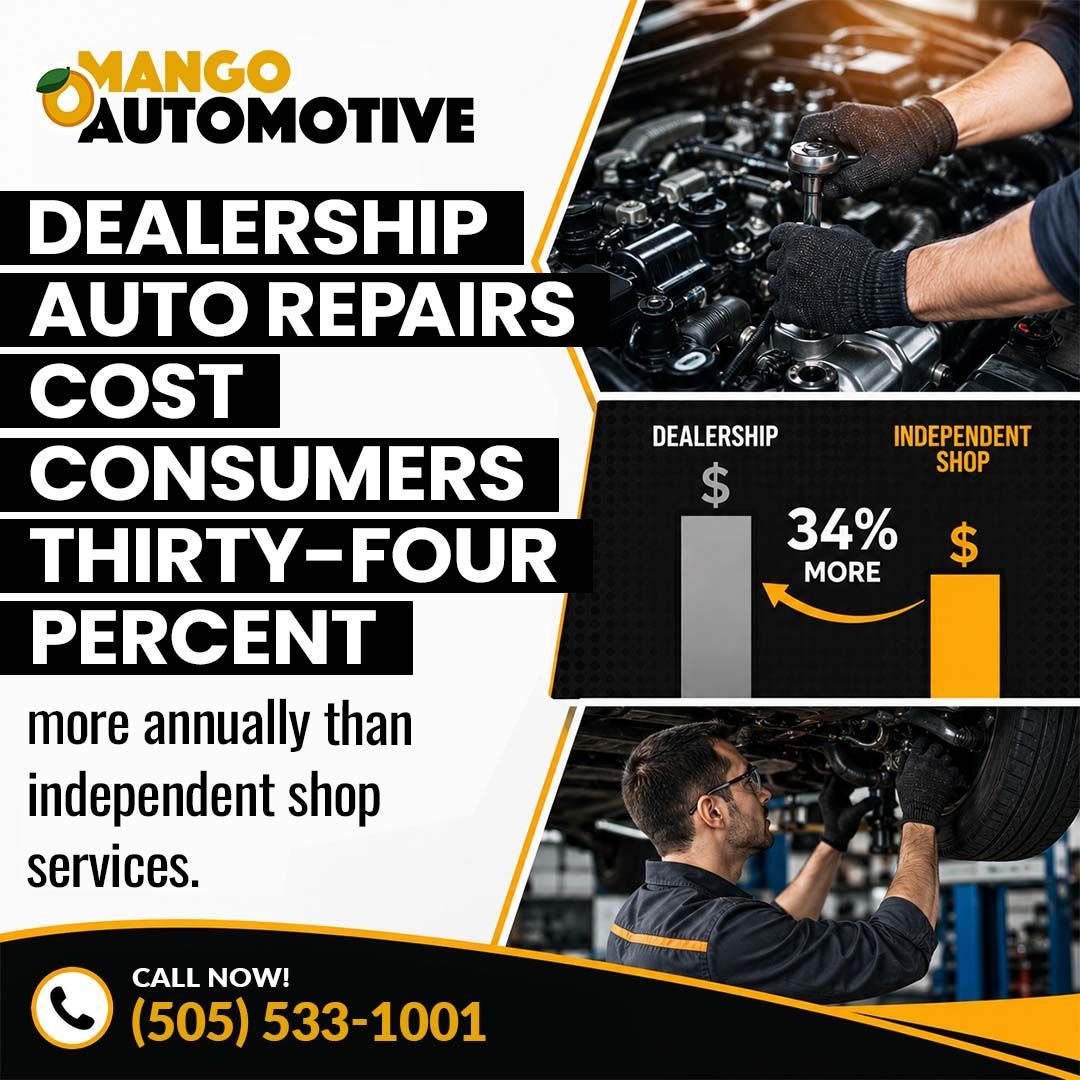
According to Consumer Reports, skipping routine maintenance drives repair costs well above what scheduled service would cost, with compounding failures from heat stress among the most common causes of larger repair bills by late summer.
Diesel Trucks Carry One Extra Variable
Diesel truck owners in the North Valley should be aware that diesel engines running under a tow load in summer heat add EGR (exhaust gas recirculation) stress to the cooling circuit. A degrading EGR cooler may go unnoticed in mild conditions but can cause coolant temperatures to spike under sustained summer demand. Scheduling an EGR check before July is well worth the hour.
How Do You Know If Your Cooling System Is Keeping Up?
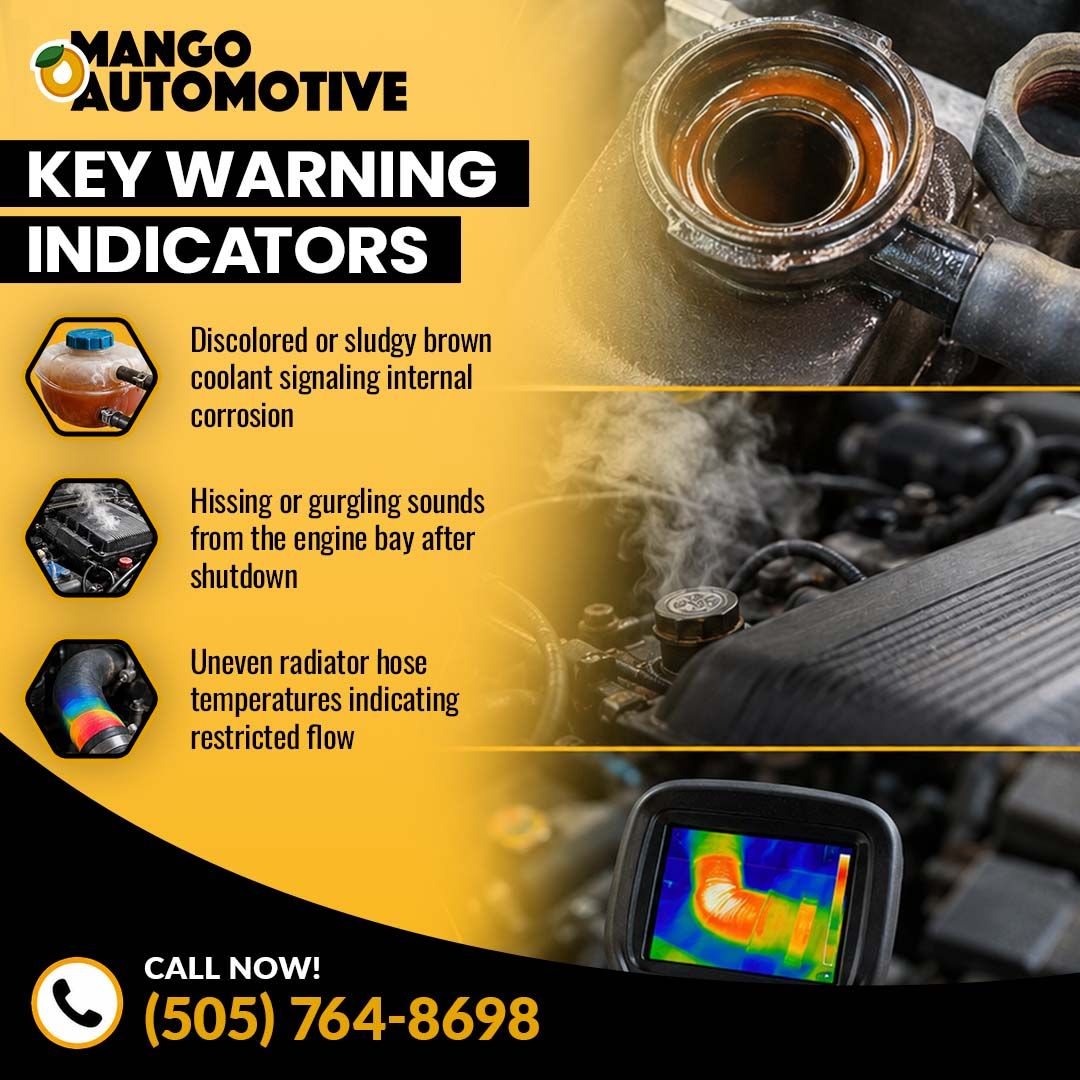
Watch for these warning signs:
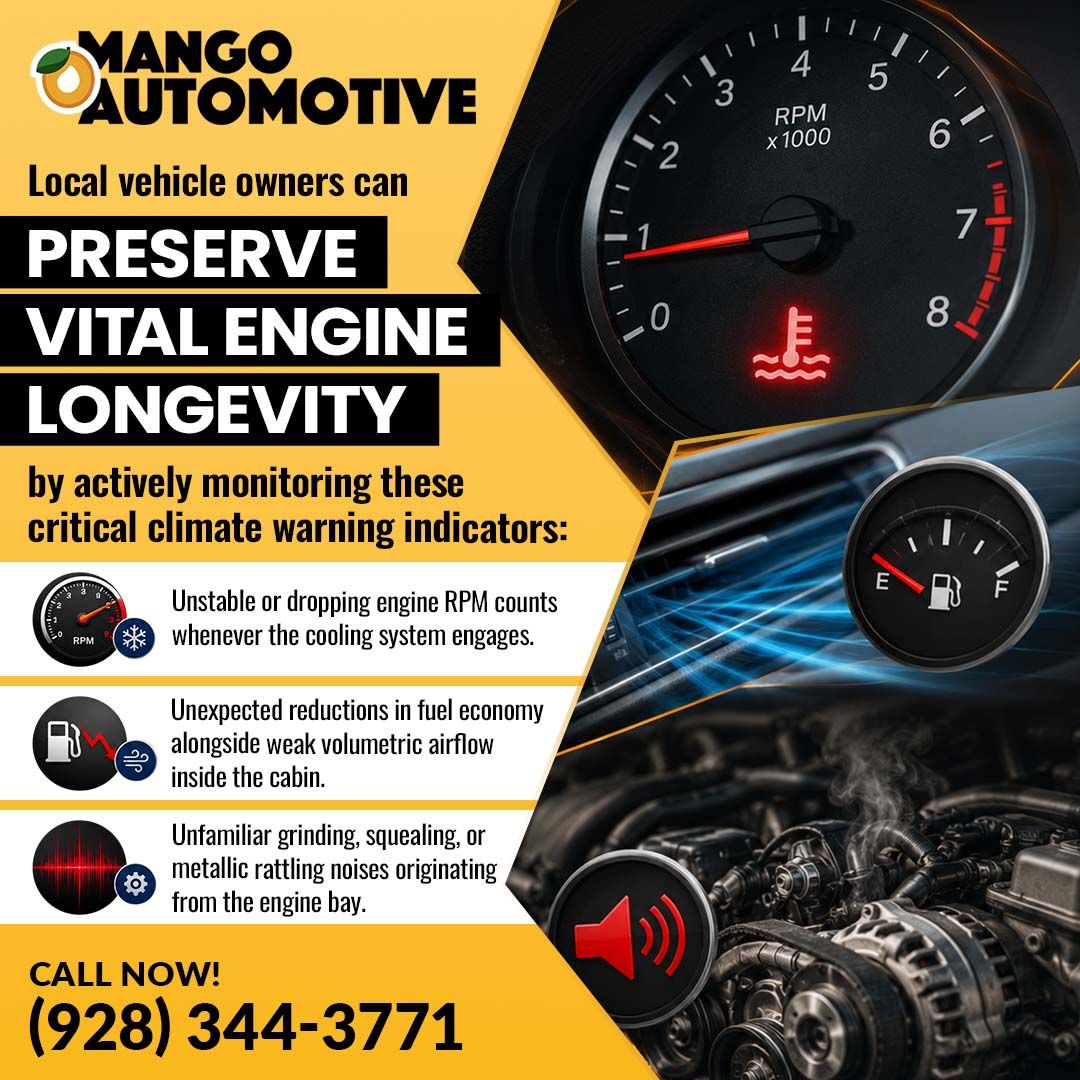
- The temperature gauge climbs above its normal position during city driving or while using the AC.
- A sweet coolant smell from the engine bay or cabin vents may indicate a coolant leak.
- Weak heater performance in winter often points to reduced coolant flow throughout the year.
If your AC service is already scheduled, ask about a cooling system check during the same visit. Coolant concentration, hose condition, radiator cap pressure, and thermostat function can all be evaluated while your vehicle is in the bay, eliminating the need for a separate appointment.
Schedule Before Summer Peaks
Call Mango Automotive (The Valley) at (505) 242-3401 or visit our website to book your summer maintenance visit at 301 Griegos Rd NW, North Valley Albuquerque.
Qualifying repairs are backed by our 60-month/60,000-mile warranty (36 months/36,000 miles nationwide + 24 months/24,000 miles at Mango Automotive). Heavy-duty vehicles receive a 24-month/24,000-mile local warranty. Exclusions apply, including engines, transmissions, brake pads, rotors, tires, control modules, and alignments. Parts warranties follow the manufacturer's policy. Coverage begins on the initial repair date and does not reset for warrantied parts or labor. Used parts are not covered. The warranty extension applies to qualifying repairs completed on or after September 2024.