Strange Noises That Indicate Performance Problems: Expert Guide from Auto Shop in Albuquerque
Your vehicle started making an unusual grinding sound, and you're wondering if it requires immediate attention. Strange vehicle noises rarely resolve themselves and often signal underlying performance problems that need professional evaluation. Understanding what different noises indicate helps you decide when to schedule
automotive repair and avoid costly damage. At
Mango Automotive (Downtown) in Albuquerque, we diagnose and repair the issues behind these warning sounds, keeping your vehicle operating smoothly and safely.
Interpreting Vehicle Sound Patterns
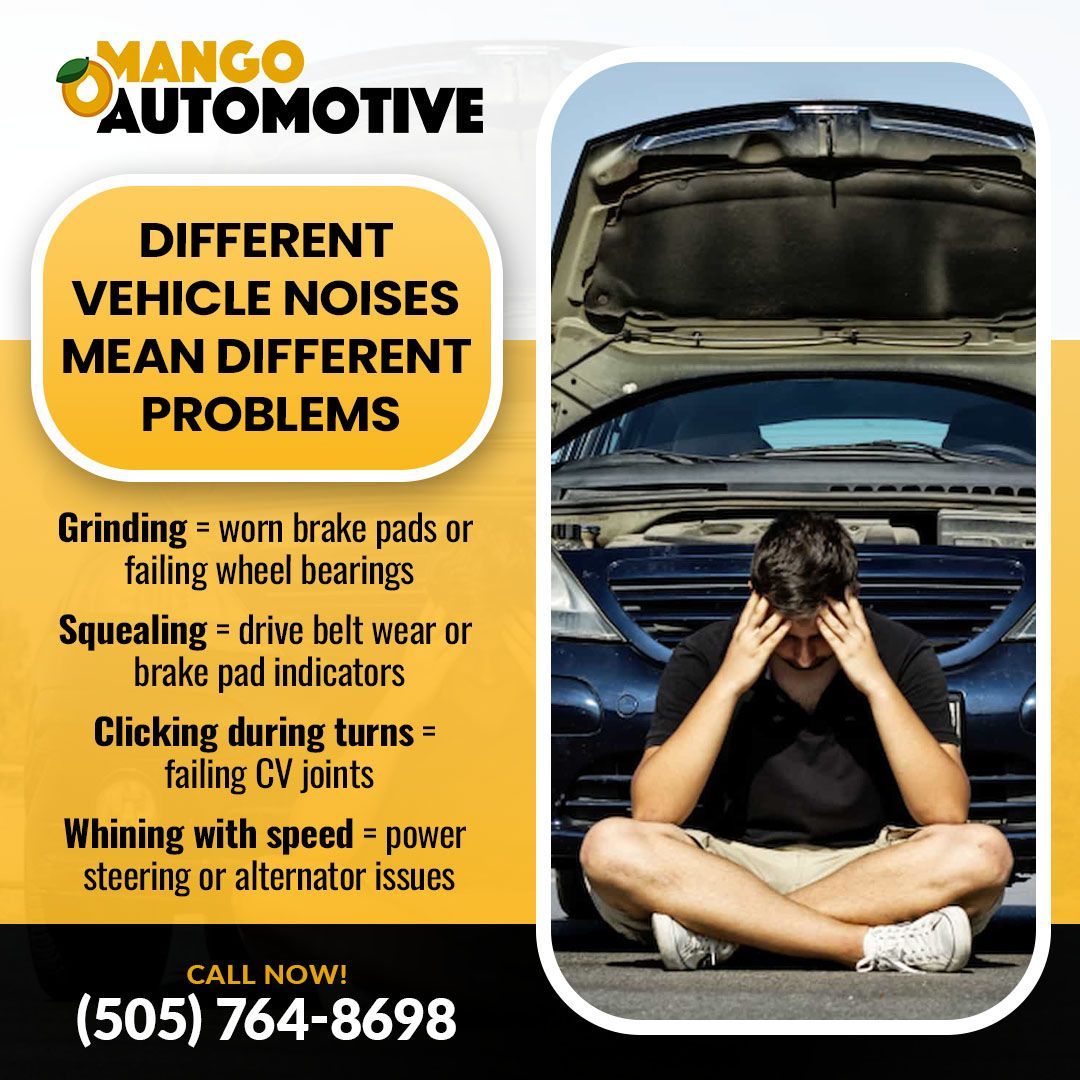
Vehicle noises communicate specific problems within your car's systems, with each sound pointing to particular components that require inspection. Grinding typically indicates metal-on-metal contact in braking or transmission systems. Squealing often originates from worn belts or brake pad wear indicators. Knocking sounds usually develop in engine components experiencing stress or deterioration.
The location, timing, and characteristics of each noise provide valuable diagnostic information. A sound occurring only during braking differs substantially from one that happens during acceleration. Similarly, noises originating under the hood require a different evaluation than sounds coming from the wheel areas.
Your vehicle's systems function interdependently, and problems in one area often affect others. A squealing belt may appear minor initially, but it could lead to alternator failure that leaves you stranded. Early diagnosis at a trusted
auto shop in Albuquerque, like Mango Automotive, prevents these cascading failures and protects your investment.
Recognizing Urgent Warning Signals
Grinding noises during braking, loud knocking from the engine, or any noise accompanied by dashboard warning lights requires immediate professional attention. Not every sound constitutes an emergency, but certain combinations of symptoms indicate serious mechanical issues.
Pay attention to when noises occur and whether they're intensifying. A sound that appears suddenly often indicates recent component failure. Noises that gradually increase in volume typically demonstrate progressive wear. Metal-on-metal contact, unusual odors, or changes in vehicle handling, alongside noise signals, indicate serious problems requiring prompt evaluation.
Some temporary sounds don't indicate damage. Light squeaking on cold mornings may result from moisture on brake rotors and typically disappears after initial driving. Brief clicking during engine startup could represent normal thermal expansion. However, persistent noises continuing after the vehicle reaches operating temperature need professional diagnosis.
Temperature and weather conditions affect how components sound. Cold weather can cause temporary belt squealing, while heat creates expansion that may generate transient sounds. Despite these normal variations, continued unusual noises require evaluation at an automotive repair facility.
Grinding Sounds
Grinding sounds represent serious performance issues where protective materials have worn completely away, allowing metal components to contact each other directly. This harsh, scraping noise causes rapid damage and diminished performance across multiple vehicle systems.
Brake System Grinding
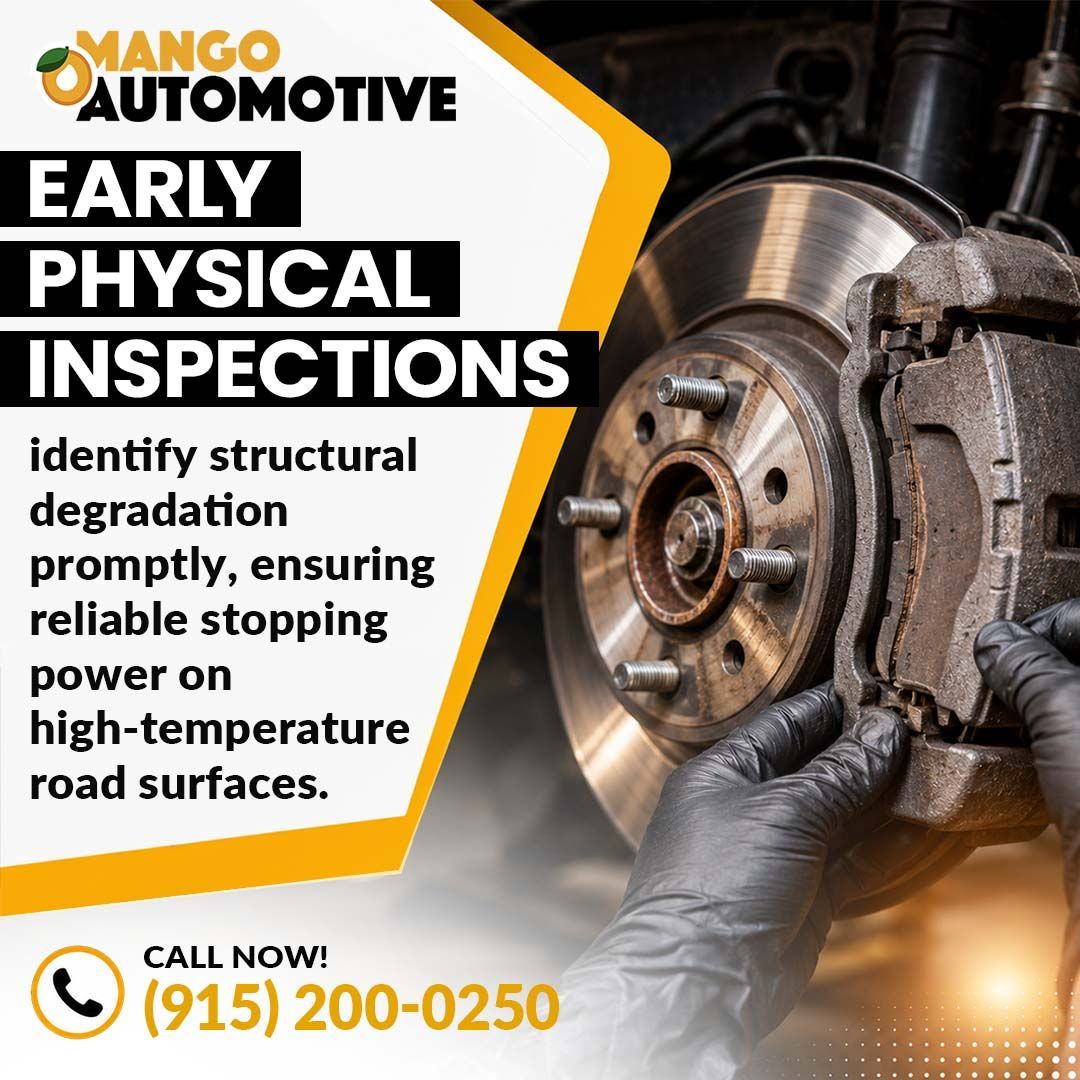
Brake grinding occurs when brake pads wear through their friction material completely. The metal backing plate then scrapes directly against the rotor, creating a distinctive sound and severely compromising stopping capability. This metal-on-metal contact damages rotors, requiring more extensive repairs than timely pad replacement would have necessitated.
Transmission Component Grinding
Transmission grinding often manifests during gear changes, indicating worn synchronizers or clutch complications. In automatic transmissions, grinding may suggest insufficient fluid levels or internal component failure. These issues progressively deteriorate and can result in complete transmission failure without intervention.
Wheel Bearing Deterioration
Wheel bearing grinding creates a constant noise that intensifies with vehicle speed. Failed wheel bearings compromise vehicle stability and can cause wheels to seize or separate in extreme circumstances. This safety concern requires immediate attention from qualified technicians.
Our auto repairs in Downtown Albuquerque include a comprehensive inspection of all related components to verify which parts need replacement and whether the grinding caused secondary damage to connected systems.
Squealing Noises
High-pitched squealing sounds typically originate from drive belts or brake wear indicators, producing similar sounds but occurring under different circumstances. Each requires distinct diagnostic approaches and repair solutions.
Drive Belt Squealing
Engine belt squealing typically occurs during startup, acceleration, or when operating accessories such as air conditioning. Serpentine belts wear over time, developing cracks and losing grip on their pulleys. When belts slip, they generate sharp squealing noises that become more pronounced under load.
Belt problems affect multiple vehicle systems simultaneously. The serpentine belt typically drives the alternator, power steering pump, air conditioning compressor, and water pump. A failed belt can cause battery discharge, loss of power steering assistance, inoperative air conditioning, and engine overheating within a short timeframe.
Brake Wear Indicator Sounds
Brake squealing functions as an intentional early warning system. Brake pads include small metal tabs that contact the rotor when pads wear thin, creating a squealing sound designed to alert drivers that replacement will be needed soon. The squeal typically occurs during light braking applications.
Some brake pad materials naturally produce slight squealing due to their composition. However, consistent squealing combined with reduced braking performance indicates worn pads requiring immediate replacement. Brake service includes a thorough inspection of pads, rotors, calipers, and brake fluid to address all components affecting braking performance.
Diagnosing Engine Knocking
Engine knocking produces repetitive tapping or pinging sounds that become more noticeable during acceleration or under load. This condition indicates stress on internal engine components that can lead to catastrophic failure if left unaddressed.
Pre-Ignition Knock
Pre-ignition knock occurs when fuel ignites before the spark plug fires, creating pressure waves that collide with the piston and produce a pinging sound. Low-octane fuel, carbon accumulation, or incorrect ignition timing can cause this condition. Using the manufacturer's recommended fuel grade typically prevents pre-ignition issues.
Rod Bearing Failure
Rod bearing knock creates a deeper, more concerning sound that worsens with engine speed. This indicates worn bearings, allowing excessive movement in connecting rods. Rod bearing failure leads to catastrophic engine damage and requires immediate shutdown to prevent complete engine destruction.
Valve Train Complications
Valve train noise produces ticking or tapping sounds that may indicate worn valve lifters, insufficient oil pressure, or incorrect valve clearances. While less immediately dangerous than rod knock, valve train problems progressively worsen and reduce engine performance. Proper oil maintenance using the correct viscosity helps prevent these issues.
Carbon accumulation in combustion chambers can cause knocking by creating hot spots that ignite fuel prematurely. Regular maintenance and quality fuel reduce carbon deposits. If knocking persists despite using proper fuel, professional diagnostic equipment identifies whether auto repairs are necessary.
Analyzing Clicking Sounds
Clicking noises often indicate CV joint wear or insufficient engine oil pressure, with each producing distinct patterns. These components require different diagnostic approaches based on when and where the clicking manifests.
CV Joint Deterioration
CV joints transfer power from the transmission to the wheels while allowing the wheels to move vertically with suspension travel. Worn CV joints produce clicking or popping sounds, particularly during turns. The clicking typically increases in frequency with vehicle speed and becomes more pronounced during sharp directional changes.
Failed CV joints affect vehicle handling and can eventually separate, causing loss of power to a wheel. The protective boots covering CV joints crack with age, allowing grease to escape and contaminants to enter. Regular inspection of the CV boot condition prevents joint failure.
Engine Oil Pressure Issues
Engine ticking sounds may indicate insufficient oil pressure or worn valve components. A persistent tick continuing after the engine reaches operating temperature often signifies a low oil level or degraded oil no longer providing adequate lubrication. Checking the oil level and condition should be the initial step when hearing engine ticking.
Lifter tick results from worn hydraulic valve lifters failing to maintain proper valve clearance. This creates a distinctive tapping sound that may diminish as the engine warms and oil pressure builds. While not immediately catastrophic, lifter problems reduce engine efficiency and indicate the need for service.
Addressing Hissing Sounds
Hissing sounds typically indicate fluid leaks or air escaping from pressurized systems, with continuous hissing during operation suggesting problems requiring attention. Brief hissing after shutting off a hot engine from coolant expansion represents normal behavior.
Vacuum System Leaks
Vacuum leaks create hissing or whistling sounds and compromise engine performance. The engine management system depends on precise airflow measurements, and vacuum leaks disrupt this balance. Symptoms include rough idle, reduced power, and increased fuel consumption. Vacuum leaks commonly occur at intake gaskets, hoses, or the brake booster.
Coolant System Leaks
Coolant leaks produce hissing when hot coolant contacts hot engine surfaces, often accompanied by visible steam and a sweet odor. Coolant leaks can originate from radiator hoses, water pump seals, or head gaskets. Continued operation with coolant leaks results in engine overheating and severe damage.
Exhaust System Breaches
Exhaust leaks create hissing or puttering sounds, particularly during acceleration. Exhaust gases escaping before the muffler produce characteristic noises and reduce engine efficiency. Exhaust leaks also permit dangerous carbon monoxide to enter the cabin, creating a health hazard that requires immediate correction.
Evaluating Rattling Noises
Rattling noises originate from loose components or parts that have separated from their mounts, varying from light rattling to heavy rumbling depending on the source and severity. These sounds indicate components no longer secured in their proper positions.
Exhaust System Components
Exhaust system rattling indicates loose heat shields, damaged hangers, or failing catalytic converters. Heat shields protect vehicle components from exhaust heat, but can corrode and vibrate against exhaust pipes. Broken exhaust hangers allow pipes to move excessively, creating rattling or dragging sounds.
Catalytic converter failure produces rattling from broken internal components. Failed catalytic converters also cause reduced engine performance, increased emissions, and failed emissions testing. The converter's internal substrate deteriorates over time, particularly if the engine has experienced rich running conditions or misfires.
Suspension System Wear
Suspension rattling occurs when components such as struts, control arms, or sway bar links wear out. These sounds typically manifest when driving over irregular road surfaces. Worn suspension components affect handling characteristics, tire wear patterns, and ride quality. Loose or damaged suspension parts compromise vehicle safety and require prompt replacement.
Identifying Whining Sounds
Whining noises typically originate from rotating components or hydraulic systems under pressure, often increasing in pitch or volume with vehicle speed. These sounds help pinpoint their source based on how they change with operating conditions.
Power Steering System
Power steering whining can indicate insufficient fluid levels or a failing pump. The hydraulic system operates under high pressure, and any restriction or air in the system creates a distinctive whine. This sound often intensifies when turning the steering wheel to full lock in either direction.
Wheel Bearing Failure
The wheel bearing humming creates a constant sound that intensifies with vehicle speed. Unlike tire noise, bearing hum remains consistent regardless of road surface. Compromised wheel bearings affect vehicle stability and potentially cause wheel separation in severe cases. The sound typically grows louder during turns, as this loads the bearing differently.
Alternator whining indicates bearing wear within the charging system. A failing alternator eventually ceases charging the battery, resulting in a vehicle breakdown. Dashboard warning lights often accompany alternator problems, providing additional diagnostic confirmation.
Documenting Symptoms for Professional Evaluation
Providing detailed information about vehicle noises helps technicians diagnose problems more efficiently, reducing diagnostic time and repair costs. Systematic documentation of symptoms leads to more accurate and timely repairs.
Note when the noise occurs: during startup, while driving, during braking, or during turns. Document whether the sound manifests at specific speeds or under particular conditions. Record the apparent location of the sound. Identify whether it comes from the front or rear, left or right side, under the hood, or underneath the vehicle.
Describe the noise as precisely as possible. Compare it to familiar sounds such as grinding metal, squealing brakes, or clicking mechanisms. Note whether the noise is constant or intermittent, and if it's intensifying over time. Mention any accompanying symptoms such as vibrations, warning lights, or performance changes.
Video recording captures sounds that may be difficult to reproduce during inspection. Many diagnostic issues prove intermittent, occurring only under specific conditions. A recording helps auto repair technicians understand what you're experiencing, even if the problem doesn't manifest during their evaluation.
Temperature and weather conditions sometimes influence noise. Note if sounds appear only when cold, only when hot, or in specific weather conditions. This information narrows diagnostic possibilities and expedites repair.
Professional Diagnosis at Mango Automotive
Strange vehicle noises require professional evaluation to identify causes and prevent progressive damage that increases repair costs. At Mango Automotive, our experienced technicians systematically diagnose noise sources using specialized equipment and proven diagnostic procedures for auto repairs in Downtown Albuquerque.
We begin with a thorough discussion of your concerns and when noises occur. Our team then performs test drives under various conditions to experience the sounds directly. We utilize diagnostic stethoscopes to isolate noise sources and identify which components produce the sounds.
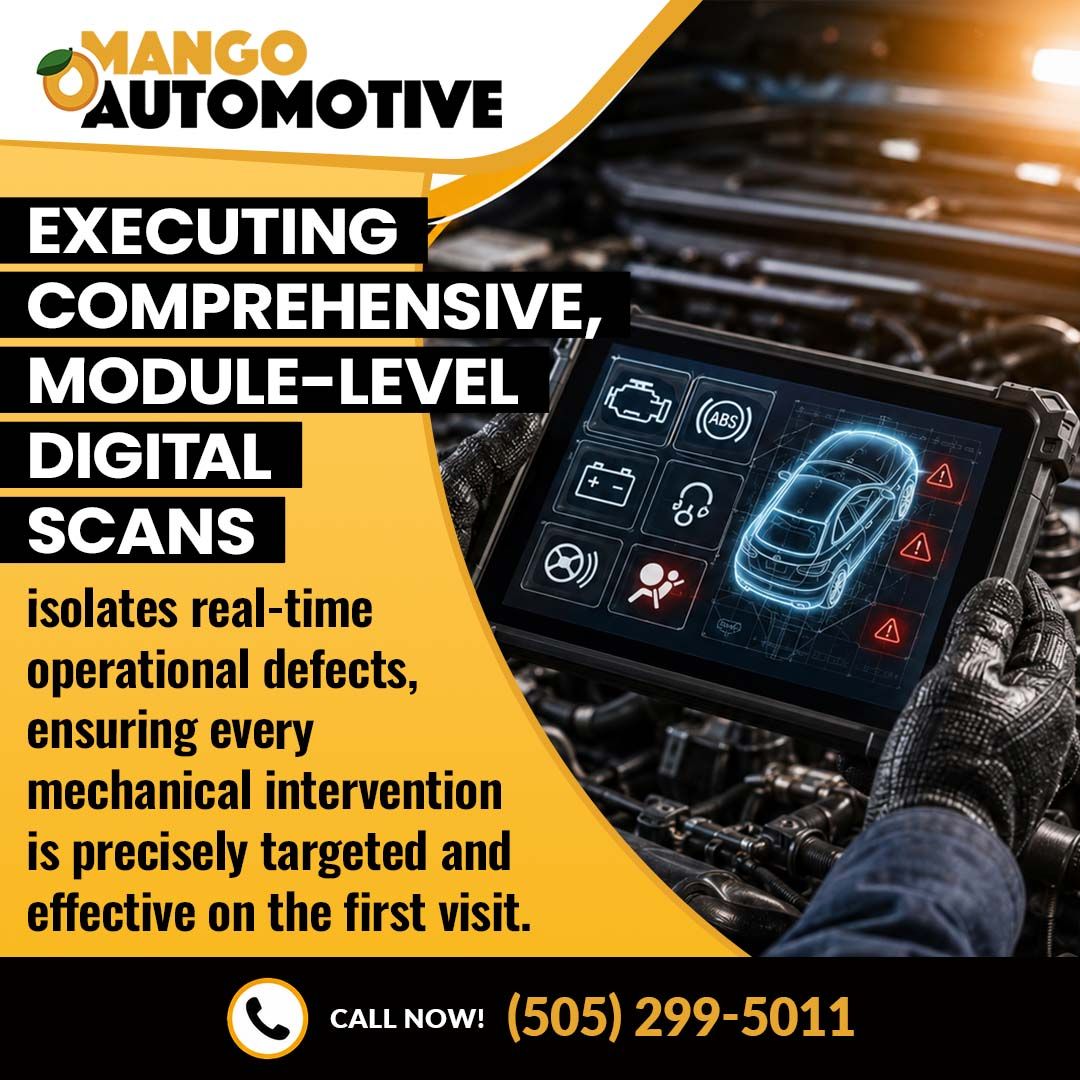
Modern vehicles incorporate sophisticated computer systems that monitor multiple sensors. Our diagnostic equipment reads stored trouble codes and live data streams that reveal system malfunctions. This electronic diagnosis complements physical inspection, providing thorough problem identification.
After identifying noise sources, we inspect related components to determine the extent of any damage. For example, grinding may indicate worn brake pads, but we also examine rotors, calipers, and brake fluid through brake inspection to verify the complete system status.
At our auto shop in Albuquerque, we explain our findings clearly and show you the affected components when feasible. Our transparent communication helps you understand necessary repairs and make informed decisions. We provide written estimates detailing parts, labor, and warranty coverage before beginning any work.

Schedule Your Diagnostic Appointment
Strange vehicle noises communicate problems that worsen without intervention. What begins as a minor squeal can progress to expensive component failure if unaddressed. Early diagnosis and auto repair protect your vehicle and your budget.
Mango Automotive's skilled technicians provide the expertise necessary to resolve performance problems. Our woman-owned business, led by Jesse Jackson, offers fast, diligent, and reliable auto repairs in Downtown Albuquerque. We support our work with an unmatched 60-month/60,000-mile warranty, demonstrating confidence in our repairs.
Our comfortable waiting area with refreshments makes your service visit pleasant. We understand your time is valuable, which is why we prioritize efficient service that returns you to the road promptly. Our commitment to excellence means completing repairs correctly the first time.
Don't allow strange noises to develop into expensive failures. Call Mango Automotive at
(505) 764-8698 to schedule your diagnostic appointment. Let our certified automotive repair technicians identify what your vehicle is communicating and restore its performance and reliability.