Hard Shifting in Automatic Transmissions: When to Seek Auto Repair
Hard shifting damages your transmission and creates dangerous driving conditions. Your automatic transmission should change gears smoothly without jerking, clunking, or delays. When shifts become rough or abrupt, internal components experience excessive wear that leads to expensive repairs.
Automatic transmissions rely on precise hydraulic pressure, electronic controls, and mechanical components working together. When any part of this system fails, you feel the effects immediately through harsh gear changes. The problem rarely fixes itself and typically worsens over time, causing additional damage to related components.
At
Mango Automotive (Downtown), we deliver reliable
transmission service in Downtown Albuquerque, addressing hard shifting and performance concerns before they become major problems. Understanding what causes hard shifting helps you recognize problems early and take action.

Recognizing Hard Shifting Symptoms
Hard shifting creates distinct sensations that differ from normal transmission operation. Common symptoms of hard shifting include:
Sudden jerking or thudding when the transmission changes gears, feeling similar to a rear-end collision.
Delayed engagement where the vehicle hesitates before shifting, then engages abruptly.
Acceleration difficulties where the engine revs, but the vehicle responds slowly.
Slipping between gears or delayed engagement when shifting into drive or reverse.
Unusual sounds such as clunking, grinding, or whining noises during gear changes.
Vibrations throughout the vehicle during shifts, with the entire car shuddering during acceleration.
Dashboard warning lights, including the check engine light or transmission temperature indicator.
Rough or harsh transitions that feel like the transmission is "slamming" into gear.
Modern vehicles use sensors to detect abnormal transmission behavior and alert drivers early through warning lights and performance changes.
Transmission Fluid Problems
Low or contaminated automatic transmission fluid causes most hard-shifting issues. Transmission fluid provides hydraulic pressure for gear changes, lubricates moving parts, and cools the system during operation.
Low Fluid Levels
Transmission fluid levels drop due to leaks in seals, gaskets, or cooler lines. Without adequate fluid, hydraulic pressure decreases and prevents smooth gear engagement. The transmission may slip, shift hard, or fail to engage gears at all.
Check for red or brown fluid puddles under your parked vehicle. Fresh fluid appears bright red, while older fluid turns darker. Any visible leak requires immediate attention to prevent transmission damage.
Low fluid levels create friction between moving parts, generating excessive heat. This heat damages seals and clutch components, creating a cycle where leaks worsen and cause additional problems.
Contaminated or Degraded Fluid
Transmission fluid breaks down over time due to heat, friction, and contamination. Fluid that appears dark brown or black has lost its protective properties. Burnt fluid smells similar to burnt toast and indicates overheating damage.
Metal particles in the fluid suggest internal wear. These particles circulate through the transmission and accelerate damage to other components. During fluid changes, technicians inspect the fluid pan for debris that reveals the extent of internal wear.
Most manufacturers recommend transmission fluid changes every 30,000 to 60,000 miles. Vehicles operating in severe conditions like stop-and-go traffic, towing, or extreme temperatures require more frequent service.
Cold Weather Effects
Temperature affects fluid viscosity. In cold weather, transmission fluid thickens and flows less freely through the transmission. This causes hard shifts until the fluid warms to operating temperature.
Albuquerque experiences temperature swings from freezing winter nights to summer heat exceeding 100°F. These extreme conditions stress the transmission fluid and affect shifting quality. Synthetic transmission fluid maintains better viscosity across temperature ranges compared to conventional formulas.
Mechanical Component Failures
Worn internal parts disrupt the mechanical process of gear engagement. Several components experience wear from normal use and eventually require replacement.
Clutch Pack Deterioration
Automatic transmissions use multiple clutch packs to engage different gears. Each clutch pack contains friction discs that squeeze together under hydraulic pressure. Over time, these friction materials wear thin or become glazed.
Worn clutches slip during engagement, creating harsh shifts. The friction material may also become contaminated with debris, preventing smooth contact. Once clutches wear beyond specifications, they require replacement through transmission disassembly.
Transmission Band Wear
Bands wrap around clutch drums to hold or release specific gears. These steel bands, lined with friction material, tighten and loosen during gear changes. Improper adjustment causes delayed engagement or harsh shifts.
Worn bands lose their ability to grip effectively. The band may slip initially, then grab suddenly as hydraulic pressure increases. This creates the characteristic hard shift sensation.
Torque Converter Issues
The torque converter transfers power from the engine to the transmission using fluid coupling. Internal components include a stator, turbine, and impeller that work together to multiply engine torque.
Torque converter failure manifests as shuddering during acceleration, delayed engagement, or unusual whining sounds. A failing converter affects all gear changes because it controls power delivery to the entire transmission system.
Diagnosing mechanical component failures requires specialized equipment and expertise. Our transmission service in Downtown Albuquerque includes thorough internal component inspection to identify worn clutches, bands, or torque converter issues before they cause complete transmission failure.
Electronic Control Problems
Modern automatic transmissions rely on electronic controls that manage shift timing and hydraulic pressure. Computer malfunctions cause shifting problems even when mechanical components remain in good condition.
Transmission Control Module Malfunctions
The Transmission Control Module (TCM) is the computer that controls automatic shifting. This module receives input from multiple sensors and calculates optimal shift points based on vehicle speed, throttle position, and engine load.
Module failure causes erratic shifting patterns, hard shifts, or complete loss of certain gears. The module may store error codes that diagnostic scanners retrieve. Sometimes the module adapts to driving patterns incorrectly, creating harsh shifts even without hardware failure.
Sensor Failures
Speed sensors provide data about vehicle velocity and transmission output shaft speed. Faulty speed sensors send incorrect information to the control module, causing inappropriate shift timing.
A failed speed sensor may signal that the vehicle travels faster or slower than the actual speed. The module responds by shifting at the wrong time, creating harsh engagement.
Throttle position sensors inform the module about driver acceleration demands. Incorrect throttle data causes the transmission to shift aggressively or hold gears too long. These sensors affect both engine performance and transmission behavior.
Solenoid Problems
Solenoids are electro-hydraulic valves that control fluid flow throughout the transmission. Each solenoid opens and closes passages that direct pressurized fluid to specific clutch packs and bands.
Failed solenoids stick open or closed, preventing proper fluid distribution. A stuck solenoid may cause one specific gear to shift hard while other gears operate normally. Multiple solenoid failures create widespread shifting problems across all gear ranges.
Electronic control problems require advanced diagnostic scanners to identify error codes and pinpoint failing components. Not all auto shops in Albuquerque have the specialized equipment needed to diagnose modern transmission computer systems, making it important to choose a facility with proper diagnostic tools and certified technicians.
Professional Diagnosis at Auto Shops in Albuquerque
Accurate diagnosis requires systematic testing to identify the root cause of hard shifting. Certified auto repair technicians follow structured procedures to pinpoint problems efficiently.
Technicians begin with visual checks of fluid level, color, and condition. They inspect for external leaks at pan gaskets, cooler lines, and seals. The inspection includes examining the shift linkage for proper adjustment.
Modern vehicles store diagnostic trouble codes when the control module detects problems. Scanning tools retrieve these codes and provide specific information about sensor failures, solenoid issues, or computer malfunctions. Code retrieval narrows the diagnostic focus to specific systems.
Driving the vehicle allows technicians to experience the shifting problem firsthand. They note when hard shifts occur, which gears are affected, and whether the problem happens when cold, hot, or throughout operation. Test drives reveal patterns that help identify causes.
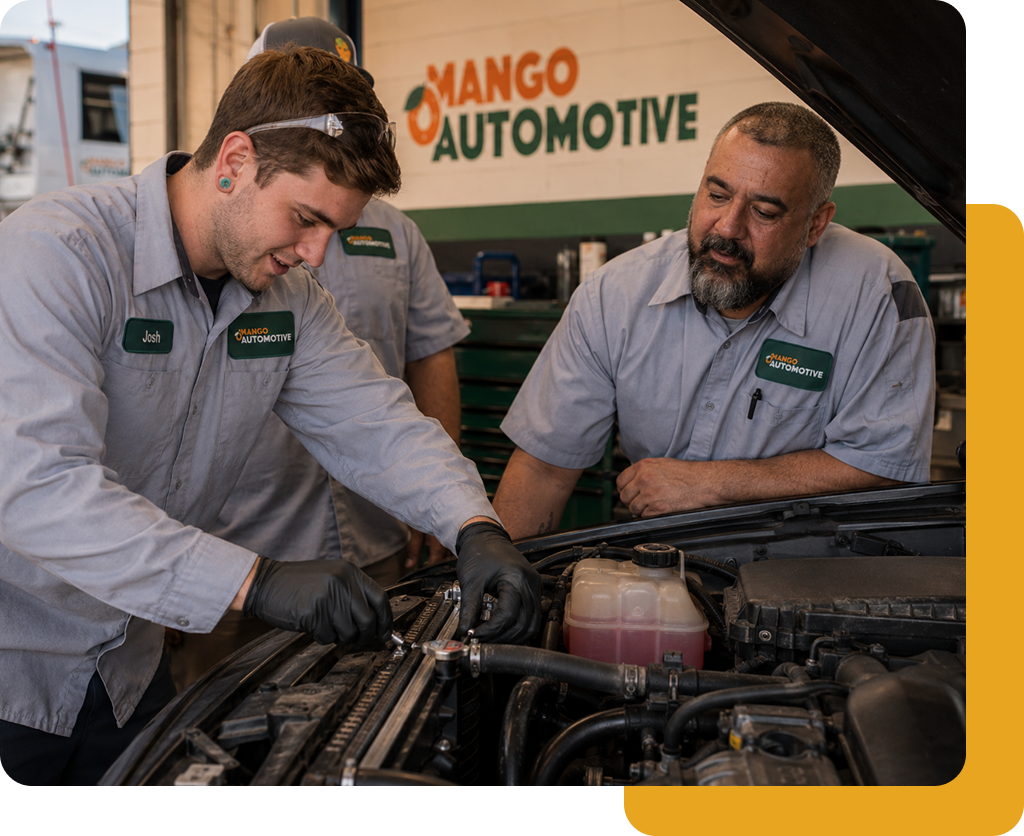
At Mango Automotive, we use advanced diagnostic equipment to identify transmission problems accurately. Our certified
automotive repair technicians combine computer diagnostics with hands-on testing to determine the most effective repair approach.
When You Need Transmission Service in Downtown Albuquerque
Certain symptoms indicate that immediate professional attention is necessary. Continuing to drive with severe transmission problems causes additional damage. Seek professional transmission service immediately if you experience:
- Delayed engagement lasting more than a few seconds - If your transmission takes longer than five seconds to engage drive or reverse, this suggests internal pressure problems requiring immediate diagnostic service.
- Complete loss of specific gears - A transmission that won't engage reverse or skips gears during acceleration prevents normal driving and needs professional diagnosis before the problem worsens.
- Burning smells while driving - This indicates overheating transmission fluid and often accompanies slipping gears, warning of imminent failure; pull over safely and arrange for towing rather than continuing to drive.
- Transmission fluid leaks - Even small leaks gradually lower fluid levels and cause damage. Address leaks before low fluid creates shifting problems or internal damage.
- Dashboard warning lights - Transmission-related warning lights should never be ignored; modern vehicle computers detect problems early, allowing you to address them quickly.
Any of these symptoms requires prompt attention from professional
auto shops in Albuquerque to prevent further damage and more expensive transmission repairs.
Preventive Maintenance for Your Transmission
Regular service prevents most hard-shifting problems and extends transmission life. Following manufacturer recommendations and adjusting for local conditions protects your investment. Key preventive maintenance practices include:
- Check transmission fluid monthly - Use the dipstick to verify fluid level and condition. Fluid should appear red or pink and smell sweet, while dark fluid or burnt odors indicate service is needed.
- Maintain proper fluid levels - Keep fluid at the correct level to prevent hydraulic pressure loss and hard shifting.
- Follow recommended service intervals - Most manufacturers specify fluid and filter changes every 30,000 to 60,000 miles; severe driving conditions require more frequent service, potentially every 15,000 to 30,000 miles.
- Address problems promptly - Early diagnosis identifies problems while they remain manageable; waiting until symptoms become severe usually increases repair complexity.
- Avoid aggressive driving habits - Quick acceleration and hard braking generate excessive heat that stresses the transmission; allow the transmission to warm up before demanding full performance, particularly in cold weather.
- Maintain your cooling system - The transmission cooler often integrates with the radiator, so cooling system problems affect both engine and transmission temperatures.
Regular preventive maintenance is your best defense against hard shifting and expensive transmission repairs.
Frequently Asked Questions
Can I continue driving if my transmission is shifting hard?
Driving with hard shifting is not recommended. While you may be able to drive short distances, continuing to operate your vehicle causes additional damage to transmission components. If you experience severe symptoms like delayed engagement, burning smells, or complete gear loss, have your vehicle towed to prevent further damage.
What's the difference between hard shifting and transmission slipping?
Hard shifting feels like a sudden jerk or thud when changing gears. Slipping feels like the transmission changes gears unexpectedly or loses power, causing the engine to rev without corresponding vehicle acceleration. Both symptoms indicate transmission problems requiring professional diagnosis.
Will adding transmission fluid fix my hard-shifting problem?
Adding fluid may resolve hard shifting if a low fluid level is the only issue. However, low fluid typically indicates a leak that needs repair. If the fluid is contaminated, burnt, or if internal components are worn, simply adding fluid won't fix the problem.
How can I tell if hard shifting is caused by fluid problems or mechanical failure?
Professional diagnosis is the only reliable way to determine the exact cause. Fluid problems may improve slightly as the transmission warms up, while mechanical failures often worsen with heat. If hard shifting continues after fluid service, mechanical or electronic components likely need repair.
Choosing Quality Automotive Repair Services
Select an auto repair facility with certified technicians and proper diagnostic equipment. Transmission diagnosis requires specialized knowledge and tools that not all auto body shops in Albuquerque possess.
Look for ASE certification among technicians. The National Institute for Automotive Service Excellence tests technicians on transmission diagnosis and repair. Certified technicians demonstrate proven expertise through examination and experience requirements.
Ask about diagnostic procedures before authorizing work. Reputable facilities explain their testing process and provide written estimates detailing necessary repairs. Avoid shops that recommend complete rebuilds without thorough diagnosis.
Professional Transmission Service at Mango Automotive
Mango Automotive provides certified transmission service in Downtown Albuquerque. We use advanced diagnostic equipment to identify transmission problems accurately and recommend appropriate repairs. We take time to explain what your vehicle needs and why. This will help you make informed decisions about repairs and maintenance.
Our auto repair shop offers comfortable waiting areas with refreshments, complimentary shuttle service within 3 miles, and flexible financing options with approved credit. We built our business around your convenience, providing the amenities and service quality that busy schedules demand. Our team understands that unexpected vehicle problems create stress, which is why we work efficiently to get you back on the road safely.
Expert Help for Your Transmission Problems in Albuquerque
Hard shifting signals problems that require professional diagnosis and repair. Ignoring these symptoms allows minor issues to develop into transmission failure, requiring expensive rebuilds or replacement.
Your automatic transmission represents a complex system where hydraulic, mechanical, and electronic components work together. When any part fails, you experience harsh shifting that damages other components. Early intervention prevents this cascade of failures and protects your vehicle's value.
Regular maintenance, including fluid service at appropriate intervals, prevents most transmission problems. Combined with prompt attention to symptoms, preventive care extends transmission life and maintains reliable performance.
Contact Mango Automotive at
(505) 764-8698 to schedule a transmission diagnosis at our downtown location. Experience the difference that professional automotive repair makes in vehicle reliability and your satisfaction.