5 Signs Your Car Needs Brake Repair in El Paso: Squeaky Brakes, Grinding & More
Most drivers do not think about their brakes until something feels wrong. By then, a small problem has often grown into a much larger one. Your braking system gives off clear warning signs well before it reaches the point of failure, and knowing what to look for can save you both money and a dangerous situation on the road.
At
Mango Automotive, we work on vehicles every week where the driver has held off too long on brake service. What started as a minor squeak turned into damaged rotors or a full system repair. Catching the warning signs early is always the smarter and more affordable path. Here are the five signs your vehicle is telling you it is time for a brake inspection in El Paso.
Sign #1: You Hear Squeaking or Squealing When You Stop
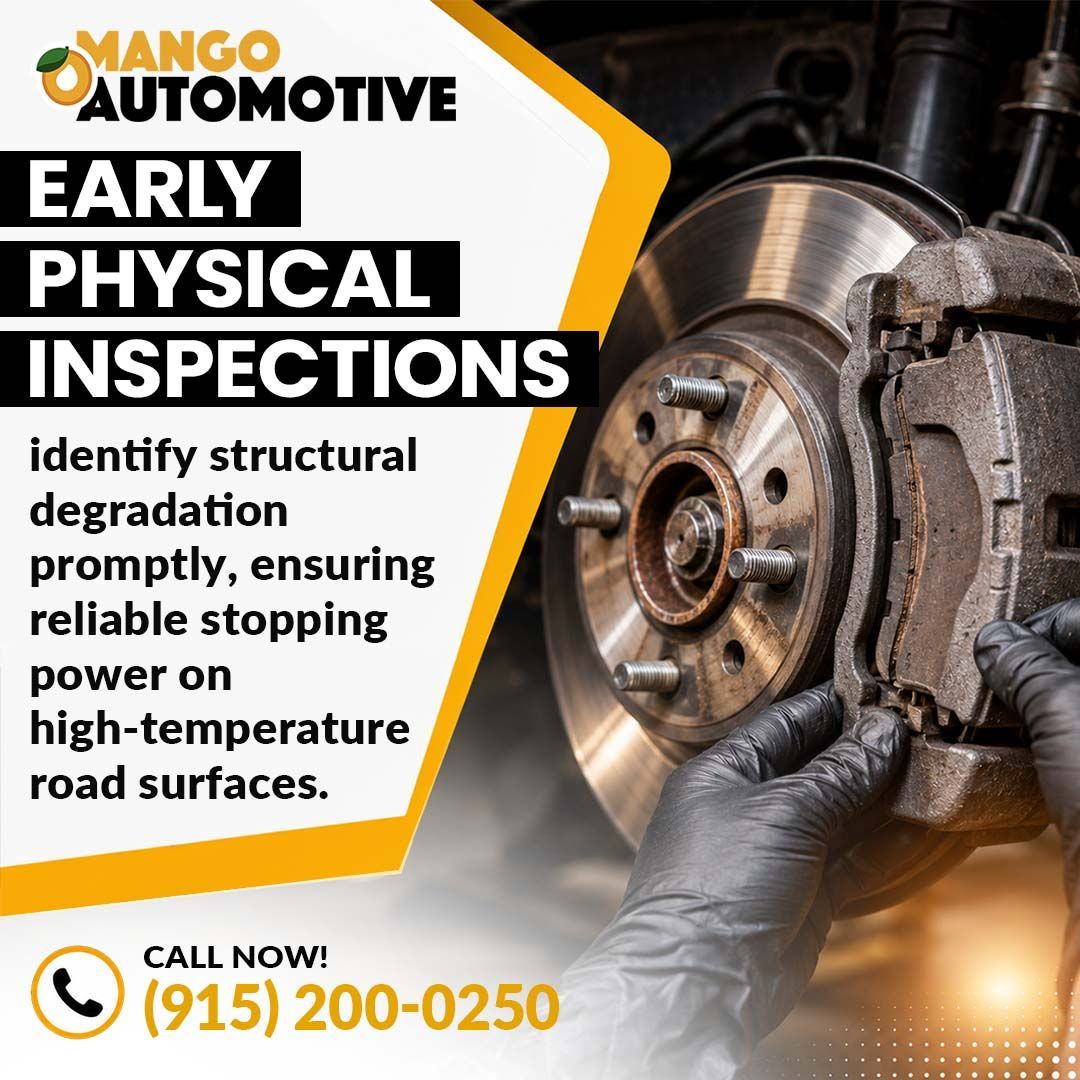
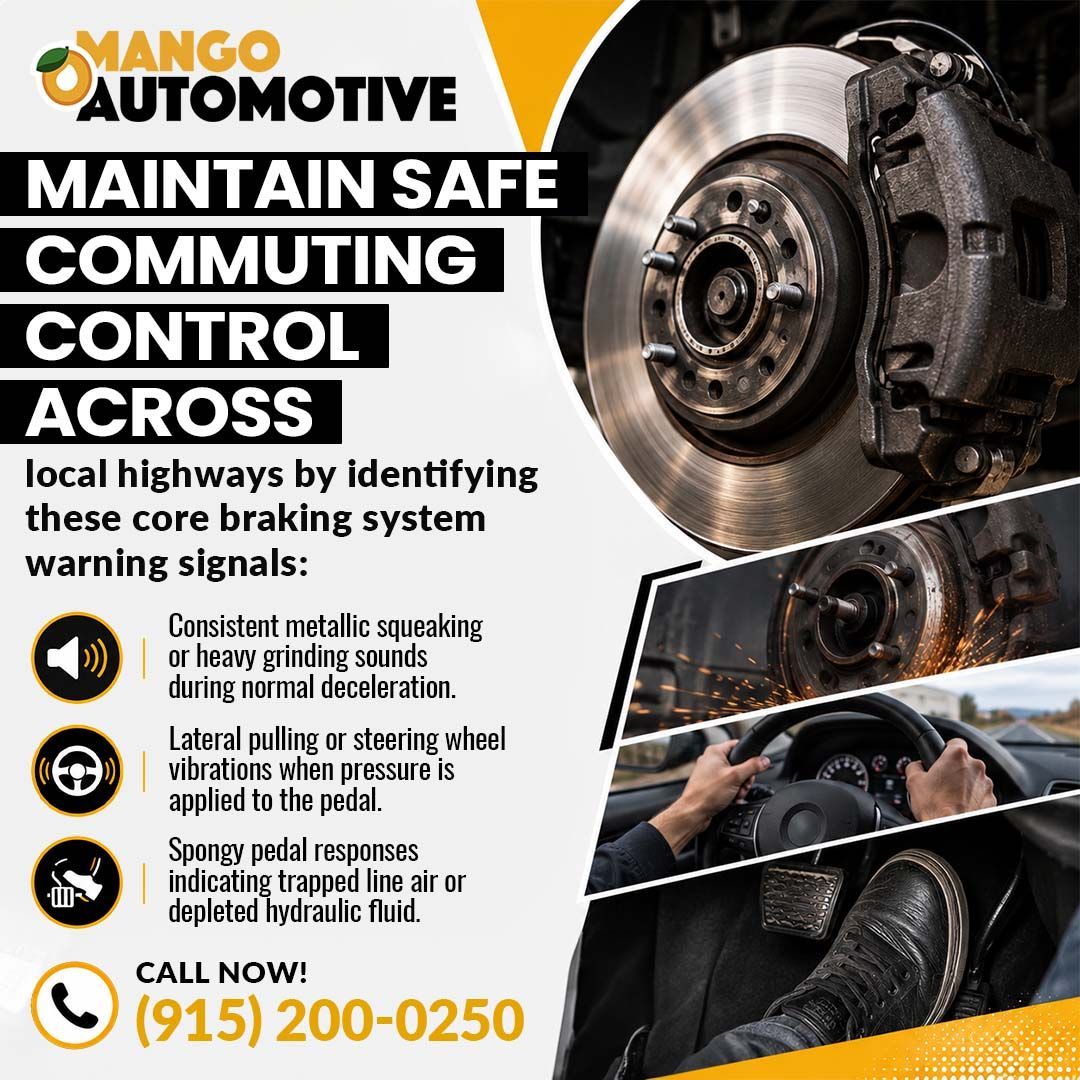
A high-pitched squeal when you apply the brakes is the most common early warning sign drivers notice. Most modern brake pads include a small metal wear indicator designed to produce exactly this sound when the pad material gets too thin. Think of it as your car's built-in alert system telling you the pads are running low.
When Squeaking Is Harmless
Not every squeal calls for immediate action. A thin layer of surface rust can form on rotors overnight, particularly during cooler desert mornings in El Paso, and produce a brief squealing sound that clears up after a few stops. If the noise fades within a minute or two of driving, it is likely harmless.
When Squeaking Means You Need Service
If the squeal happens every time you brake, regardless of the weather or time of day, that pattern points to worn pads. Squeaky brakes repair at that stage is straightforward. Waiting until the noise turns into grinding means the pads have worn through completely, and the repair becomes more involved and more expensive.
Quick Tip: A squeal that shifts into a grinding or scraping sound is a serious escalation. At that point, metal is contacting metal with every stop, and rotor damage is already underway.
Sign #2: You Hear Grinding When You Apply the Brakes
Grinding is what happens after the squealing stage is ignored. The brake pads have worn completely through, and the metal backing plate is now making direct contact with the rotor surface. Every stop grinds the rotor down further and pulls more components into the damage.
What Grinding Does to Your Repair Bill
Rotors that have been scored by metal contact often cannot be resurfaced. They need a full replacement, which is a significantly higher cost than a simple pad swap would have been weeks earlier. The longer you drive on grinding brakes, the more the damage spreads to calipers and other surrounding components.
If you need
brake repair in El Paso and are hearing grinding when you stop, bring the vehicle in right away. Our technicians at Mango Automotive will go through the full system, including pads, rotors, calipers, and brake lines, to assess exactly what the damage involves and what the repair requires.
Sign #3: Your Vehicle Pulls to One Side When Braking
A car that drifts left or right under braking is not applying even pressure across all four wheels. Beyond being uncomfortable, this makes the vehicle unpredictable when you need to stop quickly and creates a real handling risk in traffic.
Common Causes of Pulling During Braking
- A stuck or seized brake caliper on one side
- Uneven pad wear between the left and right wheels
- A brake hose that has collapsed internally, restricting fluid flow to one side
- Contaminated pads on one side are producing inconsistent friction
Could the Cause Be Outside the Brake System?
Pulling during braking can also point to a suspension or alignment issue rather than the brakes themselves. That is exactly why a proper diagnosis matters. A thorough inspection will identify whether the problem lies in the brake system or somewhere else in the chassis, so the right repair gets done the first time.
Sign #4: Your Brake Pedal Feels Soft, Spongy, or Goes Too Low
A healthy brake pedal has firm, predictable resistance every time you press it. If it feels spongy underfoot, sinks lower than usual before the car begins to slow, or travels uncomfortably close to the floor, something in your hydraulic brake system needs attention.
Three Root Causes of a Soft Pedal
- Air in the brake lines: Brake fluid is incompressible, which is what allows your foot pressure to translate directly into stopping force. Air in the lines is compressible and reduces that force before it reaches the calipers.
- Low or contaminated brake fluid: Fluid absorbs moisture from the air over time. Degraded fluid reduces hydraulic efficiency and produces an inconsistent pedal feel, particularly noticeable in temperature changes between El Paso seasons.
- A failing master cylinder: The master cylinder generates the hydraulic pressure that drives the entire braking system. When it begins to wear out, a gradually softening pedal is often the first thing you notice.
Why a Soft Pedal Should Not Wait
Any of these conditions can lead to reduced braking power or complete brake failure if left unaddressed. If your pedal feels different from how it normally does, do not keep driving and expect it to resolve on its own. This is one of the more urgent warning signs on this list.
Sign #5: Your Steering Wheel Vibrates When You Stop
A steering wheel that shakes or pulses during braking is a strong indicator of warped rotors. Rotors are the metal discs your brake pads clamp against to create friction and slow the wheel. When they warp from heat buildup or uneven wear, the pads cannot make consistent contact across the full surface, and the result is a vibration you feel through the wheel and pedal.
Resurfacing vs. Full Rotor Replacement
In less severe cases, rotors can be machined flat again through a process called resurfacing. When they have worn too thin or the warping is significant, replacement is the safer long-term option. A technician will measure rotor thickness and surface condition to determine the right call for your specific vehicle. Either way, the vibration will not go away on its own, and the condition gets worse with every stop.
How Long Do Brake Pads Last in Texas?
Brake pad life depends on driving habits, vehicle weight, and road conditions. Most pads last somewhere between 20,000 and 60,000 miles under normal use, but El Paso driving tends to push many vehicles toward the lower end of that range.
Why El Paso Is Harder on Brakes
Stop-and-go commuter traffic, active construction zones, and heavy vehicle traffic near Fort Bliss all create above-average braking demand on a daily basis. Add El Paso summers that regularly push past 100 degrees, and you have ambient heat layering onto a system that already generates substantial friction heat with every application. That combination accelerates pad and rotor wear faster than milder climates.
How Often Should You Schedule a Brake Inspection?
Most automotive professionals recommend a brake inspection in El Paso at least once a year or whenever you bring your vehicle in for routine maintenance. If your daily drive involves frequent stops, heavier vehicles, or a lot of highway-to-city transitions, checking in more often is a practical habit that keeps small wear from becoming a real problem.
What a Brake Inspection at Mango Automotive Covers
A brake inspection is not just a glance at the pads. Our technicians go through every major component in the system to give you a complete picture of where things stand.
What We Check During Every Inspection
- Brake pad thickness on all four wheels
- Rotor condition, including surface wear, scoring, and warping
- Caliper operation to identify sticking or uneven engagement
- Brake lines and hoses for leaks, cracks, or internal collapse
- Brake fluid level and condition
- ABS warning light diagnosis, where applicable
What You Get After the Inspection
Our technicians walk you through everything found and recommend only what actually needs to be done. No pressure, no guesswork. You leave with a clear understanding of your brake system's condition and a straightforward plan if any repairs are needed.
Why El Paso Drivers Choose Mango Automotive for Brake Service
When you bring your car in for brake pad replacement or any other brake repair in El Paso, you get more than a repair. You get a shop that stands fully behind its work.
A Warranty That Goes the Distance
Mango Automotive backs every brake repair with a 60-month/60,000-mile warranty. That covers 36 months/36,000 miles of nationwide protection plus an additional 24 months/24,000 miles exclusively at our El Paso location. It is the kind of coverage that gives you real confidence every time you get behind the wheel.
Built Around Your Life, Not Just Your Car
We know your schedule does not stop because your car needs service. That is why we have structured the shop around your convenience:
- Complimentary shuttle service within 3 miles
- Key drop for early morning and after-hours vehicle drop-off
- High-speed Wi-Fi and comfortable seating while you wait
- 6-month SAC financing with approved credit
We service domestic and foreign vehicles, covering all makes and models for gasoline-powered cars and trucks.
Frequently Asked Questions About Brake Repair in El Paso
Q: Is it safe to drive with squeaky brakes?
A: A brief squeak that disappears after a minute or two is usually surface rust and not a safety concern. A persistent squeal on every stop is a different story. That pattern means your pads are wearing down and squeaky brakes repair should be scheduled before the noise progresses to grinding.
Q: What is included in a brake pad replacement at Mango Automotive?
A: The service covers removing the worn pads, inspecting rotors and calipers for damage, installing new pads, and verifying full system operation before the vehicle is returned to you.
Q: Can warped rotors be fixed without full replacement?
A: In mild cases, yes. Rotors with minor warping can often be resurfaced through machining. Rotors that are too thin or heavily scored need to be replaced. A technician will measure rotor thickness and surface condition to determine the right approach for your vehicle.
Q: How do I know if my brakes need attention right now?
A: Any one of the five signs covered above is a reason to schedule a brake inspection. Grinding and a soft pedal are the most urgent. Squealing, pulling, and vibration are early-stage warnings that are much easier and less costly to address while they are still early.
Get Your Brakes Checked Before a Small Problem Becomes a Costly One
Squeaky brakes, grinding, a car that pulls, a soft pedal, and steering wheel vibration are all messages from your vehicle that the braking system needs attention. Responding to any one of these signs early keeps the repair straightforward and keeps you safe on every road between here and wherever you are headed.
Your brakes protect everyone in your vehicle. Give them the attention they deserve. Call Mango Automotive at
(915) 200-0250
to schedule your brake inspection with a team that treats your safety as a priority, not an afterthought.