What a Standard Vehicle Tune-Up Covers at an Auto Repair Shop in The Heights, Albuquerque
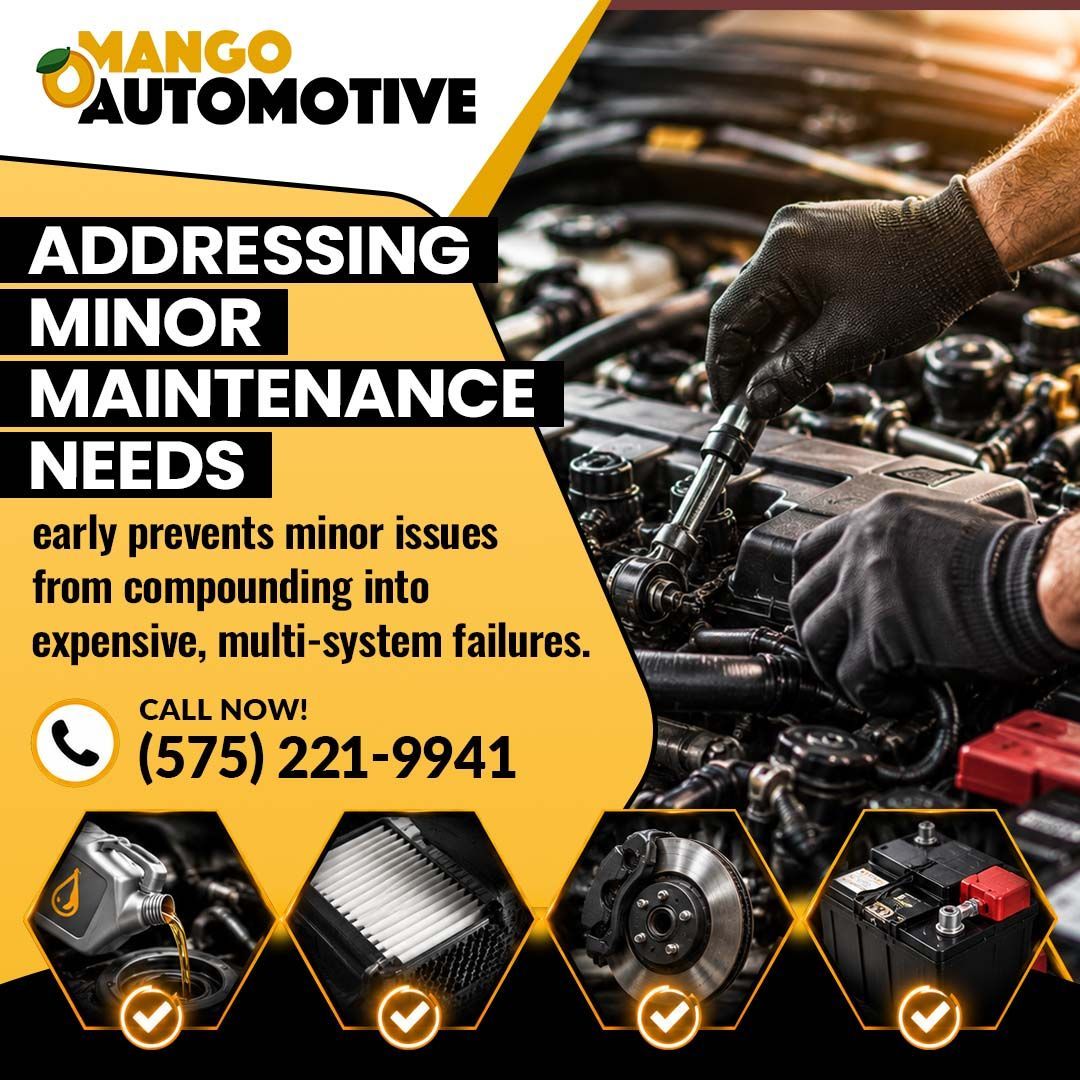
A vehicle tune-up is a scheduled maintenance service that addresses the systems most responsible for how your car starts, runs, and uses fuel. It is not a single repair. It is a structured visit that catches wear early, before it develops into a larger mechanical problem.
At
Mango Automotive, every tune-up we perform follows a structured inspection process covering ignition, filtration, fluids, and fuel system components. Drivers across Northeast Albuquerque trust our
auto repair shop to catch developing issues early and keep their vehicles running at their best.

Full Scope of a Vehicle Tune-Up
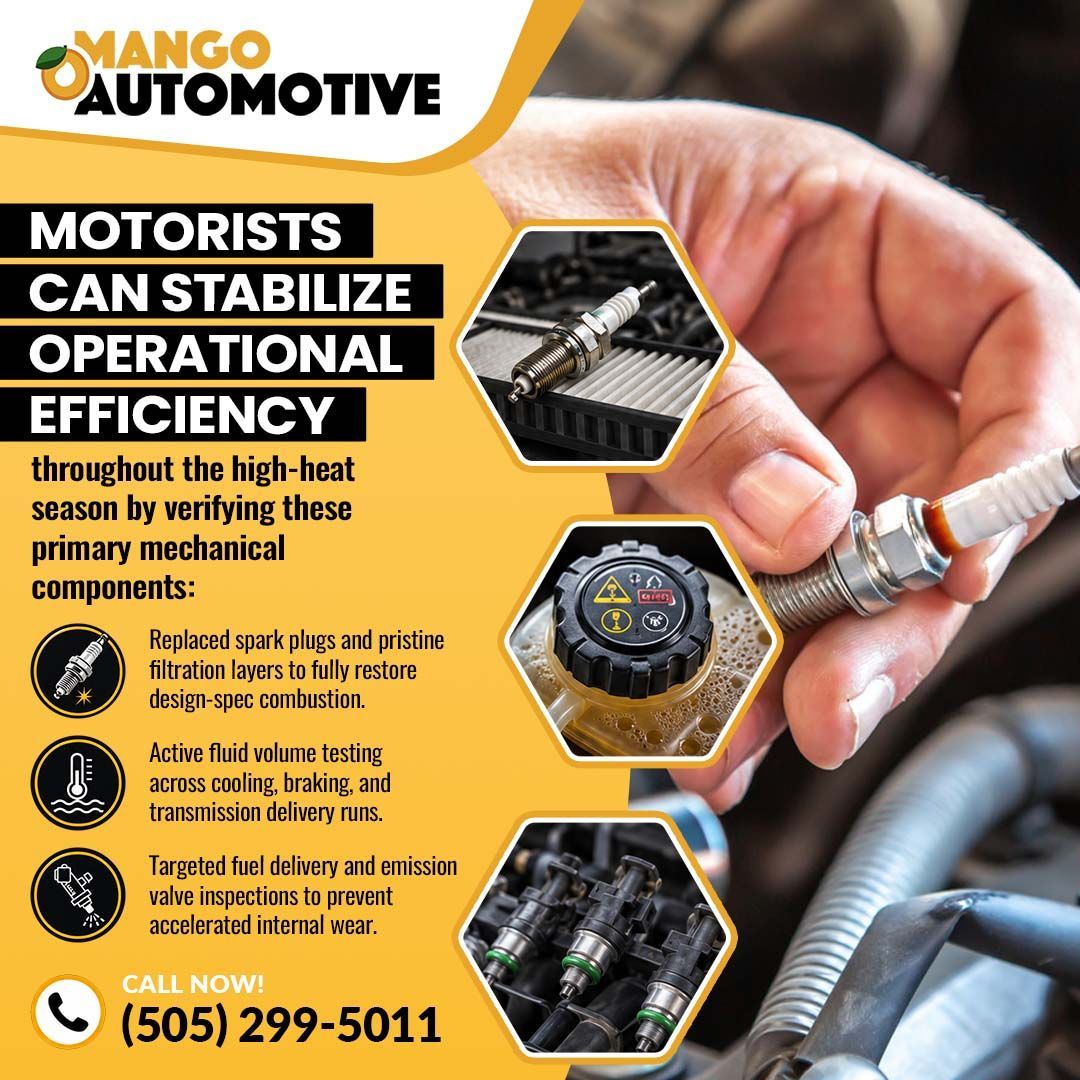
A standard tune-up addresses ignition performance, filtration, fuel system health, and fluid condition.
Most modern vehicles need a tune-up every 30,000 miles or two years, depending on make, model, and driving conditions. Older vehicles with non-electronic ignition systems typically require service more frequently. Vehicles driven in demanding conditions, such as Albuquerque's high-altitude desert climate with its wide temperature swings, may need more frequent attention regardless of mileage. Any qualified auto repair shop can review your vehicle's service history and recommend the right interval.
The term "tune-up" has changed with modern vehicles. Before electronic fuel injection became standard, mechanics manually adjusted the carburetor, ignition timing, and mechanical components. Today's vehicles use onboard computers to manage those functions automatically. A current tune-up focuses on replacing worn parts, cleaning fuel delivery components, and restoring the engine to its intended performance level.
Systems Inspected During a Tune-Up
Spark Plugs and the Ignition System
Spark plugs ignite the air-fuel mixture inside each engine cylinder. When they wear out, combustion becomes incomplete, leading to misfires, rough idling, and reduced fuel economy.
Modern iridium and platinum-tipped spark plugs can last up to 100,000 miles. Once the electrodes wear down, the spark weakens and combustion suffers. The engine compensates by working harder, which increases fuel consumption and accelerates wear on other components.
An unresolved misfire can escalate into catalytic converter damage, turning a minor ignition issue into a considerably larger repair. A car repair shop near you can run a diagnostic scan to catch ignition issues before they reach that stage.
The ignition system inspection also covers spark plug wires, which are checked for cracks or carbon tracking that weaken the electrical signal. Ignition coils are tested for consistent output, as a failing coil typically causes a single-cylinder misfire. On older vehicles, the distributor cap and rotor are inspected for corrosion or wear that disrupts ignition timing.
Air Filters
The engine air filter prevents airborne debris from entering the combustion chamber. A clogged filter restricts airflow and forces the engine to consume more fuel to maintain normal output.
Restoring proper airflow through a clean air filter supports cleaner combustion and reduces the load on the engine. For Albuquerque drivers dealing with dust-heavy desert air, this filter sees real contamination between service visits.
The cabin air filter, which cleans the air circulating through the heating and A/C system, is checked at the same time. A blocked cabin filter reduces airflow through the climate control system and can push dust, allergens, and debris into the vehicle interior.
Fuel Filter and Fuel System Components
The fuel filter removes contaminants before fuel reaches the injectors. A restricted filter reduces fuel delivery pressure, which causes hesitation, hard starts, and sluggish acceleration.
The fuel system inspection also includes the fuel injectors, which are checked for carbon buildup that disrupts spray patterns and reduces combustion efficiency. Dirty injectors force the engine toward a richer fuel mixture, which increases fuel consumption and emissions.
Mechanics also inspect the PCV valve (Positive Crankcase Ventilation), a small valve that routes combustion gases back through the intake system. A stuck or clogged PCV valve raises internal engine pressure and accelerates oil consumption.
These components work as a connected system. A clean fuel filter supports consistent injector function. A functioning PCV valve protects oil quality and engine seals.
Fluid Check and Top-Off
Fluid levels are checked and topped off during every tune-up. Each fluid serves a protective function, and running any system on low or degraded fluid accelerates component wear.
The fluids inspected include engine oil, which lubricates moving metal parts and regulates internal heat. Coolant, also called antifreeze, regulates engine temperature and prevents overheating. Degraded coolant becomes acidic over time and can corrode internal cooling system components.
Transmission fluid lubricates and cools the transmission. Low or contaminated fluid accelerates internal wear over time. Brake fluid transfers pedal pressure to the brake components through a closed hydraulic system. It absorbs moisture gradually, which lowers its boiling point and reduces braking performance. Power steering fluid maintains steering assist in vehicles equipped with hydraulic power steering systems.
Each fluid has a manufacturer-specified service interval. Running systems on degraded fluid shortens the life of the components that those fluids protect.
Ignition Timing and Idle Speed
Ignition timing refers to the precise moment a spark plug fires within the combustion cycle. Idle speed is the engine's rotational speed when the vehicle is not in motion. Both affect engine smoothness and fuel efficiency.
On older vehicles, these settings are adjusted manually during a tune-up. On modern vehicles, the engine control module manages timing and idle speed automatically. A technician checks for irregularities in both and adjusts where the vehicle allows it. Poor timing or an unstable idle can cause rough running, stalling, and increased fuel consumption.
Skipping or delaying these inspections allows small issues to compound across connected systems. What starts as a worn spark plug or a clogged filter can develop into a repair that involves multiple components. Drivers looking for
auto repair in The Heights, Albuquerque, can count on the technicians at Mango Automotive to catch these issues early and keep repairs from escalating.
Warning Signs That a Tune-Up Is Needed
These symptoms indicate that one or more vehicle systems need attention.
- A noticeable drop in fuel economy without a change in driving habits points to worn ignition components, dirty filters, or a restricted fuel system.
- Difficulty starting the engine, particularly in extreme heat or cold, suggests a fuel delivery issue or worn spark plugs.
- Rough or unsteady idling at a stop, hesitation during acceleration, and engine misfires are all consistent with ignition or fuel system wear.
- An illuminated check engine light indicates the engine management system has detected a fault.
Addressing these signs early at a qualified car repair shop near you keeps repairs straightforward and contained.
Without regular tune-ups, wear across these systems builds unnoticed until a minor issue becomes a major one. A neglected fuel filter strains the injectors. Worn spark plugs left in place accelerate catalytic converter damage. Each of these outcomes starts small and becomes avoidable with routine service. Staying current with tune-ups at a trusted shop for
auto repair near Northeast Albuquerque is the most direct way to avoid those outcomes.
Frequently Asked Questions
How often should I schedule a tune-up?
Most vehicles need a tune-up every 30,000 miles or two years. If your vehicle is older or showing symptoms like rough idling, poor acceleration, or a check engine light, schedule a visit sooner, regardless of mileage. A car repair shop near you can review your service history and recommend the right interval for your specific vehicle.
What happens if I skip a tune-up?
Worn components continue to degrade and place added stress on the systems around them. A fouled spark plug leads to misfires. A clogged fuel filter strains the injectors. Over time, deferred maintenance turns minor wear into repairs that involve multiple components and longer service times.
How do I know if my car needs a tune-up or a different repair?
Common tune-up symptoms include rough idling, hesitation during acceleration, reduced fuel economy, engine misfires, and an illuminated check engine light. A technician at a car repair shop near you can run a diagnostic check to determine whether the issue is tune-up related or points to a separate repair.
Does a tune-up improve fuel economy?
A properly tuned engine can improve fuel efficiency by up to 4%. Worn spark plugs, dirty fuel injectors, and clogged air filters all reduce combustion efficiency and increase fuel consumption. Addressing these through a tune-up restores the engine to its intended performance level.
Where can I get a reliable tune-up in Albuquerque?
Drivers can schedule a tune-up at Mango Automotive on Comanche Rd NE. Our trained technicians inspect and service ignition components, filters, fuel system parts, and fluids during every tune-up visit.
Mango Automotive: Vehicle Tune-ups and Auto Repair in The Heights, Albuquerque
Mango Automotive has served Albuquerque drivers since 2021 with straightforward priorities: honest diagnostics, plain-language explanations, and service built around the customer. Founded by Jesse Jackson, the shop was built with a direct purpose: to change the standard for auto repair near Northeast Albuquerque and beyond.
Services We Offer
Our trained technicians handle tune-ups alongside a full range of services, including A/C repair, brake and suspension work, wheel alignments, transmission service, and engine diagnostics. We service domestic and foreign vehicles across gasoline, hybrid, and electric models. Our auto repair shop on Comanche Rd NE serves drivers throughout the Heights, Tramway corridor, and nearby areas.
Our Warranty Coverage
Qualifying repairs completed at Mango Automotive are backed by our warranty: 60 months/60,000 miles of total coverage, including 36 months/36,000 miles of nationwide protection and an additional 24 months/24,000 miles at our locations.
Schedule Your Tune-Up
If your vehicle is due for service or showing any of the warning signs mentioned above, call Mango Automotive at (505) 299-5011. As a trusted destination for auto repair near Northeast Albuquerque, our team serves drivers throughout the Heights, Tramway corridor, and surrounding areas.