Clutches 101: How Your Car’s Clutch Works and When to Get It Serviced at an Auto Repair Shop in El Paso, TX
Your car’s clutch plays a vital role in connecting the engine to the transmission and enabling seamless gear changes. When it begins to wear, you may notice issues like a slipping pedal, unusual noises, or delayed engagement. Understanding how your clutch works and identifying the signs of wear can help you avoid expensive repairs.
For drivers in El Paso, TX, finding reliable auto repair near you is important for keeping vehicles safe and performing efficiently.
Mango Automotive is a trusted auto repair shop in El Paso that provides expert clutch inspection, repair, and replacement. Our team helps ensure your car stays in top condition while saving time and money.
What Is a Car Clutch?
A car clutch is the part of your vehicle that allows you to shift gears smoothly. It connects the engine to the transmission, giving you control over how power reaches the wheels.
Purpose of the Clutch
The clutch makes it possible to change gears without jerks or stalling. When you press the pedal, it disconnects the engine from the transmission for a brief moment. This helps you start from a stop or accelerate on inclines without sudden movements.
It also transfers engine power to the wheels when engaged. When you release the pedal, the connection is restored, allowing your car to accelerate steadily. This makes sure that your vehicle responds consistently to your input on the accelerator.
Key Components of a Clutch
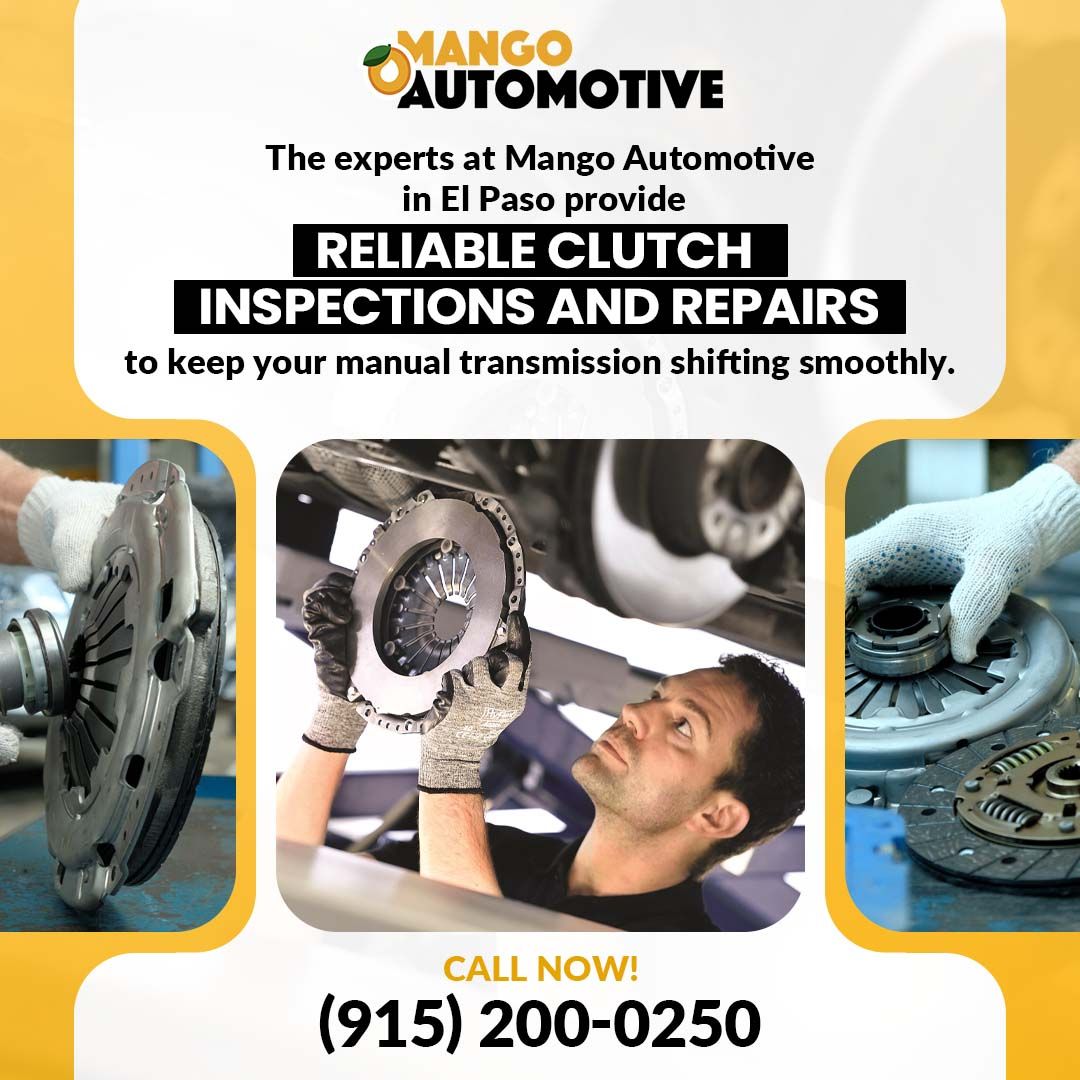
The clutch has several parts that work together to transfer power efficiently. These include the clutch disc, pressure plate, flywheel, and release bearing.
Clutch disc: Transfers power between the transmission and engine. It wears over time and may need replacement.
Pressure plate: Engages the clutch by pressing the clutch disc up against the flywheel.
Flywheel: Attaches to the engine and provides a smooth surface for the clutch disc to grip.
Release bearing: Moves the pressure plate away from the clutch disc when the pedal is pressed, allowing the gears to shift.
How the Clutch Works
When you press the clutch pedal, the release bearing pushes the pressure plate away from the clutch disc. This temporarily disconnects the engine from the transmission, letting you shift gears without resistance.
Once you lift your foot, the pressure plate presses the clutch disc back against the flywheel. This restores the connection and transfers power from the engine to the wheels. The process repeats every time you change gears, allowing the car to move smoothly.
Common Signs of Clutch Wear
The clutch in your car is under constant friction every time you shift gears. Over time, this friction leads to wear that can affect your vehicle’s performance and drivability. Identifying problems early helps prevent costly repairs and keeps your car running smoothly.
Slipping Clutch
A slipping clutch happens when the engine revs increase, but the car does not accelerate as expected. You may notice slower starts, difficulty climbing hills, or inconsistent power delivery. If your car struggles to move even when you press the accelerator, it is a clear sign that the clutch may be wearing down and requires attention.
Hard or Stiff Pedal
When the clutch pedal feels unusually heavy or stiff, it can signal internal wear. This often results from a pressure plate issue or a problem with the release bearing. You might find it harder to shift gears, particularly in stop-and-go traffic, which can make daily driving more tiring and affect overall control.
Unusual Noises
Grinding, squealing, or rattling noises during gear shifts often indicate that clutch components are wearing down. These sounds can appear when the clutch disc or release bearing is not functioning properly. Paying attention to these noises early helps prevent more serious damage to the transmission or other drivetrain components.
Delayed Engagement
Delayed engagement occurs when the car hesitates to move even after you release the clutch pedal. This can make gear changes feel sluggish and affect your control at low speeds. The delay usually points to worn friction surfaces or a clutch that may need adjustment or replacement soon.
Factors That Contribute to Clutch Wear
Several factors can speed up the wear of your car’s clutch. Being aware of these factors helps you adjust your driving habits and maintain the vehicle properly to reduce unnecessary damage.
Driving Habits
Frequent riding of the clutch or aggressive gear changes can cause the clutch to wear faster. Keeping your foot on the pedal when it’s not needed or using excessive force while shifting adds friction and heat to the components. Stop-and-go traffic or carrying heavy loads regularly can also put extra strain on the clutch, causing it to lose responsiveness over time.
Vehicle Age and Mileage
Older vehicles and those with high mileage are more likely to experience clutch wear. The clutch disc and pressure plate are subject to friction every time you drive. Over tens of thousands of miles, the material gradually thins, reducing the clutch’s effectiveness. Even if you drive carefully, age and accumulated mileage naturally affect its performance.
Environmental Conditions
Driving in hot climates, hilly areas, or congested city streets can accelerate clutch wear. High temperatures increase friction heat, while frequent uphill starts place extra pressure on the clutch. Similarly, stop-and-go traffic in urban areas requires repeated pedal use, which adds to the wear on the clutch components. Being mindful of these conditions can help you adjust your driving style and extend the clutch’s lifespan.
How Clutch Service Is Performed
When a clutch shows signs of wear, taking your vehicle to a professional auto repair shop in El Paso is the best way to address the issue. Proper service restores performance and prevents further damage to the transmission.
Inspection Process
The first step in clutch service is a thorough inspection. Key actions include:
Checking the clutch disc, pressure plate, and release bearing for wear or damage
Inspecting the clutch pedal and linkage for smooth operation
Performing diagnostic tests to detect slipping or delayed engagement
Determining whether a repair or full replacement is necessary
This process helps technicians identify the exact cause of the problem and plan the appropriate service.
Clutch Replacement Steps
Replacing a worn clutch involves carefully removing old components and installing new ones. The steps include:
Disconnecting the transmission from the engine
Removing the old clutch disc and pressure plate
Inspecting the flywheel for cracks, scoring, or wear
Installing new components and aligning them properly
Testing the clutch operation to confirm smooth engagement and power transfer
This allows the clutch to operate properly and helps your vehicle respond smoothly when shifting gears.
Factors That Affect Cost
Clutch service costs depend on parts, labor, and vehicle type. High-performance or larger vehicles may require specialized parts or more labor hours. Labor rates and the quality of replacement components also influence the final cost.
Service Guarantees
Professional shops provide warranty coverage to protect your investment. Many repair centers offer time- or mileage-based warranties that cover parts and labor. A trusted provider of auto repair in El Paso, TX, will help the clutch perform consistently after service, giving you confidence in your vehicle’s reliability.
Tips to Help Extend Clutch Lifespan
A well-maintained clutch lasts longer and keeps your car performing smoothly. Small adjustments in your driving habits and routine maintenance can prevent premature wear and reduce the risk of costly repairs.
Correct Pedal Usage
Avoid resting your foot on the clutch pedal while driving. Constant pressure adds friction and heat to the clutch components. You should only press the pedal when actively shifting gears.
Using the handbrake for stops on inclines instead of partially engaging the clutch can also reduce wear. Pressing and releasing the pedal fully during gear changes helps maintain consistent performance.
Smooth Gear Engagement
Gradual and deliberate shifting reduces stress on the clutch. Quick or forceful gear changes can accelerate wear. Shift gears in a controlled, steady manner, and avoid sudden acceleration immediately after engaging a new gear. Matching engine speed to the gear when downshifting also reduces strain on the clutch system.
Regular Vehicle Maintenance
Periodic inspections and fluid checks help maintain clutch performance. Keeping the system in good condition prevents unexpected failures. Scheduling routine clutch and transmission inspections at a trusted auto repair shop in El Paso helps catch small issues early.
Checking the clutch hydraulic fluid or linkage adjustments according to the manufacturer’s recommendations also keeps the clutch operating smoothly. Addressing minor problems promptly can prevent larger, more costly repairs in the future.
Mango Automotive: Your Local Clutch Service Experts
Finding a reliable auto repair near you can make a big difference when your clutch requires service. At Mango Automotive, a trusted provider of auto repair in El Paso, TX, we deliver expert care, making sure every vehicle receives thorough attention and professional service.
Skilled ASE-Certified Technicians
Our team consists of ASE-certified technicians with extensive experience in clutch inspection, repair, and replacement. We are trained to diagnose issues accurately and perform repairs that restore your vehicle’s performance. With the right tools and expertise, we handle every clutch service efficiently, giving you confidence in your car’s operation.
Customer-Focused Service
We prioritize convenience and comfort for every customer. Mango Automotive offers shuttle service, a comfortable waiting area, and flexible support to fit your schedule. Whether you need to drop off your car early or arrange transportation while your vehicle is in service, our team makes the process smooth and stress-free.
Reliable Work and Warranty Coverage
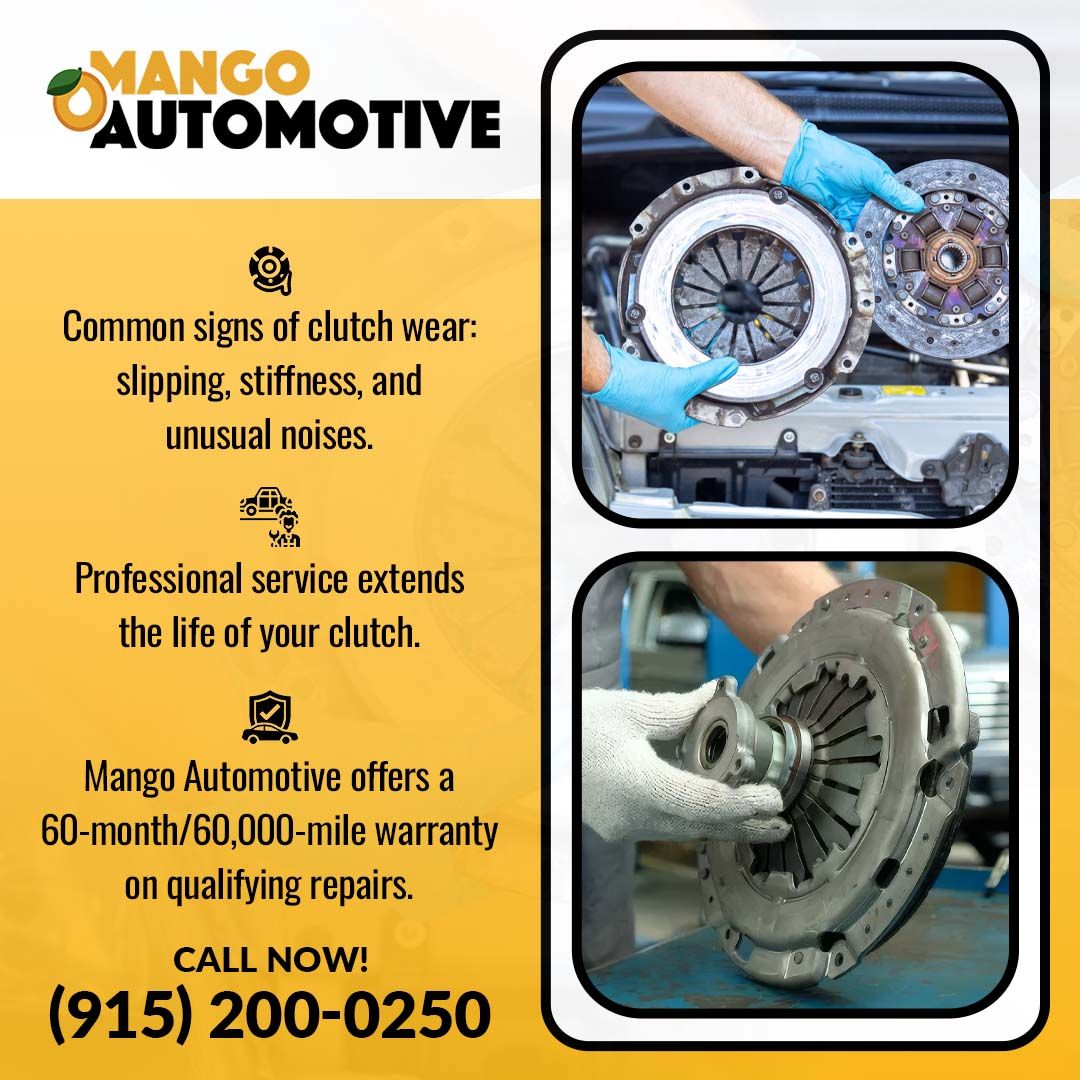
All clutch services at Mango Automotive come with a 60-month/60,000-mile warranty. This coverage protects parts and labor, reflecting our commitment to quality and reliability. Our customers know that whether it’s inspection, repair, or replacement, the work is performed professionally and will stand the test of time. Choosing us for your clutch service keeps your vehicle performing as intended and gives you confidence every time you drive.
Schedule Your Clutch Service Today
Keep your vehicle running smoothly and avoid costly repairs by booking a clutch inspection or service with Mango Automotive at (915) 200-0250. Our skilled technicians are ready to provide reliable service and answer any questions about your car’s clutch system. Let us help you maintain your vehicle’s performance and safety with professional clutch care.