How Do I Know If My Stop-and-Go Commute in East El Paso Is Damaging My Brakes?
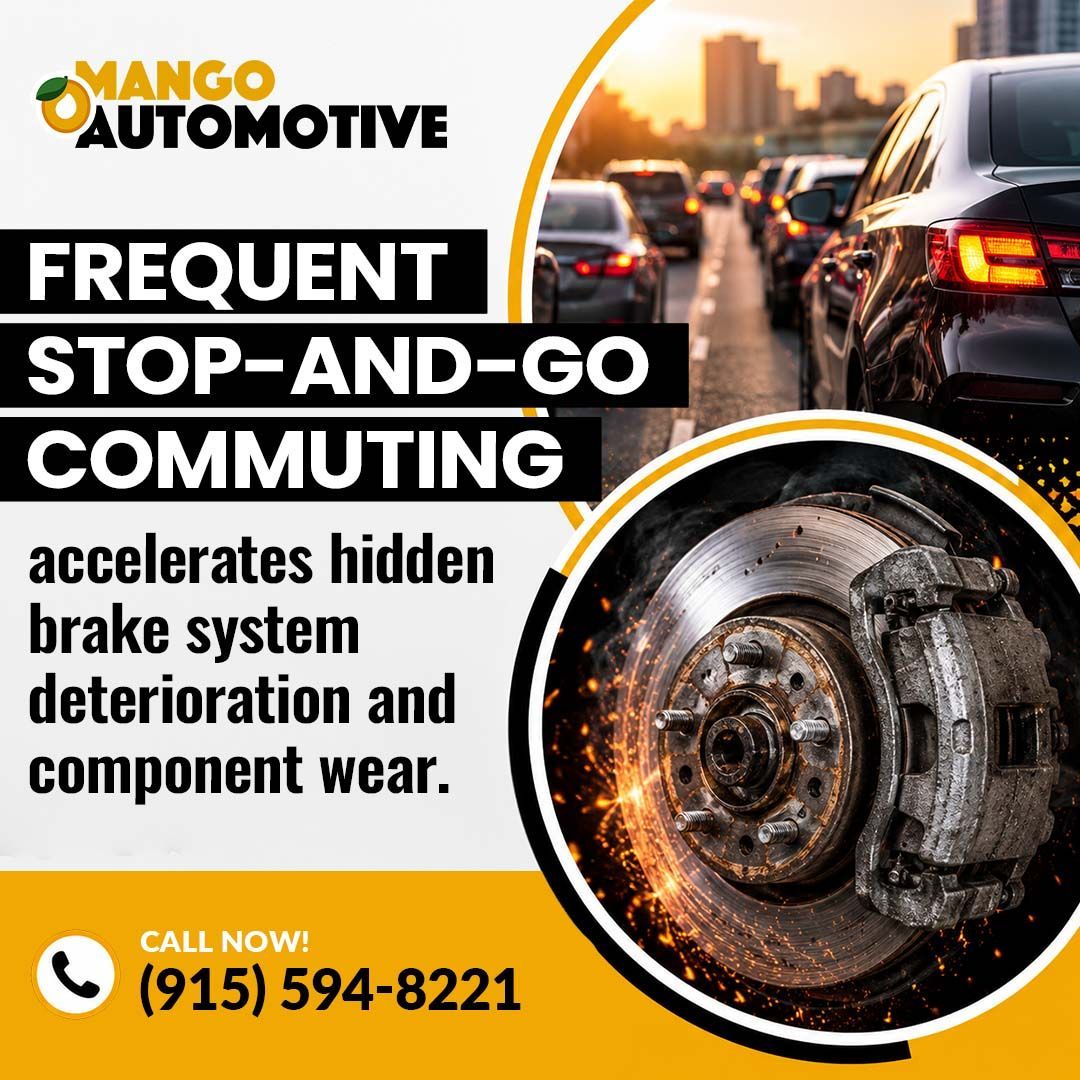
Stop-and-go traffic forces your brakes to work harder with every red light and traffic surge. Commuters on routes like Zaragoza or Pellicano Drive apply their brakes far more often than highway drivers, which speeds up pad wear considerably. At Mango Automotive, we recommend long commute maintenance that includes regular brake inspections as the most reliable way to stay ahead of this problem before it becomes expensive.
Why Are My Brakes Wearing Out Faster in East El Paso?
Every time you press the brake pedal, your brake pads clamp down on the rotors to create friction that slows the vehicle. In smooth highway conditions, that happens at a calm, predictable pace. On a stop-and-go commute through East El Paso, it happens dozens of extra times per trip.
Each braking event during stop-and-go driving increases friction cycles. Pads lose material quickly, and the repeated contact between pads and rotors builds up heat that compounds the wear. That heat can warp your rotors, degrade your brake fluid, and in serious cases, cause brake fade where the vehicle takes noticeably longer to stop.
How Does My Daily Commute Compare to Highway Driving on Brake Wear?
Driving Condition
Brake Applications Per Mile
Avg. Pad Life
Highway (steady speed)
Low
55,000 to 70,000 miles
Mixed city/highway
Moderate
40,000 to 55,000 miles
Stop-and-go city commute
High
25,000 to 40,000 miles
Pad life ranges are general estimates. Your vehicle's actual wear rate depends on vehicle weight, brake type, and driving habits.
What Warning Signs Should I Watch For That Tell Me My Brakes Need Attention?
Your vehicle will usually signal brake wear before a failure occurs. Watch for:
- A high-pitched squealing or grinding sound when braking
- The vehicle pulls to one side when you slow down
- Visible vibration or pulsing through the steering wheel while braking
- The brake warning light appears on your dashboard
Acting on these signs early is something our team at Mango Automotive sees make a real difference. A pad replacement caught in time costs considerably less than a full rotor job.
Will Staying on Top of Long Commute Maintenance Actually Save Me Money?
Yes.
AAA recommends checking your brake pads every 12,000 to 15,000 miles, or every time you rotate your tires. For drivers relying on
auto repair in East El Paso to stay road-safe, sticking to that schedule is what separates a routine service visit from an unplanned, higher-cost repair.
Frequently Asked Questions
Does my heavier vehicle make brake wear worse on my commute?
Yes. Heavier vehicles require more braking force to slow down, which puts more pressure on pads and rotors during each stop. SUV and truck owners who commute through stop-and-go traffic should lean toward the shorter end of the inspection interval.
Can my brake fluid affect how fast my brakes wear out?
Yes. Old or moisture-contaminated brake fluid reduces hydraulic pressure and makes the entire system work harder. Flushing brake fluid as part of your routine service schedule protects both the pads and the internal brake components.
What happens to my vehicle if I keep driving on worn brake pads?
Once pads wear down completely, the metal backing plate makes direct contact with the rotor. This causes scoring and grooves on the rotor surface, turning a straightforward pad swap into a more involved and expensive repair.
How do I know if my brakes need service sooner than scheduled?
Any change in how your vehicle feels or sounds when stopping is a reason to visit a trusted auto repair shop. Do not wait for the next scheduled interval if something feels off.
Schedule Your Brake Inspection at Mango Automotive
If your daily commute runs through East El Paso, our team at Mango Automotive is ready to help. We provide thorough brake inspections, pad replacements, and full brake service backed by our 60-month/60,000-mile warranty. Call us today at
(915) 594-8221 to schedule your brake inspection and keep your commute safe.