Drivetrain Issues That Cause Shaking and Rough Driving: Yuma Auto Repair Experts Explain
Worn or damaged drivetrain components disrupt the smooth transfer of power from your engine to your wheels, creating noticeable shaking and rough driving conditions. When components like U-joints, CV joints, or the driveshaft wear out or become damaged, the smooth flow of power gets interrupted. This creates vibrations that you feel through the steering wheel, seat, or floorboard.
At
Mango Automotive & Diesel, we help Yuma drivers identify and resolve drivetrain problems before they lead to expensive repairs. Our experienced
auto repair technicians understand how to diagnose and fix these issues quickly. We provide the services you need to restore smooth, reliable performance to your vehicle.
Key Components of the Drivetrain System
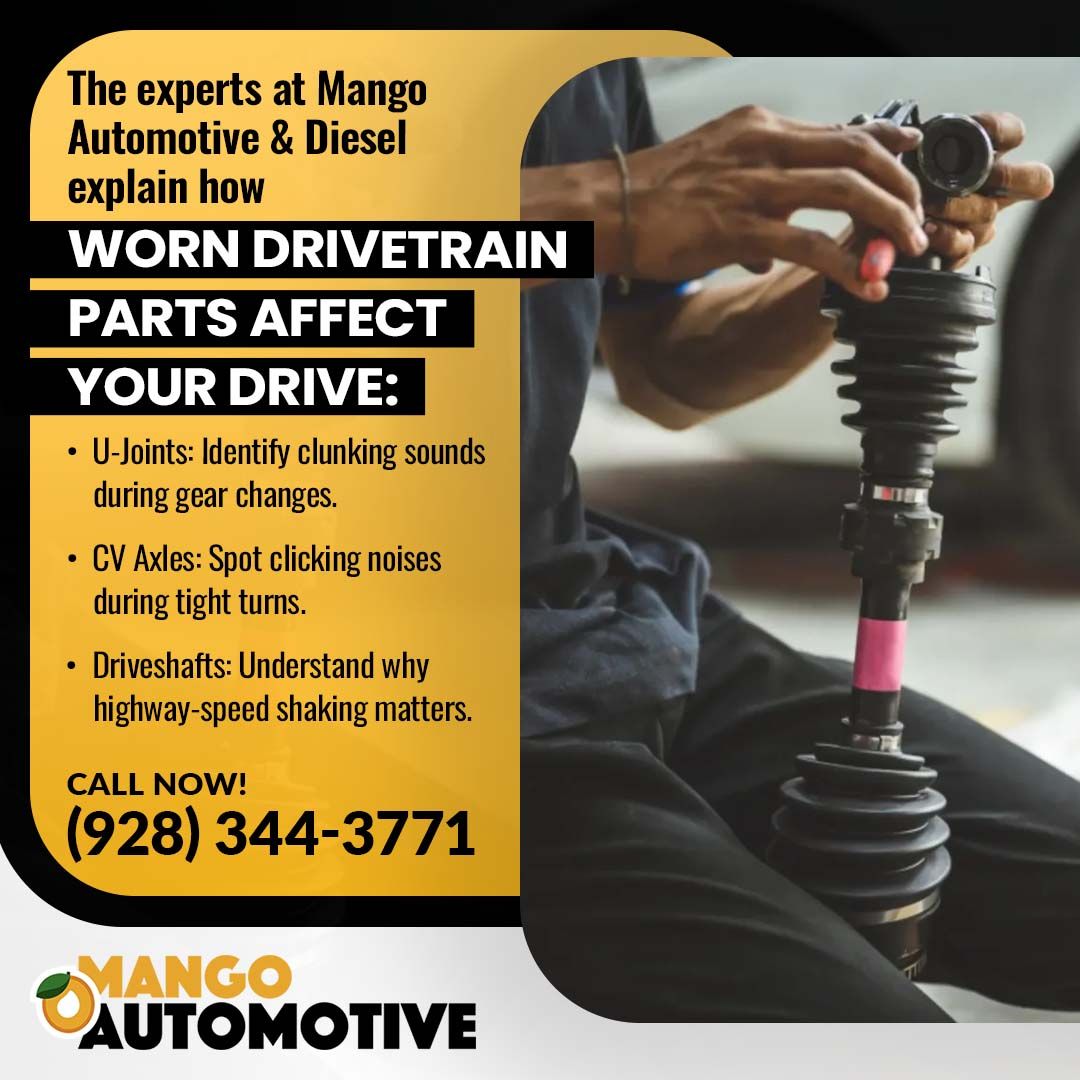
The drivetrain transfers engine power to the wheels through connected components, including the transmission, driveshaft, differential, and axles. This system works together to move your vehicle forward or backward. Each part plays a specific role in keeping your ride smooth.
The transmission adjusts how much power goes to the wheels based on your speed. The driveshaft carries that power from the transmission to the back of your vehicle. The differential splits the power between your left and right wheels, letting them turn at different speeds when you go around corners. Axles form the final connection to your wheels.
When any part in this chain develops problems, your whole vehicle suffers. Worn parts create imbalances that you feel as vibrations. Damaged components can't transfer power smoothly, which leads to jerky or rough driving.
Common Drivetrain Components That Cause Vibration
Universal Joints and Wear Patterns
Universal joints, or U-joints, connect sections of the driveshaft and allow it to move flexibly while the suspension goes up and down. These joints look like small crosses with caps on each end. They let the driveshaft bend and flex as you drive over bumps and uneven roads.
U-joints wear down over time from normal use. However, certain driving habits speed up this wear:
- Towing heavy trailers puts extra stress on U-joints.
- Frequent off-road driving exposes joints to dirt and debris.
- Lack of lubrication causes metal parts to rub and wear faster.
In Yuma's hot desert climate, dust gets everywhere and speeds up wear on these parts. The extreme heat also breaks down the grease that keeps U-joints working smoothly.
Constant Velocity Joints in Front-Wheel Drive Vehicles
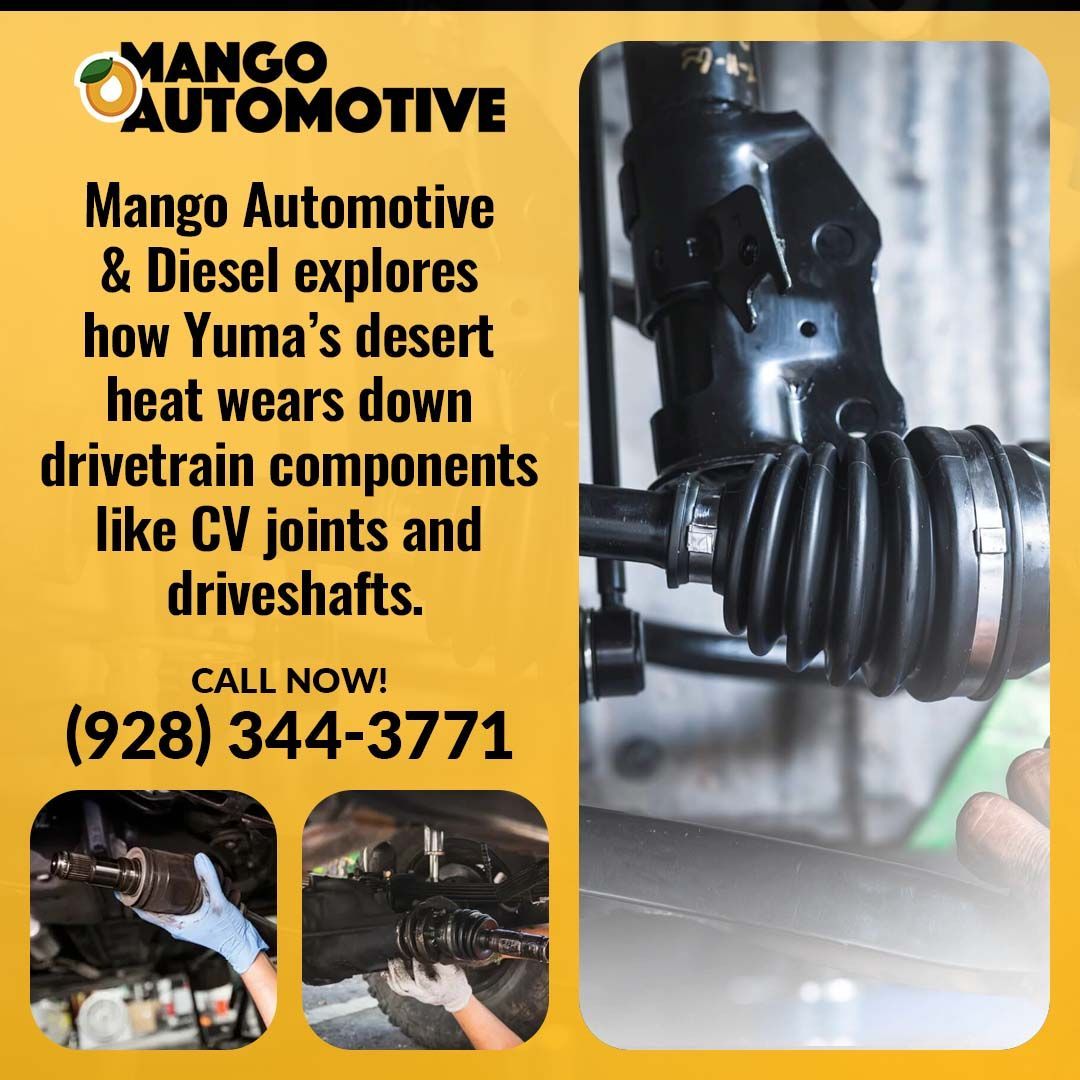
Constant velocity joints, called CV joints, let your front wheels receive power while also steering and moving up and down. If you drive a front-wheel drive car or an all-wheel drive vehicle, CV joints are what make it possible for your wheels to do two jobs at once: steer and power your vehicle forward.
Each front axle has two CV joints:
- The outer joint connects to your wheel and handles sharp steering angles.
- The inner joint connects to your transmission and handles smaller movements.
Both joints contain small ball bearings that roll in grooves for smooth power flow. The rubber boot covering each CV joint is what keeps it working. This accordion-like cover keeps the special grease inside while keeping dirt and water out. When the boot tears, moisture and dirt get in while the grease leaks out. Once that happens, the CV joint wears out quickly.
Driveshaft Balance and Alignment Issues
The driveshaft must spin perfectly balanced at high speeds, but any damage or imbalance creates vibrations that get worse as you drive faster. This long metal tube spins thousands of times per minute when you're driving. Even a small imbalance becomes a big problem at high speeds.
Common causes of driveshaft imbalance:
- Road debris impact that causes dents or bends.
- Rust buildup on one side adding uneven weight.
- Missing factory balance weights.
- Worn center support bearings that allow excessive wobble.
Where you feel the vibration tells you what's wrong. If you feel shaking through your seat or the floor, the driveshaft is usually the problem. If your steering wheel shakes instead, the issue is more likely your tires or wheels.
The way the U-joints line up at each end of the driveshaft matters too. If they're not properly aligned during installation, the shaft creates speed changes as it spins, and you'll feel that as vibration. Visiting a
mechanic shop near you for driveshaft service addresses balance problems before they cause additional damage.
Recognizing Drivetrain Problems Through Driving Symptoms
Vibrations During Acceleration
Vibrations that get worse when you press the gas pedal point to drivetrain problems rather than tire issues. When you accelerate and feel shaking that increases with more power, worn drivetrain parts are usually to blame. The extra force during acceleration makes any looseness or damage much more noticeable.
Common causes of acceleration vibrations:
- Worn U-joints create obvious vibrations because they're working hardest during acceleration, letting the driveshaft wobble as it spins under load.
- Bad CV joints cause similar shaking in front-wheel drive cars, especially when accelerating hard or driving up steep hills.
- Bent axles or driveshafts create vibrations that worsen with speed, becoming severe enough at highway speeds to affect vehicle control.
You feel these vibrations through your seat, floor, or steering wheel, depending on which component is failing.
Clunking and Grinding Noises
Sharp clunking sounds when you shift between drive and reverse mean worn U-joints or differential parts are moving too freely. These noises happen when loose parts suddenly move and slam together under load. You're hearing metal hitting metal after moving through the gap created by wear.
What different noises indicate:
- Clunking from U-joints occurs when shifting gears or applying sudden throttle, as the worn joint moves through its looseness before engaging.
- Grinding or growling sounds point to worn differential bearings and change with vehicle speed.
- Louder grinding during turns means more weight is shifting to the worn bearing.
- Rattling during normal driving suggests worn center bearings, letting the driveshaft move excessively.
Rough Shifting and Power Delivery
Jerky power or rough gear changes mean your transmission is affecting your entire drivetrain's performance. Smooth power needs all your drivetrain parts working together properly. When your transmission doesn't shift cleanly, it makes everything feel rough.
Common transmission-related issues:
- Low transmission fluid causes delayed shifts and rough engagement because the transmission needs fluid pressure to change gears smoothly.
- Worn transmission mounts let the engine and transmission move around too much, creating jerking or shaking during acceleration or gear changes.
- Bad solenoids in automatic transmissions cause unpredictable shifting, making the transmission shift at the wrong times or hunt for the right gear.
Without proper fluid levels, shifts become harsh, or the transmission might slip. Addressing transmission issues promptly at car repair shops prevents internal damage that leads to expensive rebuilds or replacements.
Diagnostic Approaches for Drivetrain Problems
Professional diagnostics pinpoint specific failed components through test drives and hands-on inspections. Experienced technicians at car repair shops use step-by-step methods to find exactly what's wrong. This approach saves you money by fixing only what needs fixing.
The diagnostic process starts with a thorough test drive. Auto repair technicians pay attention to when vibrations happen, at what speeds, and under what conditions. Vibrations during acceleration mean something different than vibrations during braking or coasting.
After the test drive comes the physical inspection. Technicians look for torn boots, leaking grease, and damaged parts. They check U-joints by trying to move the driveshaft by hand to feel for looseness. CV joints get inspected for torn boots and rough movement when turned.
Mango Automotive & Diesel stands out among auto repair shops in Yuma, AZ, with diagnostic tools and an experienced team that quickly identifies what's causing your drivetrain issues. We explain everything we find in plain language and recommend only the repairs your vehicle actually needs.
Repair Solutions and Component Replacement
U-Joint Replacement and Driveshaft Service
U-joint replacement involves removing your driveshaft, pressing out worn joints, and installing new ones with proper alignment. Greaseable U-joints with fittings for periodic lubrication often work better in Yuma's desert environment than sealed, non-greaseable versions.
Proper installation is critical. The U-joints must sit completely flush with retaining clips snapped fully into place. When vibrations were present before repair, the driveshaft should be balanced afterward to correct any imbalances.
CV Joint and Axle Repair
CV joint repair typically means replacing the entire axle because the joint and shaft are built as one piece. New axles come with fresh CV joints at both ends plus new boots, making complete replacement more practical than rebuilding individual joints.
The replacement process involves removing the wheel and brake components, disconnecting the old axle, and installing the new one. Some vehicles allow CV boot replacement if caught immediately after tearing, but once dirt enters the joint, complete axle replacement is necessary.
Transmission Service and Mount Replacement
Transmission fluid service and new mounts address common causes of rough drivetrain operation and excessive vibration. Fresh fluid restores smooth shifting, while new mounts eliminate excessive movement that creates shaking.
Transmission fluid intervals vary by use. Normal driving requires service every 30,000 to 60,000 miles, while heavy use, like towing or operating in extreme heat, shortens intervals. Yuma's climate qualifies as heavy use.
Worn mounts show cracks, separated rubber, or collapsed cushioning. New mounts restore proper drivetrain positioning and prevent vibrations from reaching the cabin. Technicians at a mechanic shop near you can inspect mounts during regular maintenance and install new ones to restore proper drivetrain positioning and prevent vibrations from reaching the cabin.
Preventive Maintenance for Drivetrain Longevity
Regular inspections catch developing drivetrain problems before they cause complete failure or additional damage. Proactive maintenance saves money compared to emergency repairs and keeps you from getting stranded.
Visual inspections during routine oil changes give mechanics chances to spot early warning signs. These quick checks take just a few minutes but can find problems before they get serious.
Driving habits that accelerate drivetrain wear:
- Aggressive acceleration puts extra stress on CV joints and U-joints.
- Frequent towing that loads the drivetrain components beyond normal limits.
- Off-road driving exposes parts to impacts and dirt.
- Vehicles used this way need more frequent inspections.
Arizona's extreme heat and dusty conditions are especially hard on drivetrain components. Heat breaks down lubricants faster. Dust gets past seals and grinds away at bearings. These factors mean parts often need replacement sooner in Yuma than in other places. Regular maintenance at
car repair shops helps catch these issues early and extends component life.
When to Stop Driving and Seek Help
Certain symptoms mean your drivetrain is about to fail and needs immediate attention to prevent breakdown or safety problems. Ignoring serious warning signs can lead to driveshaft separation, complete CV joint failure, or transmission damage. These failures can leave you stranded or create dangerous situations.
- Loud clunking during gear changes signals severe wear in U-joints or differential parts. When the clunking becomes constant instead of occasional, failure is near. The worn parts are at the end of their life.
- Severe vibrations that affect your ability to control the vehicle demand immediate attention. If your steering wheel shakes so badly it blurs your vision, or if the vehicle wanders without you turning the wheel, stop driving. These symptoms mean parts are working beyond safe limits.
- Grinding noises from the transmission or differential mean the bearings are failing. Bearings support spinning parts and keep metal from grinding on metal. Once bearings start failing, the grinding gets worse quickly.
- Fluid leaks under your vehicle, especially red or brown fluids, mean seals have failed and will damage internal parts. Transmission fluid leaks cause low levels that lead to overheating. Differential oil leaks let metal parts run dry, destroying gears and bearings.
Professional Drivetrain Services at Mango Automotive & Diesel
At Mango Automotive & Diesel, we provide complete drivetrain diagnostics and repairs for Yuma drivers. Our experienced auto repair team knows the specific challenges that Arizona's desert climate creates for vehicles. We use professional diagnostic equipment to find problems accurately and recommend only necessary repairs.
Our drivetrain services include U-joint replacement, CV axle installation, driveshaft balancing, differential service, and transmission repairs. We work on all vehicle types, from passenger cars to heavy-duty trucks, RVs, and fleet vehicles. Every repair gets thoroughly tested before we return your vehicle.
Mango Automotive & Diesel has earned our reputation among
auto repair shops in Yuma, AZ, through quality work and exceptional service. Our facility offers comfortable amenities as you wait, including high-speed WiFi, productivity-friendly seating, and refreshments. We also provide complimentary shuttle service within three miles for customers who prefer to leave their vehicles with us.
Expert Drivetrain Service in Yuma
Drivetrain issues that cause shaking and rough driving don't fix themselves. Worn components keep deteriorating until they fail completely. The vibrations you feel today are warning signs that let you address problems before they become emergencies. Experienced technicians at a mechanic shop near you can tell the difference between similar symptoms that have different causes.
Contact Mango Automotive & Diesel today to schedule a thorough drivetrain inspection. Call us at
(928) 344-3771 to make an appointment at one of the most trusted auto repair shops in Yuma, AZ. Our team is ready to diagnose your drivetrain problems and restore smooth, quiet operation to your vehicle.