
How Automotive Repair Services Optimize Engine Efficiency
Every time you start your vehicle, hundreds of precisely timed events occur inside the engine to convert fuel into motion. This complex process of combustion, compression, and exhaust depends on every component working in harmony. When just one part falls out of sync, your engine burns more fuel to produce less power.
Yuma's desert climate makes this balance even harder to maintain. Extreme heat stresses cooling systems. Fine dust works its way past worn seals. Extended highway drives demand peak performance from engines that may have skipped routine care. The result? Drivers notice their fuel economy dropping, power fading, and maintenance costs climbing.
At
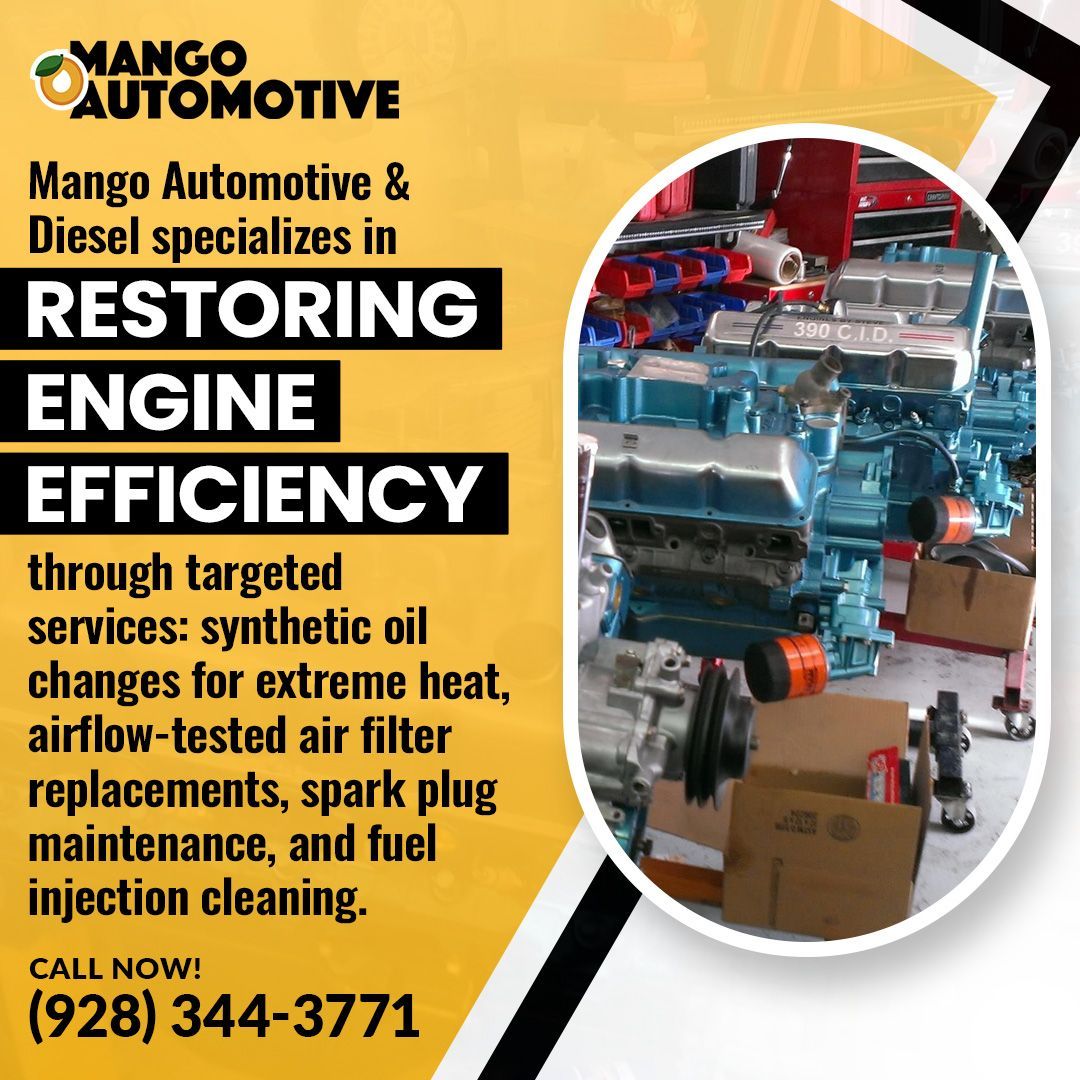
Mango Automotive & Diesel, we specialize in restoring engine efficiency through targeted
automotive repair services in Yuma. Our technicians understand how desert conditions affect vehicle performance and know which services deliver the biggest improvements for local drivers. Whether your engine suffers from neglected maintenance or normal wear, professional service brings back the performance and fuel economy you expect.
Engine Performance and Fuel Use
Engine efficiency measures how much fuel energy is converted to useful work. Modern gasoline engines convert 30-35% of fuel energy into motion on average, with the rest becoming heat. Engine efficiency depends on three core processes working together.
Intake System: Draws air into cylinders where it mixes with fuel in precise ratios- Ignition Process: Spark plugs ignite the mixture, creating controlled explosions that push pistons down
- Exhaust System: Removes spent gases so the cycle can repeat continuously
Each process must occur at precise intervals. When timing shifts even slightly, efficiency drops. Several common maintenance issues disrupt these critical processes.
Oil breaks down and loses its ability to reduce friction between metal surfaces.- Air filters clog and restrict oxygen flow needed for complete combustion.
- Spark plugs wear and create weaker ignition.
Professional automotive repair services restore these systems to their original condition. This brings back the performance and fuel economy you experienced when your vehicle was new.
Primary Services That Restore Engine Performance
Oil Changes and Lubrication Management
Fresh oil reduces friction between moving engine parts by creating a protective film. This film prevents metal-on-metal contact that generates heat and wastes fuel energy. Oil performs four functions inside your engine.
Lubrication: Reduces friction between moving parts- Cooling: Removes heat from hot components
- Cleaning: Carries away combustion byproducts
- Sealing: Fills gaps between pistons and cylinder walls
As oil ages, it loses effectiveness in all four areas. During combustion, tiny particles of carbon and metal enter the oil. These particles act like sandpaper between precision-machined surfaces. Clean oil suspends these particles and carries them to the filter. Old oil becomes saturated and allows particles to circulate freely, accelerating wear.
Heat also breaks down oil molecules over time. Fresh oil maintains the right thickness across temperature ranges. Degraded oil becomes too thin when hot and too thick when cold, failing to protect properly in either condition.
Synthetic oil offers advantages in extreme climates. In Yuma's summer temperatures exceeding 110°F, synthetic formulations maintain protective properties longer than conventional oils.
Air Filter Replacement and Intake Optimization
Clean air filters maintain proper fuel-to-air ratios by allowing unrestricted airflow into the combustion chamber. Restricted airflow forces engines to burn fuel less completely.
Engines require precise mixtures of fuel and air for efficient combustion. The ideal ratio sits around 14.7 parts air to 1 part fuel. When air filters clog with dust and debris, airflow decreases while fuel delivery remains constant. This creates a rich mixture that burns incompletely.
The Cost of Restricted Airflow
Incomplete combustion wastes fuel and reduces power output. Unburned fuel exits through the exhaust system rather than generating motion. Black exhaust smoke often indicates this condition.
Modern fuel injection systems attempt to compensate by adjusting delivery, but a heavily restricted intake still impacts performance. The computer can only do so much when physical airflow limitations exist.
Desert environments accelerate filter contamination. Fine dust particles bypass pre-filters and accumulate in the main element faster than in humid climates. Replacing a clogged air filter restores proper airflow and improves both acceleration and efficiency.
At Mango Automotive & Diesel, we inspect air filters during every service visit at our automotive repair shop. Visual inspection reveals contamination levels, but airflow testing provides accurate measurements. Filters showing heavy restriction require replacement regardless of mileage intervals.
Spark Plug Inspection and Replacement
Spark plugs ignite the fuel-air mixture at precisely timed intervals. Worn plugs create weak sparks that cause incomplete combustion and misfires.
Each spark plug fires thousands of times per minute during normal driving. Over time, the metal tips wear down from these constant electrical sparks. As the tips erode, the gap between them grows wider. A wider gap needs more electrical power to create a spark. Eventually, your ignition system can't produce enough power, and the spark plug stops firing consistently.
When a spark plug misfires, the fuel is wasted in the cylinder. The fuel-air mixture never ignites, so it goes straight out the exhaust without creating any power. If one cylinder stops working in a four-cylinder engine, you lose roughly 25% of your power. When multiple cylinders misfire, your vehicle struggles even more.
Worn spark plugs create another problem beyond wasted fuel. They force your ignition coils to work overtime trying to generate stronger sparks. This extra strain can burn out the coils prematurely. Replacing failed coils costs significantly more than changing spark plugs on schedule.
Today's platinum and iridium spark plugs last much longer than the older copper plugs. Some can go 60,000 to 100,000 miles before needing replacement. Even so, they still need regular inspection.
Fuel System Cleaning and Injection Service
Fuel injectors spray precise amounts of fuel into cylinders. Deposits on injector nozzles disrupt spray patterns and prevent proper atomization.
Modern fuel injection systems operate under high pressure to force fuel through tiny nozzles that create fine mist patterns. Each droplet must vaporize completely before combustion begins. This allows the fuel to burn thoroughly and produce maximum energy.
Carbon deposits build up on injector tips from heat and fuel additives. These deposits alter spray patterns, creating larger droplets that don't vaporize completely. Partially vaporized fuel burns inefficiently or not at all. This wastes fuel and reduces engine power.
Professional cleaning services use specialized equipment to remove these deposits. Chemical cleaners dissolve carbon buildup while ultrasonic cleaning removes stubborn residue. The process restores original spray patterns and atomization quality.
Direct injection systems face additional challenges. Fuel sprays directly into the combustion chamber, bypassing intake valves. Without fuel washing over valves, carbon deposits accumulate faster on these surfaces. Intake valve deposits restrict airflow and disrupt mixture distribution between cylinders.
Advanced Maintenance for Maximum Efficiency
Beyond basic services, several specialized automotive repair services address complex systems that play major roles in engine efficiency. These advanced maintenance procedures require professional diagnostic equipment and technical expertise to perform correctly.
Cooling System Service
Proper coolant circulation prevents overheating and maintains ideal combustion temperatures. Engines operate most efficiently within narrow temperature ranges.
Temperature Control and Combustion Quality
Engine temperature directly affects combustion quality. Cold engines waste fuel with rich mixtures. Overheated engines damage pistons and lose power. The cooling system maintains the temperature at which fuel burns completely.
Coolant Degradation
Coolant degrades over time and becomes acidic. This corrodes aluminum components and creates deposits that block passages in the radiator and engine block.
Common Thermostat Problems
Thermostat failure is another common problem. Stuck-open thermostats prevent engines from reaching proper temperature, forcing the computer to use more fuel. Stuck-closed thermostats cause overheating and serious damage.
At Mango Automotive & Diesel, we pressure test cooling systems during service to catch leaks early. Testing reveals weak hoses, failing water pumps, and radiator cap issues before they cause roadside breakdowns.
Timing Belt and Valve Timing Inspection
Precise valve timing controls when air enters and exhaust exits the combustion chamber. Incorrect timing reduces power and increases fuel consumption. Intake valves must open at exact moments to draw maximum air into cylinders. Exhaust valves must close before intake valves open to maintain compression. Even small timing errors reduce efficiency.
Timing Belt Wear and Stretch
Timing belts stretch with age. Stretched belts allow camshafts to lag behind their programmed positions, delaying valve events. This reduces air intake and exhaust evacuation time, dropping power while increasing fuel consumption.
Variable Valve Timing Systems
Modern engines with variable valve timing adjust based on speed and load using oil pressure. Dirty oil or worn solenoids prevent proper adjustment, locking timing in one position and reducing efficiency across the engine's operating range.
Diagnostic Services That Identify Efficiency Problems
Modern automotive repair shops use advanced diagnostic tools to pinpoint problems that reduce engine efficiency. These tests identify issues before they cause breakdowns or expensive damage.
Computer Diagnostics and Sensor Analysis
Modern engines rely on dozens of sensors to adjust fuel delivery, timing, and emissions controls. Failed sensors cause computers to make incorrect adjustments that waste fuel.
The engine control computer monitors sensors continuously. When sensors fail or become contaminated, the computer receives faulty data and creates incorrect fuel mixtures that waste gas and reduce power. Professional diagnostic equipment reads live sensor data and compares readings against factory specifications to identify problems before warning lights appear.
Compression Testing
Compression testing measures cylinder sealing quality. Low compression indicates worn rings, valves, or gaskets that allow combustion pressure to escape.
When cylinders don't seal properly, pressure leaks during combustion, reducing power and increasing fuel consumption. Compression values should fall within similar ranges across all cylinders. Wide variations indicate specific problems like head gasket failure or worn valves.
At Mango Automotive & Diesel, we use advanced diagnostic equipment to identify efficiency problems quickly and accurately. Our
auto repair shop in Yuma, AZ, performs comprehensive computer diagnostics and compression testing during service visits. We catch problems early, prevent expensive failures, and provide detailed explanations so you understand what your engine needs.
The Desert Climate Factor in Engine Efficiency
Heat Effects on Engine Components
Yuma's extreme temperatures stress engines beyond normal operating conditions. Components designed for high internal temperatures also face very high external ambient conditions.
Component
Heat Challenge
Impact on Efficiency
Cooling System
Reduced temperature difference between the engine and the surrounding air makes heat rejection harder
Engine temperatures climb into ranges where efficiency drops, and damage occurs
Engine Oil
Conventional oils thin as temperatures rise above 110°F
Reduced protective film strength increases bearing and cylinder wall wear, consuming power
Fuel System
Fuel heats up in tanks, lines, and rails exposed to the desert sun
Hot fuel vaporizes easily, creating problems in older vehicles and reducing cooling effects in modern systems
Dust and Debris Management
Desert dust contains fine particles that bypass basic filtration and accelerate internal wear. Proper filter maintenance becomes more important in arid climates.
Area Affected
Dust Problem
Consequence
Engine Interior
Micron-sized particles pass through worn or low-quality filters
Act as abrasive compounds between metal surfaces, accelerating wear
Radiator
Dust coats radiator fins
Blocks heat transfer and reduces cooling efficiency
Electrical System
Dust mixes with morning dew
Creates corrosion and conductive pathways that cause shorts
Intake System
Cracks or poor seals in air filter housings
Allow unfiltered air to enter, defeating the entire filtration system
Cost Benefits of Efficiency Maintenance
Regular maintenance prevents expensive auto repairs while improving fuel economy. Small investments in routine service save money compared to major component replacements.
Consider a vehicle averaging 15,000 miles annually. Improving efficiency through proper maintenance reduces fuel costs over the year. Even modest improvements add up to real savings at the pump.
Major repair costs exceed routine maintenance by large margins. Engine replacement can cost several thousand dollars for common vehicles. These repairs become necessary when maintenance lapses allow small problems to escalate into component failures.
Vehicles with complete maintenance records also sell for more than identical vehicles with incomplete records. Buyers value documented service history because it demonstrates responsible ownership and predicts future reliability.
Frequently Asked Questions About Engine Efficiency
How often should I service my engine for maximum efficiency?
Service intervals depend on driving conditions and vehicle age. Most engines need oil changes every 5,000-7,500 miles, air filter checks every 15,000 miles, and spark plug replacement every 30,000-100,000 miles. Desert driving in Yuma requires more frequent service.
Can maintenance really improve my fuel economy?
Yes. Fixing maintenance problems improves fuel economy noticeably. Replacing worn components like oxygen sensors, spark plugs, and clogged filters restores lost efficiency. Proper tire inflation, using manufacturer-recommended oil, and replacing clogged air filters all provide measurable fuel economy gains. Professional auto repair services address multiple efficiency issues simultaneously for maximum improvement.
How do I know if my engine needs efficiency service?
Warning signs include reduced fuel economy, decreased power, rough idling, difficult starting, and unusual exhaust smoke. Check engine lights indicate sensor problems that affect efficiency.
Track your fuel economy over several tanks. If mileage drops noticeably without driving habit changes, visit an automotive repair shop for diagnostic service.
Mango Automotive & Diesel: Expert Engine Repair Services in Yuma
We understand that Yuma drivers face unique challenges from extreme heat and dusty conditions. Our technicians specialize in desert climate maintenance and use this knowledge to extend engine life and maximize efficiency.
Our automotive repair services are backed by an industry-leading 60-month/60,000-mile warranty that includes 36 months/36,000 miles of nationwide coverage plus an additional 24 months/24,000 miles at our locations. This warranty demonstrates our confidence in service quality.
While you wait for service, enjoy our comfortable environment with high-speed WiFi, refreshments, and productivity-friendly seating. We offer complimentary shuttle service within 3 miles for drivers who prefer to continue with their day. For added convenience, our key drop service accommodates early morning and after-hours vehicle drop-off. Our auto repair shop in Yuma, AZ, handles everything from routine maintenance to complex diagnostic work.