Understanding Brake Noise: When Squealing Means Brake Service and Inspection in The Valley, New Mexico
Brake noises often signal wear or issues affecting your vehicle’s safety. High-pitched squealing and grinding sounds commonly correlate to brake component wear, a feature seen in vehicles everywhere, and professionals at service centers regularly identify these symptoms during inspections.
Dry conditions, plenty of sunshine, and average summer highs near the low 90s characterize Albuquerque’s desert climate. While extreme heat and fine dust can contribute to brake dust buildup on components, such conditions are one of many factors that may affect braking performance over time. Longer heat exposure can affect brake pad materials, but most modern pads are designed for normal performance in this climate.
At
Mango Automotive (The Valley), we see Albuquerque drivers every day who've caught brake problems early simply by paying attention to unusual sounds. In this guide, we'll break down the different types of brake noises, what causes them in our local driving conditions, and when it's time to schedule a professional
brake service and inspection in The Valley, NM.

Decoding Different Types of Brake Noises and What They Mean
Not all brake noises signal the same problem. Learning to distinguish between different sounds helps you understand the urgency of your situation.
- High-Pitched Squealing – This sharp, consistent sound usually indicates your brake pads have worn down to the point where the wear indicator, a small metal tab designed specifically to make noise, is contacting the rotor. It's an early warning system built into most brake pads to alert you before the pad material is completely gone.
- Metal-on-Metal Grinding – If you hear a harsh grinding or scraping sound, you've moved beyond the warning stage. This noise means the brake pad material has worn away completely, and the metal backing plate is now rubbing directly against the rotor. This situation damages your rotors and reduces your stopping power.
- Clicking or Rattling – These sounds often point to loose brake hardware, such as anti-rattle clips or caliper mounting bolts. While not always an immediate safety concern, loose components can affect braking performance and should be checked by a car mechanic near you in The Valley, NM.
- Rubbing or Scraping Sounds – Continuous rubbing noises, even when you're not applying the brakes, might indicate a stuck caliper or foreign debris caught between the pad and rotor. This creates constant friction that can overheat your brake components.
Being aware of these noise patterns helps you communicate more effectively with your mechanic and gives you insight into how urgently you need service.
Common Causes of Brake Squealing in The Valley's Driving Conditions
The Valley's unique environment creates specific challenges for brake systems that drivers in other climates don't face.
Climate Impact on Brake Components
Albuquerque's desert climate subjects brake components to extreme temperature swings. According to Weather Spark climate data, summer temperatures in Albuquerque typically reach 93°F, with the hottest months seeing temperatures that can exceed 100°F. Pavement temperatures rise considerably higher than air temperatures during peak afternoon hours. These conditions affect brake performance in several ways:
Temperature Effect
Impact on Brakes
Extreme heat exposure
Accelerates brake pad glazing and hardening
Rapid temperature changes
Causes thermal stress on rotors
Low humidity
Increases dust accumulation on components
Temperature cycling
Affects brake fluid moisture absorption
Stop-and-Go Traffic Patterns
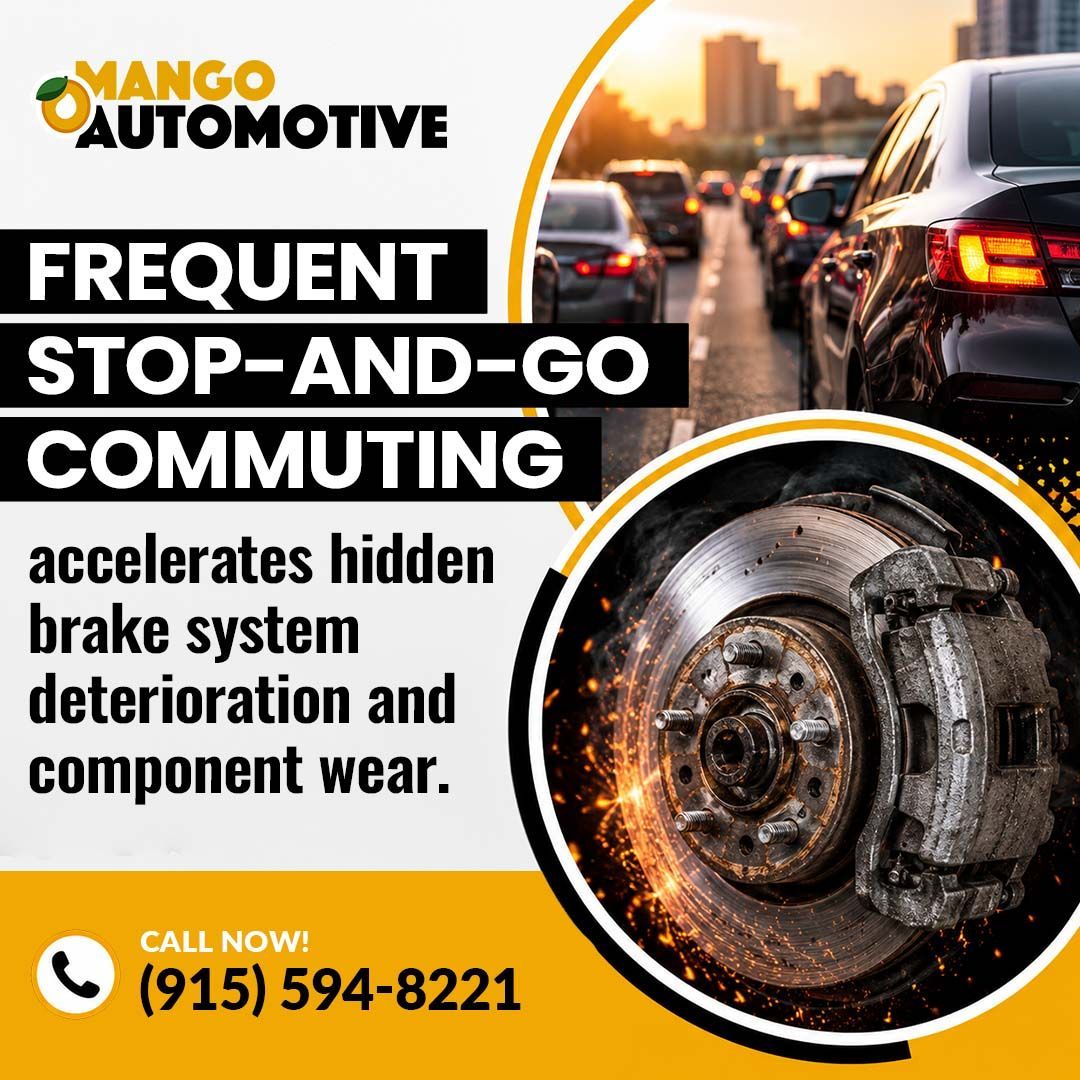
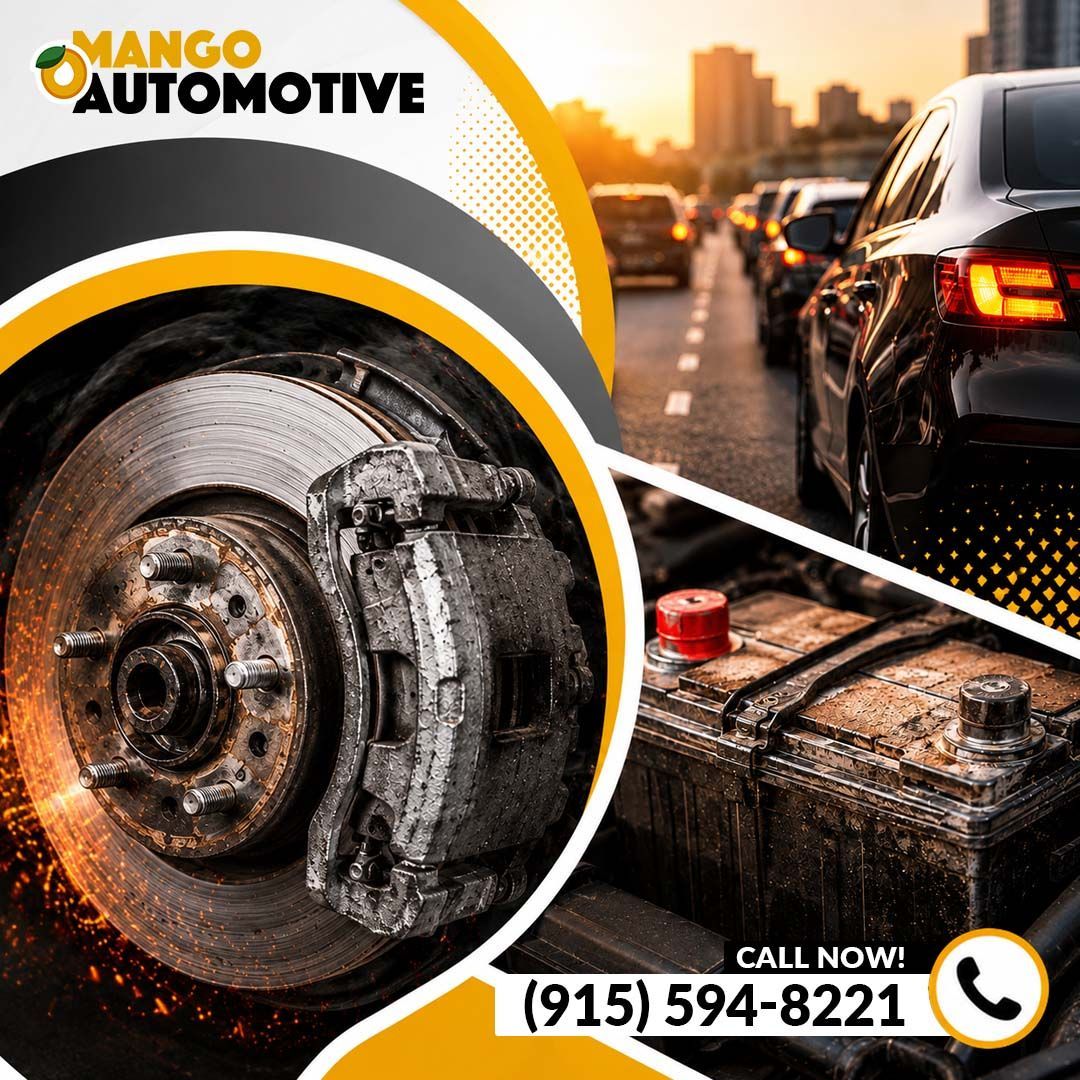
Traffic congestion along major corridors like I-25 and Coors Boulevard creates frequent braking scenarios that accelerate pad wear. Urban driving involves substantially more brake applications per mile than highway driving, leading to faster component degradation. The constant stopping and starting in city traffic generates more heat in your brake system and wears through the pad material more quickly than steady highway speeds.
Brake Pad Material Considerations
Different brake pad materials produce varying levels of noise:
- Ceramic pads: Quieter operation, but may produce occasional squealing in cold weather
- Semi-metallic pads: More prone to noise but offer excellent stopping power
- Organic pads: Quietest operation, but wear faster in high-heat conditions
Dust and Debris Accumulation
The Valley's dusty environment means fine particles constantly settle on brake components. When combined with moisture from morning dew, this creates a thin layer that can cause temporary squealing until the brakes warm up and clear the debris.
Morning Condensation Effects
If you only hear squealing during the first few brake applications in the morning, you're likely experiencing surface rust formation from overnight condensation. This typically clears within a few stops and doesn't indicate a problem. However, if the noise persists beyond initial use, schedule brake service and inspection to identify the underlying cause.
The Critical Role of Professional Brake Service and Inspection
Brake noises warrant professional evaluation because what you hear doesn't always tell the complete story of your brake system's condition.
What a Thorough Inspection Includes
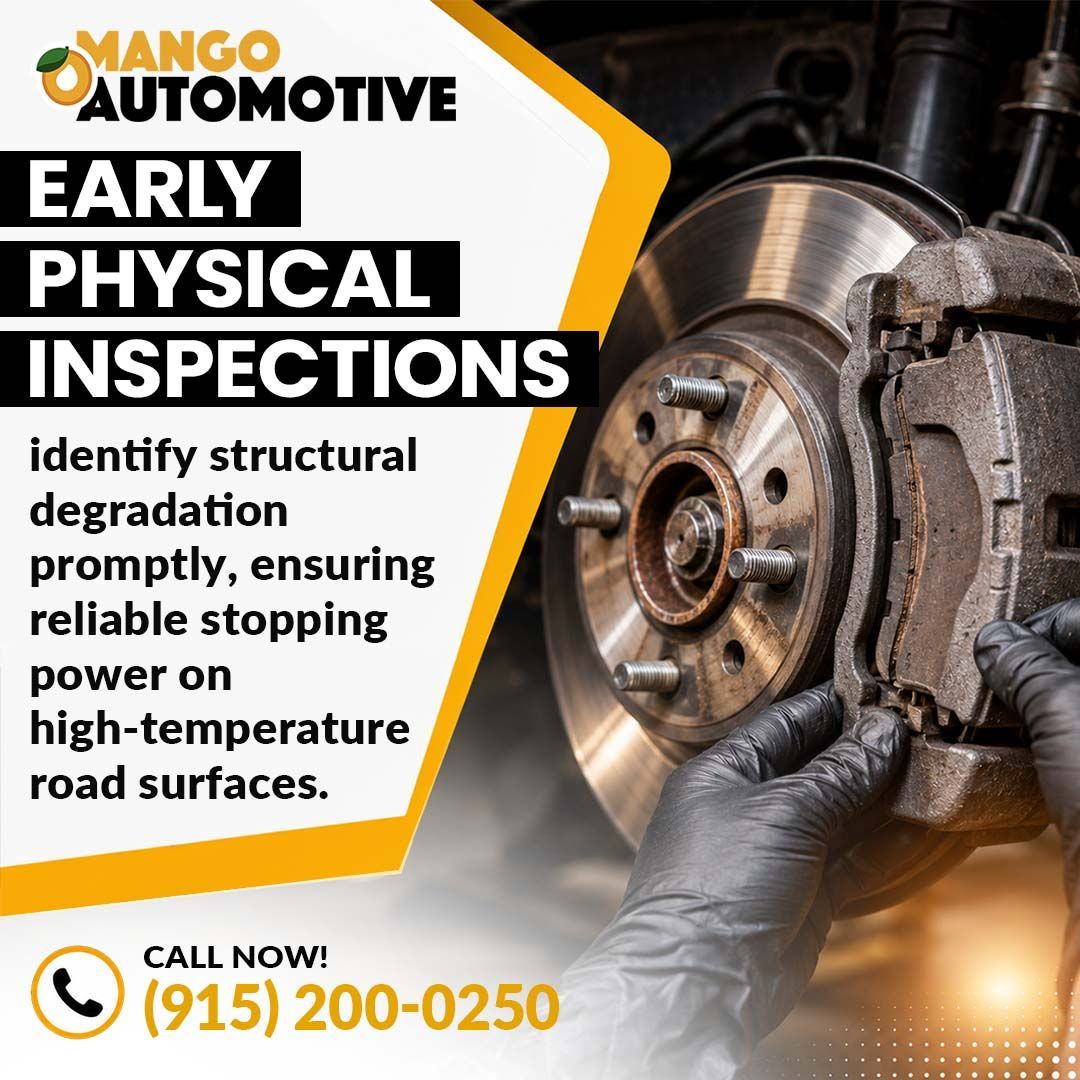
When you bring your vehicle to Mango Automotive (The Valley), our technicians perform a multi-point brake inspection that examines:
- Brake pad thickness: Measuring remaining material on all four wheels
- Rotor condition: Checking for scoring, warping, or excessive wear
- Caliper function: Testing for proper piston operation and seal integrity
- Brake fluid quality: Assessing contamination, moisture content, and proper level
- Hardware condition: Inspecting clips, springs, and mounting bolts
- Brake line integrity: Examining hoses and lines for leaks or damage
Beyond Visual Assessment
Brake-related issues are a serious safety concern. In National Highway Traffic Safety Administration research, approximately 22% of vehicle crashes attributed to mechanical failure involve brake system problems. Many of these accidents could have been prevented through proper inspection and maintenance. Professional brake evaluation goes beyond what you can see, including:
- Measuring rotor thickness with precision micrometers
- Testing brake fluid boiling point
- Checking caliper slide pin movement
- Verifying proper brake balance between all four wheels
- Road testing under controlled conditions
Safety Thresholds and Measurements
Brake components have specific minimum thickness requirements set by manufacturers. For example, most brake pads need replacement when they reach about 3–4 mm, though this varies by vehicle. Rotors also have minimum thickness specifications stamped on their surface, and driving below those limits can compromise safety. During an inspection, a mechanic near you checks these measurements to confirm whether your brakes need attention right away or can safely wait until your next scheduled maintenance.
Warning Signs That Require Immediate Attention
Certain brake warning signs mean you should stop driving and go immediately to an auto repair shop near you in The Valley, NM.
Critical Warning Indicators
Metal-on-Metal Grinding: This sound means you've completely worn through your brake pads. Continuing to drive damages your rotors, increases stopping distances, and puts you at serious risk. Pull over safely and arrange for towing to an auto repair shop near you.
Brake Pedal Changes: A soft, spongy pedal that sinks toward the floor indicates air in the brake lines or a fluid leak; both are serious safety issues. A hard pedal that requires excessive force suggests a problem with the brake booster or vacuum system.
Vibration or Pulsing: If your brake pedal pulses or the steering wheel shakes when braking, your rotors have likely warped from excessive heat. While you can typically drive cautiously to an auto repair shop, address this promptly, as it reduces braking efficiency.
Pulling to One Side: When your vehicle pulls left or right during braking, one side of your brake system isn't working properly. This could indicate a stuck caliper, collapsed brake hose, or contaminated brake pad.
Dashboard Warning: Light Your brake warning light illuminates for several reasons: low fluid level, parking brake engagement, or ABS system problems. Don't ignore this light; have it diagnosed immediately.
Extended Stopping Distances: If you notice your vehicle takes longer to stop than usual, even without obvious noises, your brake system isn't performing correctly. This warrants immediate professional evaluation.
Rear-end collisions are a significant safety concern on urban roads. According to Insurance Institute for Highway Safety research, approximately one-third of all police-reported crashes in the United States are rear-end collisions. Stop-and-go traffic conditions common in Albuquerque increase the frequency of these incidents, making properly functioning brakes critical for preventing crashes.
Preventing Brake Problems Through Regular Maintenance
Proactive brake care saves money and keeps you safer on The Valley's roads.
Recommended Service Intervals
For typical driving conditions in Albuquerque, follow these general guidelines:
- Brake inspection: Every 12,000 miles or annually
- Brake fluid replacement: Every 24,000-36,000 miles or every 2-3 years
- Brake pad replacement: Every 25,000-70,000 miles (varies by driving habits)
- Rotor service: Evaluation at each pad replacement
Heavy stop-and-go driving, frequent mountain trips, or towing require more frequent inspections.
The Cost of Prevention vs. Reaction
Service Type
Approximate Cost Range
What's Included
Routine brake inspection
Complimentary-$100
Visual check, measurements, test drive
Brake pad replacement
$325 - $383 per axle
New pads, hardware, labor
Rotor resurfacing
$75-$150 per axle
Machining existing rotors
Rotor replacement
$550-730 per axle
New rotors, installation
Caliper replacement
$825-$940 per wheel
New caliper, bleeding, labor
Catching pad wear early can sometimes allow rotor resurfacing instead of replacement, often saving around $100–$250+ per axle, depending on the vehicle and local labor rates. Waiting until metal-on-metal grinding occurs often requires complete rotor replacement plus potential caliper damage.
Warranty Coverage and Protection Assurance
At Mango Automotive (The Valley), we back our brake services with an industry-leading warranty: 60 months/60,000 miles total coverage (36 months/36,000 miles nationwide plus an additional 24 months/24,000 miles exclusively at Mango Automotive locations). This warranty demonstrates our confidence in our work and protects your investment in vehicle safety.
Note: Brake pads and rotors are considered wear items and follow manufacturer warranty policies, but our labor warranty provides coverage for the service we perform.
What to Expect During Your Brake Service Appointment
Knowing the brake service process helps you feel confident about the care your vehicle receives.
Initial Consultation
When you arrive, describe the noises you've been hearing in as much detail as possible:
- When does the noise occur (cold start, highway speeds, city driving)?
- How long has it been happening?
- Has it changed or worsened over time?
- Are there any other symptoms (vibration, pulling, warning lights)?
Diagnostic Test Drive
A technician may drive your vehicle or ride with you to hear the noises under actual driving conditions. This helps pinpoint whether the issue occurs during braking, acceleration, turning, or cruising.
Complete Brake Inspection
The technician performs a detailed inspection of all four wheels, measuring pad thickness, examining rotors, checking fluid condition, and testing caliper operation. This takes 30-45 minutes for a thorough evaluation.
Repair Recommendations
Based on findings, your service advisor explains what needs attention:
- Items requiring immediate service for safety
- Components approaching replacement thresholds
- Preventive services that can extend system life
You'll receive transparent pricing before any work begins, allowing you to make informed decisions about your vehicle.
Service Timeline
Most brake jobs are completed same-day:
- Brake pad replacement: 1-2 hours per axle
- Rotor replacement or resurfacing: adds 30-60 minutes
- Brake fluid flush: 30-45 minutes
- Caliper replacement: 2-3 hours per wheel
While your vehicle is being serviced, take advantage of our comfortable waiting area with high-speed WiFi and refreshments, or use our complimentary shuttle service within 3 miles.

Schedule Your Brake Inspection Today
Brake noises are your vehicle's early warning system; don't ignore them. Whether you're hearing squealing, grinding, or any unusual sounds when you apply your brakes, our team can diagnose the issue and recommend the right solution. We've built our reputation in The Valley on honest assessments, quality workmanship, and treating every customer with respect.
Ready to address those brake noises? Contact Mango Automotive (The Valley) at (505) 242-3401 or visit our location page to schedule your brake service and inspection. We're here to keep you safe on Albuquerque's roads with professional service backed by our 60-month/60,000-mile warranty. Your brakes are too important to wait; let's get them checked today.