Yes, a loose or damaged gas cap is one of the common reasons a check engine light comes on.
It breaks the seal on your evaporative emissions system, so the computer flags the pressure drop and lights the dash warning. Tightening or replacing the cap often clears it within a few drive cycles, although the timing depends on the vehicle and its emissions-monitoring conditions. At
Mango Automotive (The Valley), we always suggest checking the simplest cause first before assuming a bigger repair is needed, since it can save you both time and money.

What Causes a Check Engine Light After Refueling?
Your fuel tank is part of a sealed evaporative emission control (EVAP) system. On applicable gasoline vehicles, the onboard diagnostic system monitors the EVAP system for leaks and other faults. EPA vehicle emissions testing documentation confirms that fuel system leaks, including leaks at the gas cap, are tracked as part of standard evaporative emissions compliance monitoring.
When the cap is loose, cracked, or missing, the EVAP system may detect a leak and store a fault code. This can cause the check engine light to appear shortly after refueling. However, a similar warning can result from other EVAP system faults, so the gas cap should not be assumed to be the cause without further diagnosis.
Which Codes Point to a Car Engine Light Repair Issue?
If a technician scans your car for a car engine light repair, the following are EVAP leak codes. A loose, damaged, or missing gas cap is one possible cause, but these codes can also indicate leaks or faults elsewhere in the EVAP system. A diagnostic scan and appropriate testing are needed to identify the actual cause.

- P0442 – Small EVAP system leak detected
- P0455 – Large EVAP system leak detected
- P0457 – Leak detected, often specifically the fuel cap
How Do You Fix a Loose Gas Cap at Home?
Before booking a check engine light service in Albuquerque, you can check the gas cap if the vehicle is otherwise running normally and there are no urgent warning signs. Follow your vehicle owner's manual for refueling and gas cap instructions. Turn the engine off, keep away from flames and other ignition sources, and avoid smoking or creating sparks near the fuel filler.
- With the engine off, inspect the gas cap and its rubber seal for visible cracks, damage, or wear.
- Reinstall the cap according to the vehicle manufacturer's instructions. Do not assume every cap requires three clicks or the same tightening procedure.
- If the cap is damaged or will not seal properly, replace it with a cap that meets the vehicle manufacturer's specifications.
- Follow the owner's manual for any recommended steps after refueling. The EVAP monitor may need specific operating conditions before it can retest the system, so the warning light may not go out immediately. There is no guaranteed number of trips that will clear it.
If the check engine light is flashing, the engine is running roughly, the vehicle stalls, or you notice a strong fuel smell or a visible fuel leak, do not rely on a gas cap check alone. Stop driving when it is unsafe to continue and seek professional assistance.
Gas Cap Codes vs. Other EVAP System Problems
| Symptom | Likely Cause | DIY Fix? |
|---|---|---|
| Light appears right after fueling | Loose or crooked cap | Yes, retighten |
| Cap won't click, feels loose | Worn seal or cracked cap | Yes, replace cap |
| Light stays on after new cap | Bad purge valve or canister | Needs a scan tool |
| Rough idle or stalling with the light on | Broader engine issue | Needs professional diagnosis |
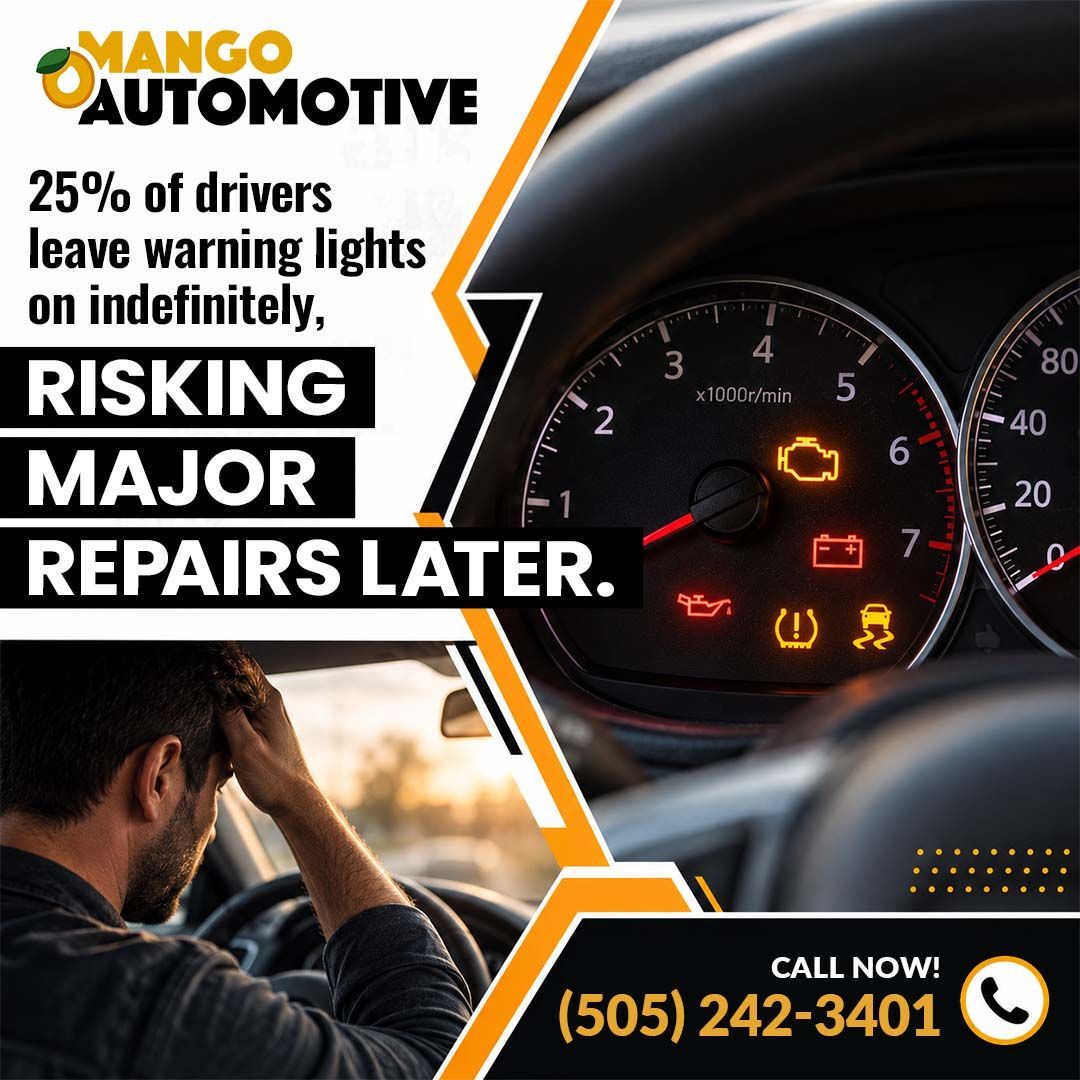
Drivers who put off checking a warning light aren't unusual. Kelley Blue Book reports that only about 36 percent of drivers get their check engine light inspected within the first week of it turning on, and 25 percent leave it on indefinitely. That delay can turn a five-minute gas cap fix into a bigger repair bill later.
When Should You Call a Mechanic in Albuquerque?
If tightening or replacing the cap doesn't clear the code, the leak may be elsewhere in the EVAP system. This is when it helps to talk to a mechanic in Albuquerque, rather than guessing. At Mango Automotive, our team handles everything from automotive engine repair to auto sensor replacement, so we can confirm whether it's a faulty purge valve, vapor pressure sensor, or something else entirely.

Frequently Asked Questions
How long does it take for the light to turn off after fixing the cap?
The timing varies by vehicle. The EVAP monitor must run under the operating conditions specified by the manufacturer before the system can confirm that the fault is no longer present. The light may turn off after subsequent driving, but there is no guaranteed number of trips. If it stays on, have the vehicle diagnosed.
Can I keep driving with the light on for this reason?
If the gas cap is loose and the vehicle otherwise runs normally, you can generally drive to have the issue checked. However, the cause may not be the cap. If the check engine light flashes, the engine runs roughly, the vehicle stalls, or you notice a strong fuel smell or visible fuel leak, stop driving when it is unsafe to continue and seek professional assistance.
Will this cause my car to fail an emissions test?
Albuquerque-Bernalillo County requires emissions testing for applicable vehicles, and its Air Care program includes a gas cap pressure test and diagnostic testing of emissions control components. A vehicle may fail if it does not meet the applicable test criteria. An active check engine light, emissions-related faults, and incomplete diagnostic readiness monitors can affect the result, depending on the vehicle and applicable testing rules. A retained history code does not by itself establish that the fault is still active or commanding the check engine light. Clearing a code alone does not guarantee a passing result because the system may need to complete its readiness checks and verify that the fault has been resolved. For details, visit the City of Albuquerque's Vehicle Emissions Testing page.
Bring It In and We'll Check It
A gas cap is an easy first check, but not every light is that simple. Regular
car engine maintenance in Albuquerque, including a quick gas cap check at every oil change, helps catch this before it becomes a bigger issue. If yours won't clear, Mango Automotive can scan it properly the first time. Call us at
(505) 242-3401 to schedule your visit.