
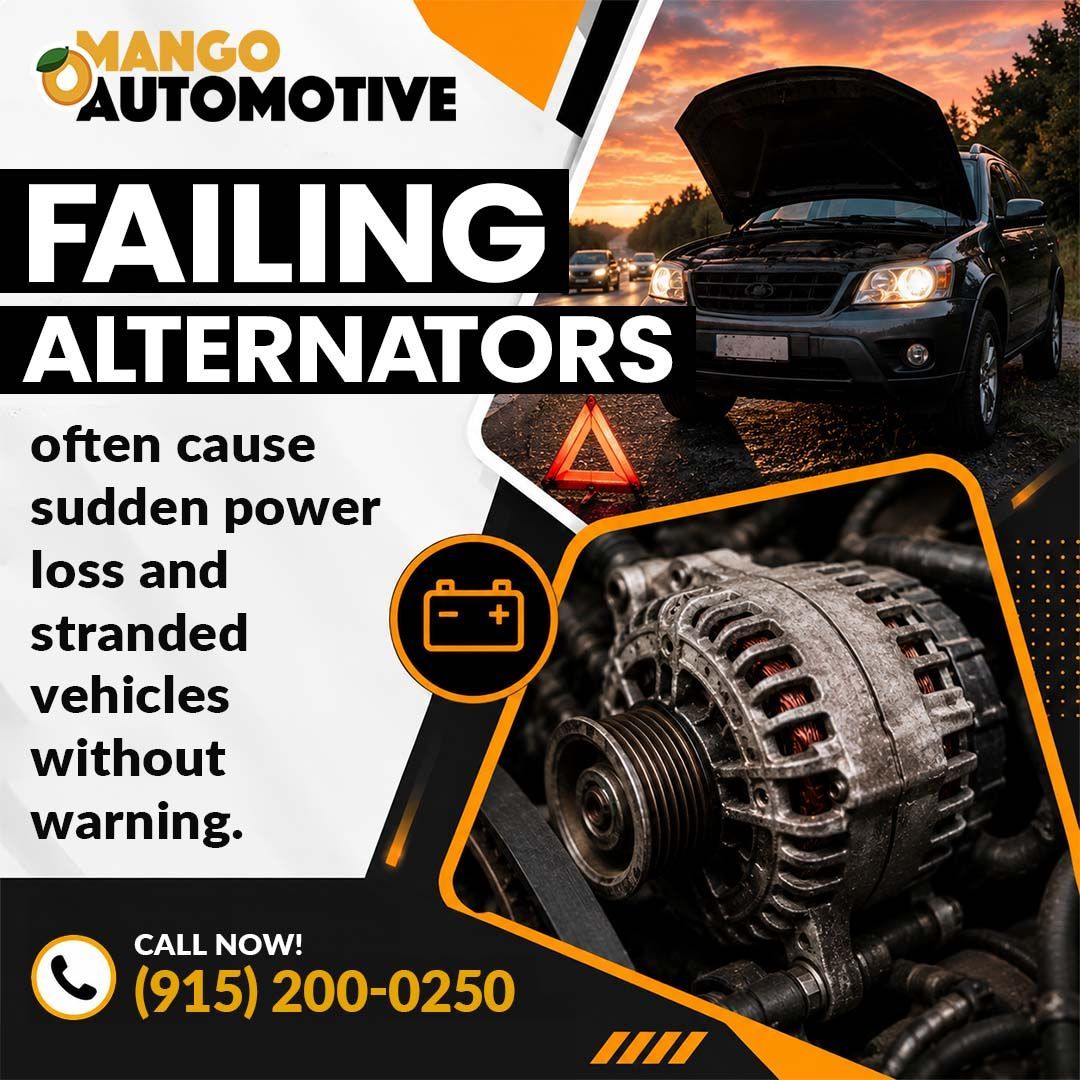
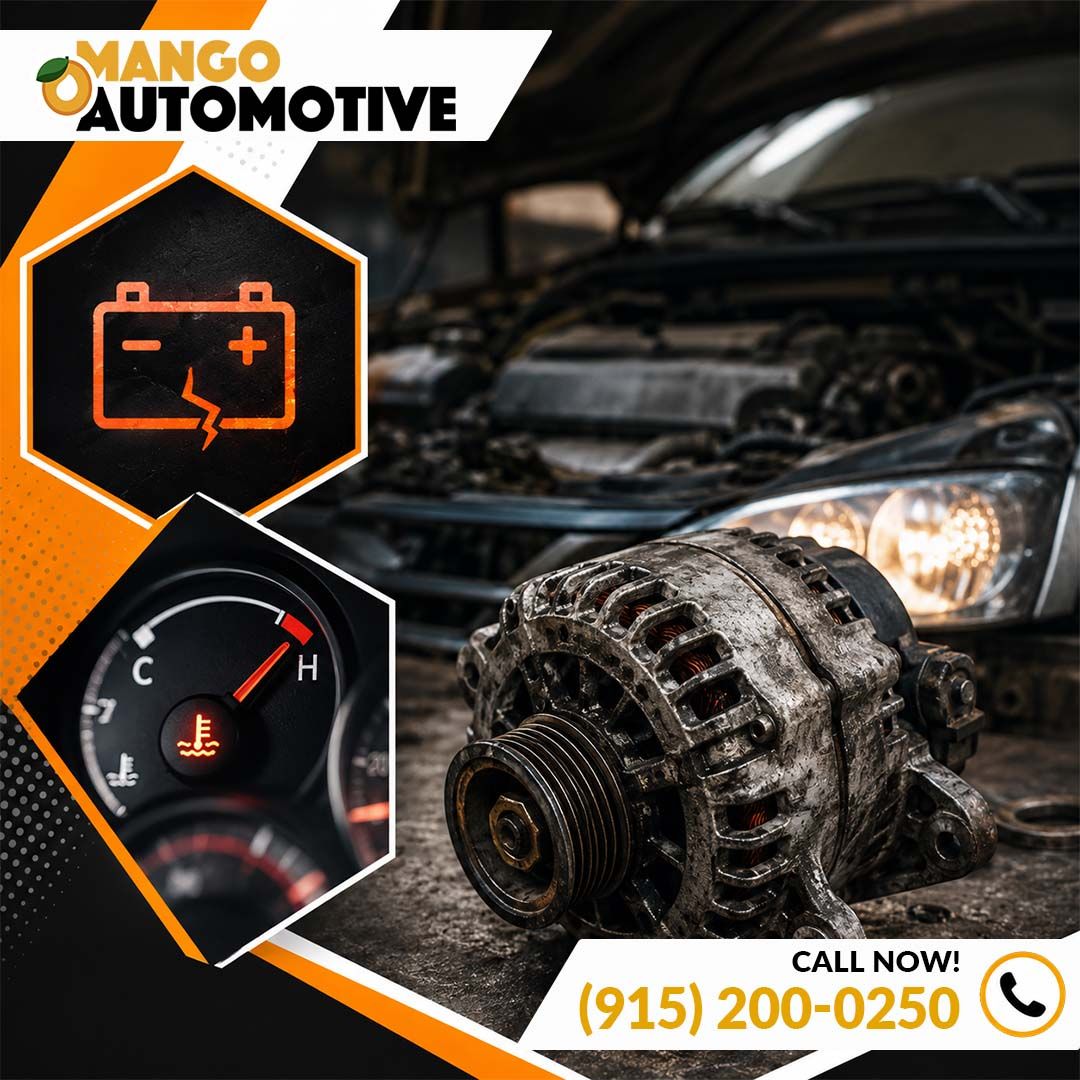
An alternator problem may show up through dimming or flickering lights, a battery that repeatedly loses its charge, or accessories that act sluggishly while you drive. Mango Automotive tests the charging system to determine whether the issue involves the alternator, battery, wiring, or another electrical component. These symptoms can have several causes, so testing is needed before replacing any parts. 

What Electrical Changes Suggest the Alternator Is Struggling?
The alternator keeps your battery charged and powers electrical systems while the engine runs, so trouble here may begin with subtle changes. Watch for headlights that brighten when you accelerate and dim again at a stoplight, or interior lights that pulse instead of staying steady. These fluctuations may indicate inconsistent voltage, but they can also result from a weak battery, loose connections, poor grounding, or a problem with the charging control system.
Small Clues That Add Up
- Power locks or windows moving slower than usual
- A radio or touchscreen that blinks off and restarts on its own
- Dashboard gauges that behave erratically without explanation
These signs are clues rather than proof of alternator failure. A technician can check battery condition, inspect the terminals and ground connections, examine the alternator drive belt, and test charging-system output to narrow down the cause.
Is It the Battery or the Alternator Draining Your Car?
Drivers sometimes replace a battery only to find that the new one loses its charge again. Repeated battery trouble does not automatically point to alternator failure. A weak battery, loose or corroded terminals, damaged wiring, poor grounding, a faulty charging control, or an electrical component that continues drawing power when the car is off can produce similar symptoms.
If jump-starting gets you moving but the car dies again shortly afterward, have the battery and charging system tested rather than assuming one component is responsible. A proper diagnosis may include a battery performance test, alternator output and voltage-drop tests, inspection of the belt and electrical connections, and a parasitic-drain test if the battery discharges while the vehicle is parked. These checks help identify the actual cause before you pay for a replacement.
What Sounds or Odors Signal a Failing Alternator?
A rising whine that changes with engine speed may come from worn alternator bearings, although belt problems and other engine components can produce similar noises. A scorched rubber odor from under the hood may indicate a slipping belt or overheating component. Neither symptom should be ignored, particularly when accompanied by dimming lights or charging warnings.

Have the vehicle inspected promptly if you notice these signs. A technician can examine the belt, pulleys, bearings, and charging components to determine whether the problem is mechanical or electrical.
Battery Trouble vs Alternator Trouble: Spotting the Difference
Because both issues can leave you stuck with a car that won't start, a side-by-side look at the clues helps avoid guessing. However, no single symptom confirms which component has failed.
| Symptom | Possible causes | Recommended check |
|---|---|---|
| Starts after a jump | Weak battery, poor connections, charging fault | Battery and charging tests |
| Battery repeatedly loses charge | Battery fault, charging issue, parasitic drain | Battery, charging, and drain tests |
| Lights dim or flicker | Battery, alternator, belt, or wiring issue | Output, belt, and connection checks |
| Older battery | Battery wear or charging fault | Battery test |
| Whine changes with engine speed | Bearing, belt, or pulley issue | Belt and alternator inspection |
What Factors Influence Alternator Replacement Cost?
Alternator replacement cost depends heavily on your vehicle's make and model, plus whether you go with a new, remanufactured, or OEM part. Some alternators are tucked in easy-to-reach spots, while others sit behind components that add extra labor time to remove. A proper diagnostic step upfront helps confirm the alternator is truly at fault before committing to a full replacement.
Alternators typically hold up for seven to ten years, or about 80,000 to 150,000 miles, under normal driving conditions, according to
AutoZone.
When Should You Visit an Auto Repair Shop in El Paso, TX?
Multiple electrical symptoms may signal a charging problem that needs inspection at an auto repair shop in El Paso, TX. At Mango Automotive, our team checks the battery, alternator, wiring, and related components to identify the cause. Computer diagnostics can help detect fault codes, though some issues may not trigger a warning.
If the battery or charging warning light comes on while driving, find a safe place to pull over and stop. Turn off nonessential accessories and arrange roadside assistance or a tow if the warning persists. Avoid driving if electrical power drops, the engine overheats, or the vehicle behaves unpredictably.
Frequently Asked Questions
Will a car keep running once the alternator fully fails?
Only briefly. The battery can carry the load for a short stretch, but the engine will eventually stall once that reserve runs out.
Does idling the engine longer help recharge a struggling battery?
It offers a small boost at best and won't resolve an underlying charging system problem.
What should I do if the battery light comes on while driving?
Find a safe place to pull over and stop the vehicle. The warning can indicate a charging-system problem that may lead to loss of electrical power or an engine stall. Arrange roadside assistance or a tow if the warning persists rather than continuing your trip.

Get Your Charging System Checked Today
A flickering headlight now beats a tow truck later. Call Mango Automotive at
(915) 200-0250, and let's get your charging system checked, serving Central El Paso, Cielo Vista, Fort Bliss, and nearby areas.