

BLOG

How Long Does a Check Engine Light Diagnosis Take in Albuquerque, NM?

Jesse Jackson • September 24, 2026

Share this article

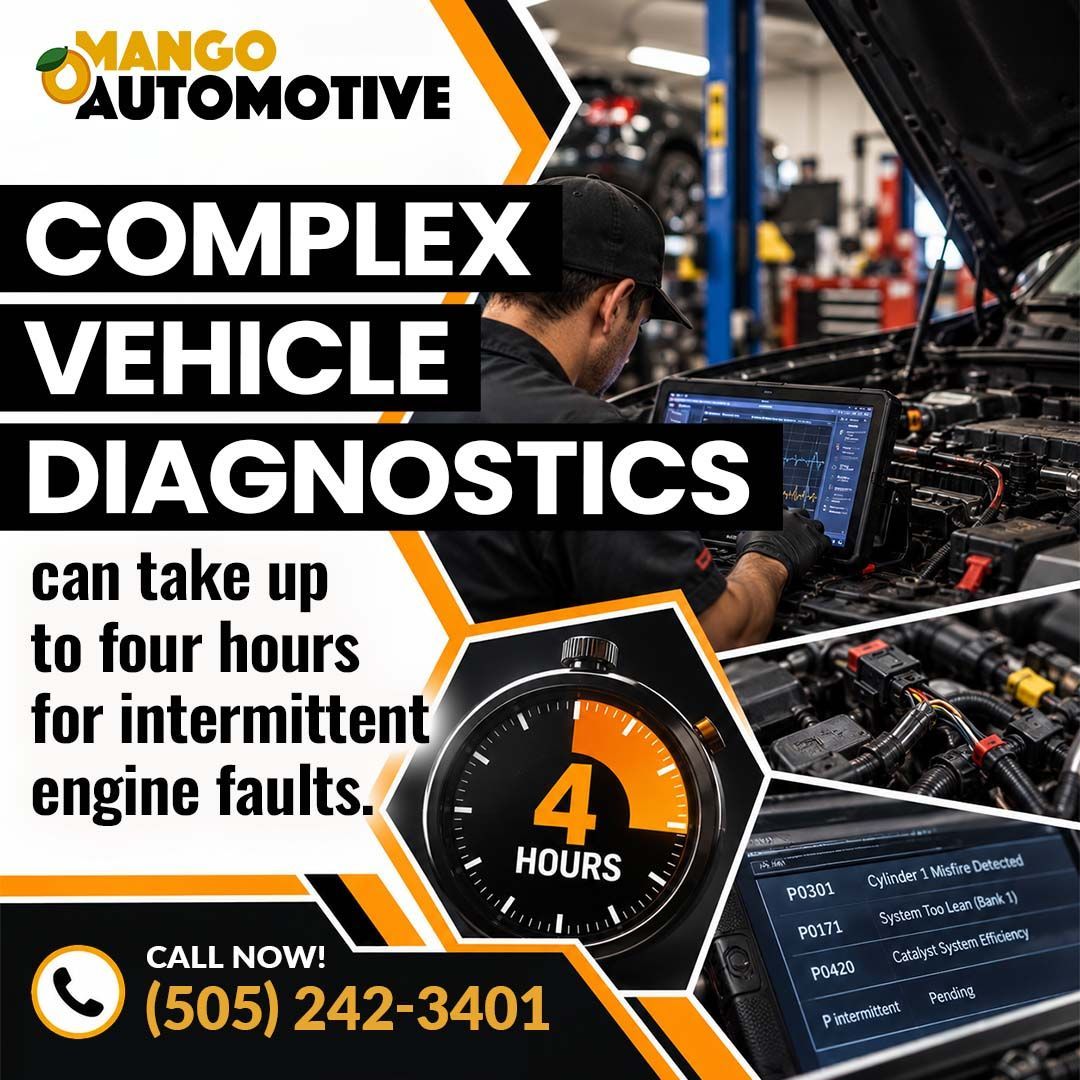
A check engine light diagnosis in Albuquerque typically takes 30 minutes to 2 hours, depending on how many codes are stored and whether the fault is constant or intermittent. Simple, single-code issues resolve fastest, while problems that only show up while driving take longer to confirm. At Mango Automotive, we give you a realistic time estimate before we start, so you know what to expect and can plan your day around it.

vehicle diagnostics in Albuquerque

What Determines How Long a Diagnosis Takes?

A handful of factors decide the timeline for any car diagnostic test in Albuquerque. According to J.D. Power, a standard diagnostic typically runs about an hour to an hour and a half, while more complicated faults that require further testing can stretch to two to four hours. The main variables are the number of stored codes, whether the issue is happening right now or only shows up occasionally, and how old or complex the vehicle's systems are.


Typical Diagnosis Time by Scenario

Scenario Typical Time
Single stored code, no road test needed 20 to 40 minutes
Standard check engine light diagnosis 45 to 90 minutes
Intermittent fault requiring a road test 1.5 to 3 hours
Follow-up confirmation after repair Varies by vehicle and system

If your check engine light is tied to Albuquerque's required emissions test, timing matters beyond the shop visit itself. The City of Albuquerque's Vehicle Pollution Management Division confirms that the required test includes a diagnostic check of your emissions control components. If your vehicle fails the test, you can receive one free retest at the Vehicle Pollution Management Division (VPMD) Headquarters within 90 days of the failed test date. You must bring the vehicle and the failed test results for the retest. This window gives you time to get the repair done right instead of rushing it.


What Slows a Diagnosis Down?

As a mechanic, we see a few things repeatedly add time to an otherwise quick visit:


  • Multiple stored codes pointing to more than one system
  • A fault that only appears under specific driving conditions
  • Wiring or network issues that require tracing circuits
  • A vehicle that needs a road test to reproduce the symptom
  • High shop volume during peak scheduling times

How We Keep Your Visit Efficient

A basic check engine code reader service only takes a few minutes, but it only tells you which system triggered the light, not the root cause. A full vehicle warning light diagnostic takes longer because it includes live data review and, when needed, a road test to confirm the fault. We prioritize an auto engine inspection based on symptoms you describe, which helps us skip unnecessary steps and get you an answer faster.

auto engine inspection in Albuquerque

Frequently Asked Questions

Can I wait at the shop while my vehicle is diagnosed?

For most single-code issues, yes. If a road test or extended monitoring is needed, we will let you know upfront so you can plan accordingly.


Why did my diagnosis take longer than expected?

Intermittent faults sometimes need a road test to reproduce the exact conditions that trigger the code, which can add time beyond the initial estimate.


Does the diagnosis time include the repair itself?

No. The diagnosis confirms the cause. Repair time is quoted separately once we know what parts or labor are needed.


Schedule Your Visit

Wondering how long your check engine light diagnosis will take? Mango Automotive (The Valley) gives you an honest time estimate upfront, based on your vehicle and symptoms, so there are no surprises. Call us at (505) 242-3401 to book your appointment today.

All Posts

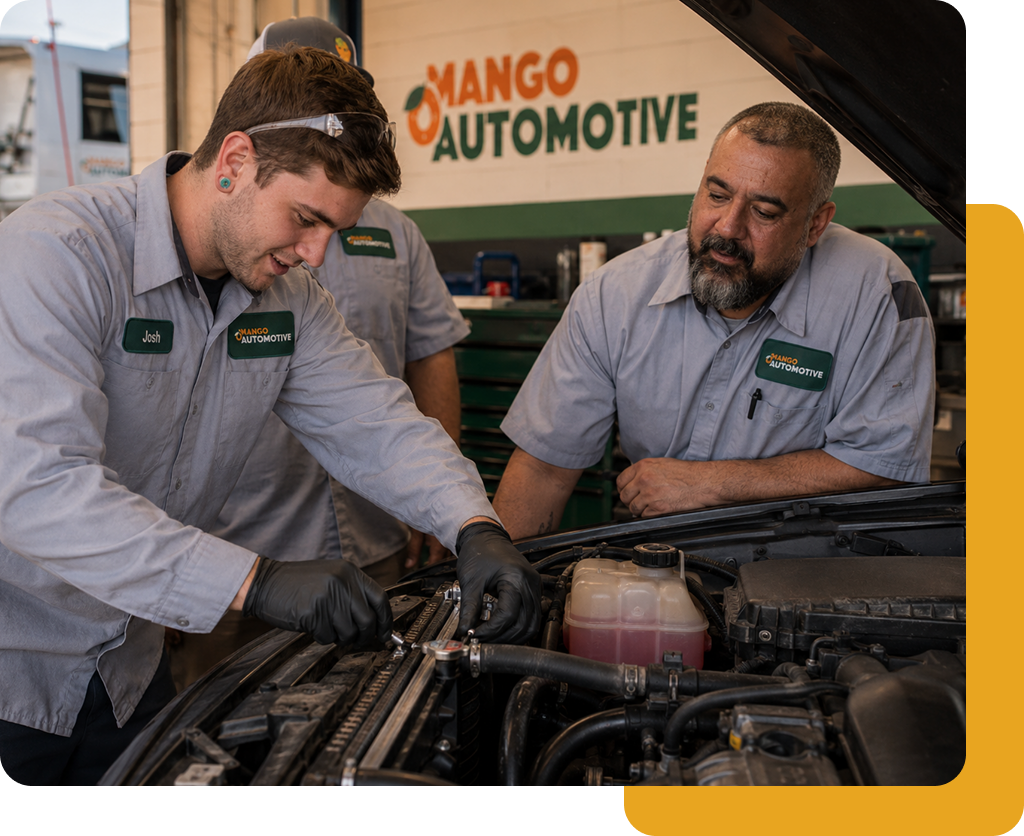
Two Mango Automotive technicians inspecting an engine bay together
By Jesse Jackson • October 14, 2026
How a diesel repair shop goes from trouble codes to a confirmed cause: scan data, compression, fuel pressure, and injector tests before any repair.
Mango Automotive & Diesel shop building at 3222 S Florence Ln, Yuma, Arizona
By Jesse Jackson • October 14, 2026
Questions to ask a diesel repair shop about pricing, estimates, diagnostic fees, technician experience, and warranty terms before you book.
Two Mango Automotive technicians repairing an engine
By Jesse Jackson • October 14, 2026
Detergent additives can limit injector deposits but can't fix wear. What deposits do, what additives can and can't help, and injector warning signs.
Mango Automotive technician working on an engine with a socket wrench
By Jesse Jackson • October 14, 2026
Which diesel fuel additives help, what the research shows, how Yuma's heat changes the picture, and when to see a diesel mechanic instead.
Mango Automotive technician working under a lifted vehicle above an oil drain pan
By Jesse Jackson • October 14, 2026
Why a diesel pickup leaks fuel only after a fill-up: fuel expansion, filler neck seals, cap gaskets, or a stuck vent valve. What to check first.
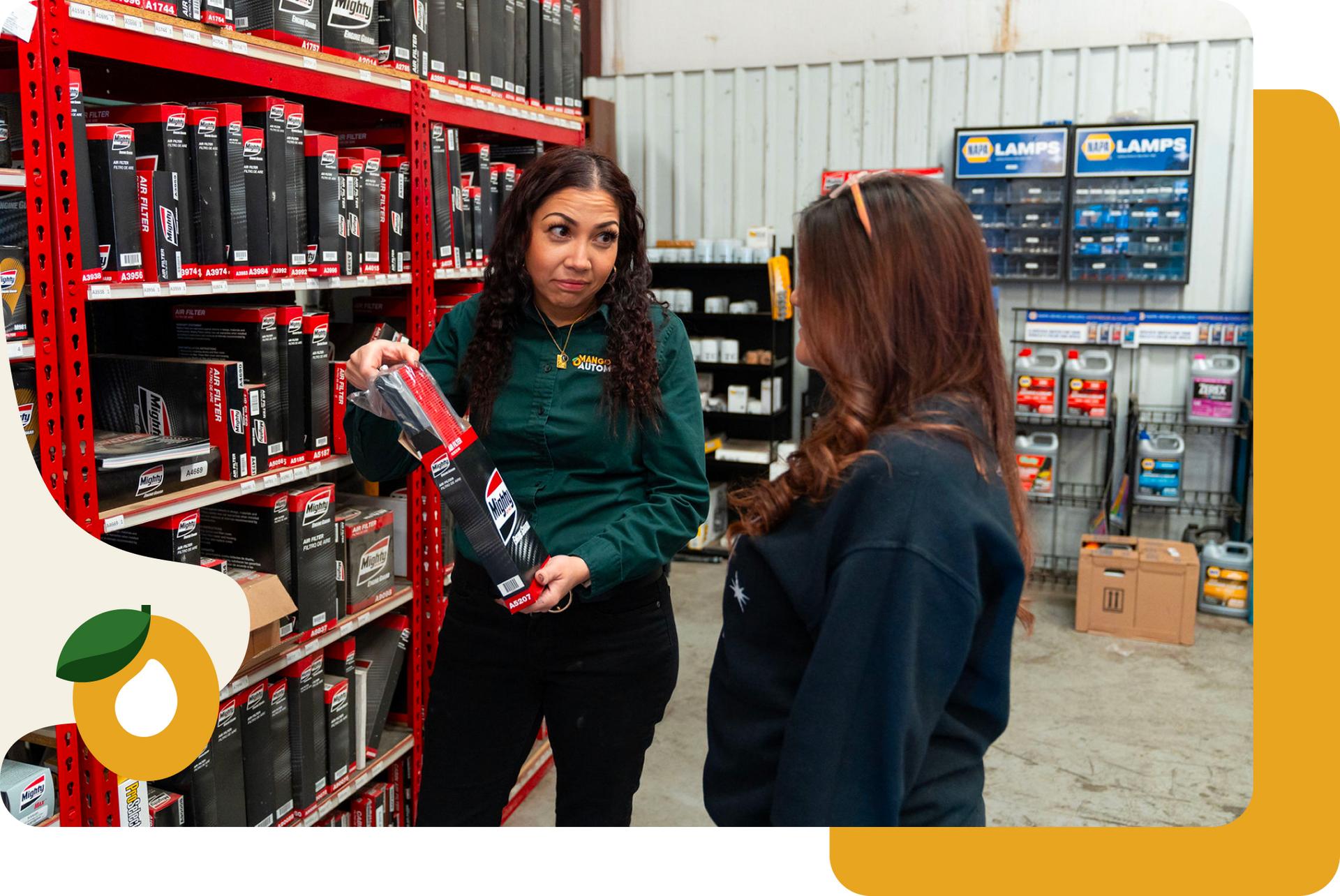
Mango Automotive service advisor showing a bottle of motor oil to a customer in the parts area
By Jesse Jackson • October 14, 2026
How to tell an electrical A/C fault from a refrigerant problem, why the two get confused, and how a proper A/C inspection in Las Cruces sorts it out.
Mango Automotive technicians checking a sedan on a wheel alignment rack
By Jesse Jackson • October 14, 2026
Identify a car fluid leak by color, texture, smell, and location: coolant, oil, brake, transmission, or power steering fluid. Checks in NW Albuquerque.
Two Mango Automotive technicians repairing an engine
By Jesse Jackson • October 14, 2026
Power steering repair ranges from a fluid service to pump, belt, or rack replacement. How the right repair is diagnosed at our NW Albuquerque shop.
Mango Automotive technician working on an engine with a socket wrench
By Jesse Jackson • October 14, 2026
Stiff steering usually means low fluid, a failing pump, a slipping belt, or an electric power steering fault. How to tell fluid from pump problems.

Two Mango Automotive technicians inspecting an engine bay together
By Jesse Jackson • October 14, 2026
How a diesel repair shop goes from trouble codes to a confirmed cause: scan data, compression, fuel pressure, and injector tests before any repair.
Mango Automotive & Diesel shop building at 3222 S Florence Ln, Yuma, Arizona
By Jesse Jackson • October 14, 2026
Questions to ask a diesel repair shop about pricing, estimates, diagnostic fees, technician experience, and warranty terms before you book.
Two Mango Automotive technicians repairing an engine
By Jesse Jackson • October 14, 2026
Detergent additives can limit injector deposits but can't fix wear. What deposits do, what additives can and can't help, and injector warning signs.
Mango Automotive technician working on an engine with a socket wrench
By Jesse Jackson • October 14, 2026
Which diesel fuel additives help, what the research shows, how Yuma's heat changes the picture, and when to see a diesel mechanic instead.
Mango Automotive technician working under a lifted vehicle above an oil drain pan
By Jesse Jackson • October 14, 2026
Why a diesel pickup leaks fuel only after a fill-up: fuel expansion, filler neck seals, cap gaskets, or a stuck vent valve. What to check first.
Mango Automotive service advisor showing a bottle of motor oil to a customer in the parts area
By Jesse Jackson • October 14, 2026
How to tell an electrical A/C fault from a refrigerant problem, why the two get confused, and how a proper A/C inspection in Las Cruces sorts it out.
Mango Automotive technicians checking a sedan on a wheel alignment rack
By Jesse Jackson • October 14, 2026
Identify a car fluid leak by color, texture, smell, and location: coolant, oil, brake, transmission, or power steering fluid. Checks in NW Albuquerque.
Two Mango Automotive technicians repairing an engine
By Jesse Jackson • October 14, 2026
Power steering repair ranges from a fluid service to pump, belt, or rack replacement. How the right repair is diagnosed at our NW Albuquerque shop.
Mango Automotive technician working on an engine with a socket wrench
By Jesse Jackson • October 14, 2026
Stiff steering usually means low fluid, a failing pump, a slipping belt, or an electric power steering fault. How to tell fluid from pump problems.