
BLOG

How Long Does a Typical Car Brake Repair Take in Albuquerque?

Jesse Jackson • October 14, 2026

Share this article

A typical brake pad replacement takes about 1 to 2 hours per axle, while bigger vehicle brake system maintenance covering several wheels, rotors, or calipers can take several hours. Those numbers shift the moment rust, worn rotors, or unusual wear enter the picture. That's why Mango Automotive builds every estimate around the actual vehicle in the bay, not a generic quote.

How Does Brake Repair Time Vary by Job Type?

These are typical industry ranges. Your vehicle's actual time depends on its condition and what the inspection finds:

  • Pad replacement, one axle: about 1 to 2 hours, including a caliper and rotor check
  • Pads and rotors, one axle: about 2 to 3 hours
  • Brake fluid flush: usually well under an hour on its own
  • Multi-wheel work with caliper replacement: several hours, including bleeding the brakes and a road test

What Happens During a Brake Pad Replacement?

A pad replacement involves removing the wheel, checking the caliper and rotor, swapping in new pads, and a test drive to confirm the pedal feels right. If both axles need pads, the technician handles them in the same visit rather than as two separate jobs, since the vehicle is already up on the lift.

What Makes a Brake Repair Take Longer?

Several factors can stretch a routine brake job past the standard window:

  • Rusted or seized caliper bolts
  • Warped or heavily worn rotors needing resurfacing or replacement
  • Special-order parts for less common makes and models
  • New issues found mid-inspection, like a fluid leak or cracked line.
  • Multiple axles needing different repairs instead of a simple pad swap

A technician will explain any of these issues and the added time before continuing the brake system maintenance.

What Happens During a Brake Fluid Flush?

A brake fluid flush drains the old, moisture-contaminated fluid from the master cylinder and lines, then bleeds fresh fluid through each wheel. Old fluid absorbs water over time, which lowers its boiling point and can cause a soft, spongy pedal. Many manufacturers recommend replacing brake fluid every two to three years, so check your owner's manual for your vehicle's interval.

How Often Should You Schedule a Brake Inspection?

The typical recommendation is an auto brake inspection every 10,000 to 12,000 miles, or about once a year for average drivers. Stop-and-go city driving wears pads faster than highway miles. If you're due, schedule an inspection before a small issue turns into a bigger repair.

Frequently Asked Questions

Can I wait while my brakes are serviced?

Ask when you book. A pad-only job often takes 1 to 2 hours, so waiting can work for simple jobs, while larger jobs are usually better as a drop-off.

What if the technician finds a bigger problem during the inspection?

The shop explains the issue, added time, and cost before doing any extra work. Nothing beyond the original request gets repaired without approval first.

Does brake fluid need to be flushed even if it looks fine?

Yes. Fluid absorbs moisture over time without visible discoloration, which can affect braking performance before it's noticeable by eye. Sticking to the recommended flush interval helps catch this before it becomes a bigger issue.

Schedule Your Car Brake Service in Albuquerque

Knowing the timeline helps you plan the visit, but the best way to protect your vehicle is to get it checked before a small noise becomes a bigger repair. Call Mango Automotive at (505) 299-5011 to book a car brake service and get a clear time estimate before any work begins.

All Posts

Mango Automotive & Diesel shop building at 3222 S Florence Ln, Yuma, Arizona
By Jesse Jackson • October 14, 2026
How a diesel repair shop goes from trouble codes to a confirmed cause: scan data, compression, fuel pressure, and injector tests before any repair.
Mango Automotive & Diesel shop building at 3222 S Florence Ln, Yuma, Arizona
By Jesse Jackson • October 14, 2026
Questions to ask a diesel repair shop about pricing, estimates, diagnostic fees, technician experience, and warranty terms before you book.
Mango Automotive & Diesel shop building at 3222 S Florence Ln, Yuma, Arizona
By Jesse Jackson • October 14, 2026
Detergent additives can limit injector deposits but can't fix wear. What deposits do, what additives can and can't help, and injector warning signs.
Mango Automotive & Diesel shop building at 3222 S Florence Ln, Yuma, Arizona
By Jesse Jackson • October 14, 2026
Which diesel fuel additives help, what the research shows, how Yuma's heat changes the picture, and when to see a diesel mechanic instead.

Mango Automotive logo: auto and diesel repair in New Mexico, Arizona and Texas
By Jesse Jackson • October 14, 2026
What drives alternator replacement cost: parts, labor, vehicle type, and new vs remanufactured units. Get a written estimate in El Paso, TX.
Mango Automotive logo: auto and diesel repair in New Mexico, Arizona and Texas
By Jesse Jackson • October 14, 2026
Gauge creep, sweet smells, steam, knocking, and power loss: the warning signs your engine is about to overheat and what to do when you spot them.
Mango Automotive logo: auto and diesel repair in New Mexico, Arizona and Texas
By Jesse Jackson • October 14, 2026
Why a car overheats at idle but not on the highway: fans, fan clutch, belts, shroud, or radiator airflow. When to get it checked on Montana Ave.
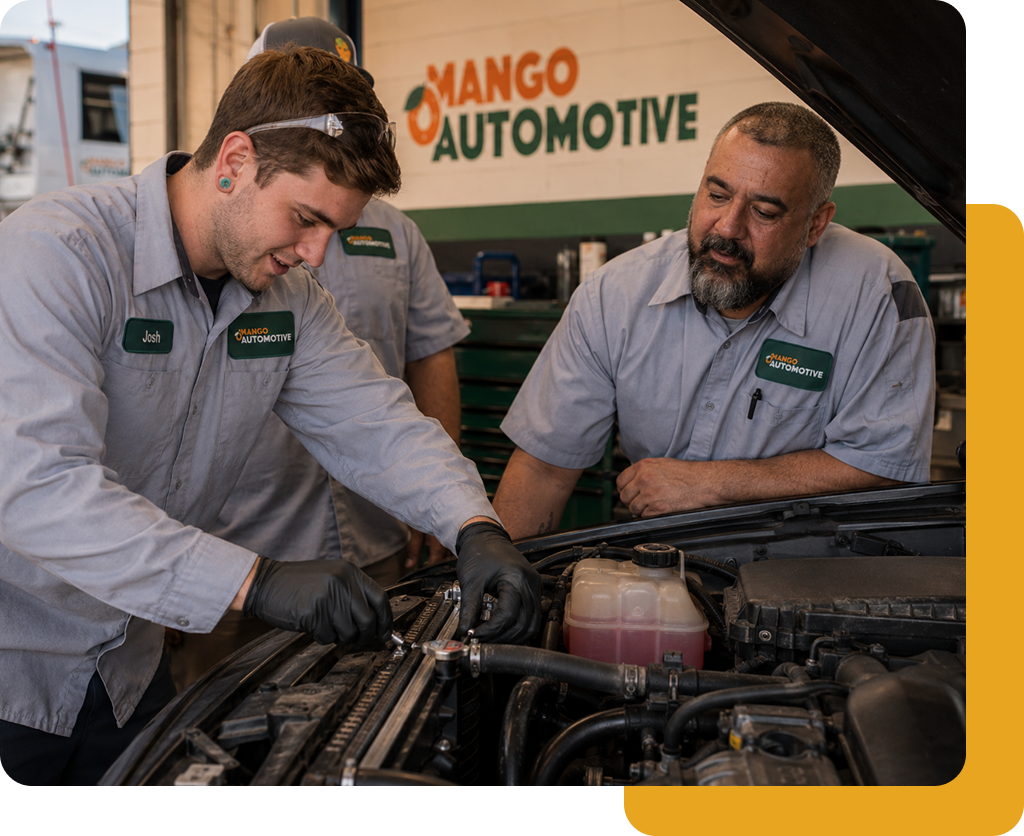
Two Mango Automotive technicians working under the hood of a vehicle in the shop
By Jesse Jackson • October 14, 2026
What a full cooling system repair includes: replacing the failed part, flushing, refilling, and bleeding air so the fix holds. Repairs in East El Paso.
Two Mango Automotive technicians working under the hood of a vehicle in the shop
By Jesse Jackson • October 14, 2026
An engine diagnostic test reads codes, live sensor data, fuel and ignition, and emissions systems. How a full diagnostic differs from a quick code scan.

Mango Automotive & Diesel shop building at 3222 S Florence Ln, Yuma, Arizona
By Jesse Jackson • October 14, 2026
How a diesel repair shop goes from trouble codes to a confirmed cause: scan data, compression, fuel pressure, and injector tests before any repair.
Mango Automotive & Diesel shop building at 3222 S Florence Ln, Yuma, Arizona
By Jesse Jackson • October 14, 2026
Questions to ask a diesel repair shop about pricing, estimates, diagnostic fees, technician experience, and warranty terms before you book.
Mango Automotive & Diesel shop building at 3222 S Florence Ln, Yuma, Arizona
By Jesse Jackson • October 14, 2026
Detergent additives can limit injector deposits but can't fix wear. What deposits do, what additives can and can't help, and injector warning signs.
Mango Automotive & Diesel shop building at 3222 S Florence Ln, Yuma, Arizona
By Jesse Jackson • October 14, 2026
Which diesel fuel additives help, what the research shows, how Yuma's heat changes the picture, and when to see a diesel mechanic instead.
Mango Automotive logo: auto and diesel repair in New Mexico, Arizona and Texas
By Jesse Jackson • October 14, 2026
What drives alternator replacement cost: parts, labor, vehicle type, and new vs remanufactured units. Get a written estimate in El Paso, TX.
Mango Automotive logo: auto and diesel repair in New Mexico, Arizona and Texas
By Jesse Jackson • October 14, 2026
Gauge creep, sweet smells, steam, knocking, and power loss: the warning signs your engine is about to overheat and what to do when you spot them.
Mango Automotive logo: auto and diesel repair in New Mexico, Arizona and Texas
By Jesse Jackson • October 14, 2026
Why a car overheats at idle but not on the highway: fans, fan clutch, belts, shroud, or radiator airflow. When to get it checked on Montana Ave.
Two Mango Automotive technicians working under the hood of a vehicle in the shop
By Jesse Jackson • October 14, 2026
What a full cooling system repair includes: replacing the failed part, flushing, refilling, and bleeding air so the fix holds. Repairs in East El Paso.
Two Mango Automotive technicians working under the hood of a vehicle in the shop
By Jesse Jackson • October 14, 2026
An engine diagnostic test reads codes, live sensor data, fuel and ignition, and emissions systems. How a full diagnostic differs from a quick code scan.