
A check engine light diagnosis in Albuquerque involves connecting a scan tool to your vehicle's onboard computer, reading the stored trouble codes, and testing the affected system to confirm the actual cause before recommending any repair.
The process protects your engine, your fuel economy, and your wallet from a small issue turning into a major one. At
Mango Automotive (The Valley), we walk you through every code we find and explain what it means for your car in plain language.

What Triggers the Warning Light on Your Dashboard?
Your car's onboard diagnostics system, OBD-II, watches engine performance and emissions around the clock. Under a final rule published in the Federal Register, the U.S. Environmental Protection Agency requires OBD-II systems on 1996 and newer model-year vehicles nationwide, built to monitor virtually every component that can affect emissions. When it finds a malfunction, it stores a code and lights up your dashboard.
Loose gas caps, worn oxygen sensors, and failing ignition coils are frequent causes. A steady check engine light with otherwise normal vehicle operation may allow you to arrange a prompt diagnostic appointment. However, the light's urgency depends on your vehicle's symptoms and the owner's manual. If the engine stalls, you experience substantial power loss, notice smoke or fuel or exhaust hazards, or see other serious warning indicators, take immediate action to reach a safe location and stop driving if necessary. A flashing light can indicate a serious engine misfire, so pull over safely and arrange a tow rather than continuing to drive.
What Happens When You Bring Your Vehicle In?
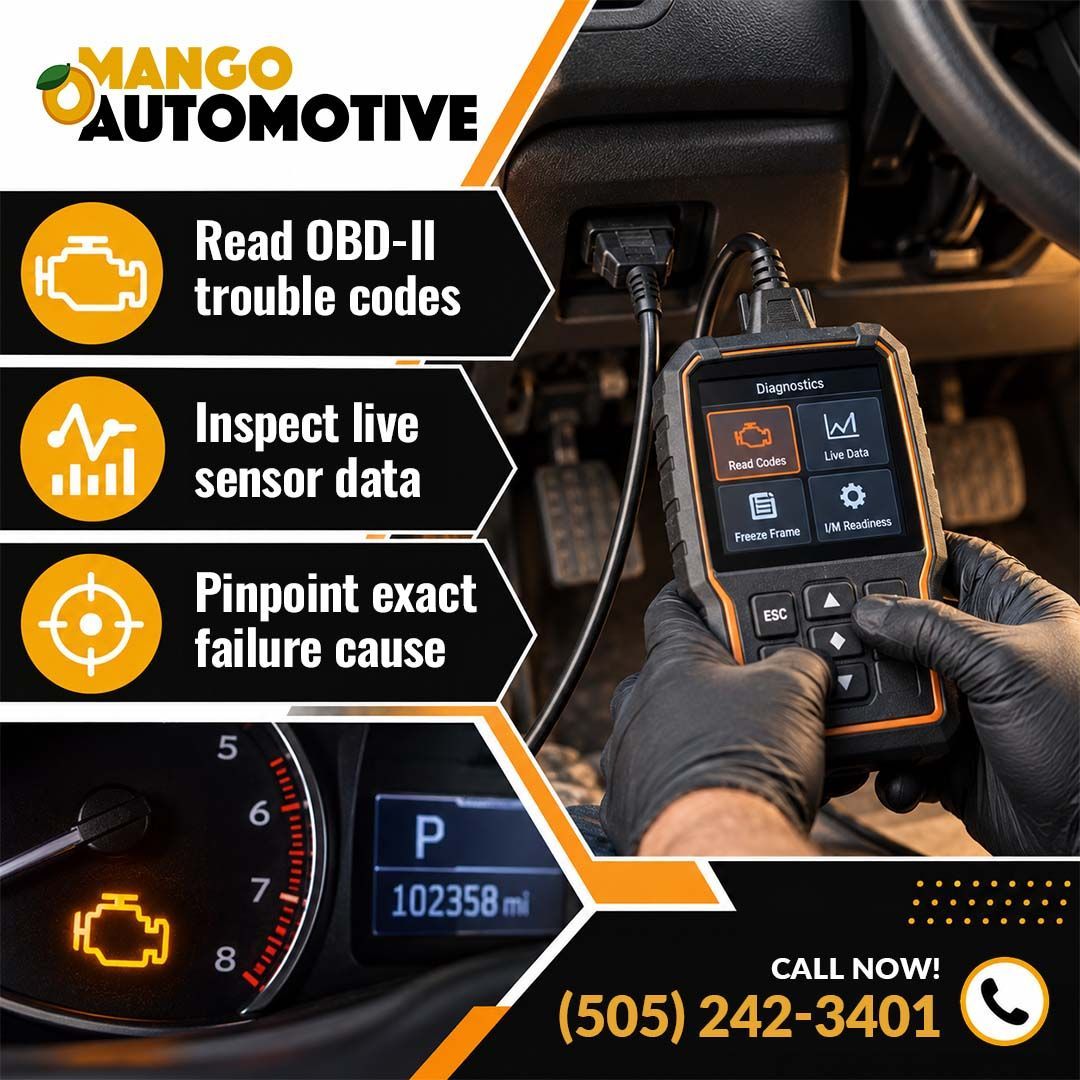
As a mechanic, we start every check engine light diagnosis in Albuquerque by connecting a professional scan tool and reading every stored and pending code, not just the one that triggered the light. From there, we cross-check those codes against live sensor data, since a single code can point to more than one possible cause. A code like P0420, for example, can trace back to a failing oxygen sensor, a small exhaust leak, or a worn catalytic converter.
Quick Scan vs. Full Diagnostic: What's the Difference?
| Factor | Quick Code Scan | Full Diagnostic Inspection |
|---|---|---|
| What it does | Pulls the stored code only | Pulls codes plus live sensor data and a physical inspection |
| Confirms root cause | No, points you toward a system | Yes, narrows the code to a specific part |
| Best for | A quick check before a trip | Confirming the cause before repair work begins |
| Where offered | Many auto parts stores | A full-service repair shop with trained technicians |
A basic check engine code reader service tells you which system triggered the light. It does not confirm why. A full car diagnostic test goes further, using live data and a hands-on inspection to pinpoint the actual failing part.
What Are Common Warning Signs to Watch For?
Beyond the dashboard light, watch for:

- Rough idle or stalling at stoplights
- A noticeable drop in fuel economy
- Hesitation or lack of power when accelerating
- A smell of gas or exhaust in the cabin
- The light flashing instead of staying steady
Our
auto engine inspection in Albuquerque can catch these issues early. Ignoring them has a cost beyond the dashboard warning: the U.S. Department of Energy's
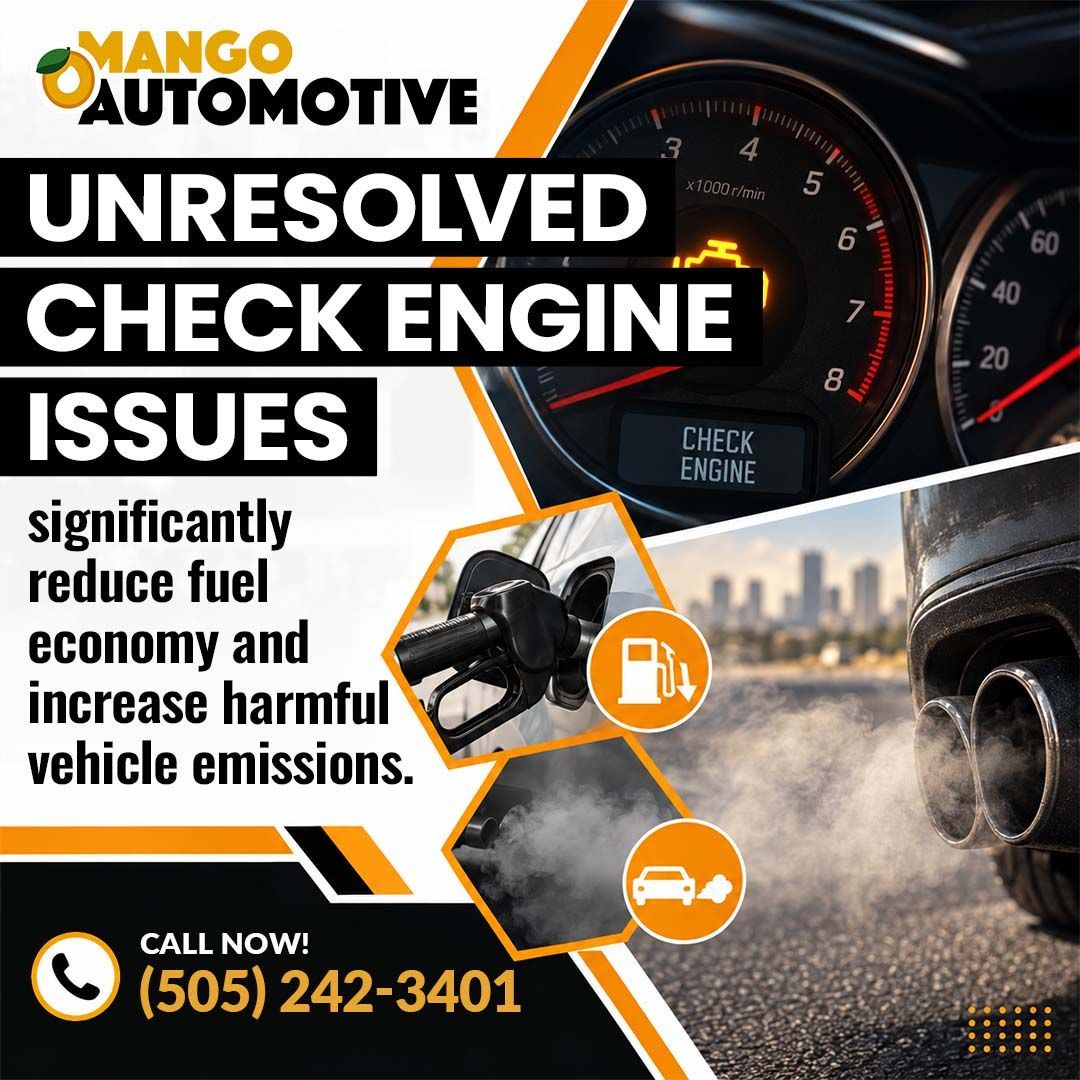
fueleconomy.gov notes that an unresolved check engine issue can reduce fuel economy and raise emissions, and recommends having the vehicle inspected as soon as the light comes on rather than waiting.
How Much Does This Service Cost?
Pricing varies by shop and vehicle. Many independent shops price a vehicle warning light diagnostic separately from the deeper diagnostic work needed to confirm a repair. At Mango Automotive, we walk through the estimate before starting further testing, so there are no surprises on your invoice.

Frequently Asked Questions
Can I keep driving with the check engine light on?
If the light stays steady and the vehicle runs normally, you may be able to drive a short distance to arrange a prompt inspection. Follow your owner's manual and watch for changes in vehicle performance. If the light flashes, the engine stalls, power drops substantially, smoke appears, or you notice fuel or exhaust hazards or other serious warnings, stop in a safe location and arrange assistance or towing as appropriate.
Why did my check engine light turn off on its own?
The light may turn off when the fault is no longer detected during subsequent drive cycles. However, the diagnostic code may remain in the vehicle's memory as a history code, and some vehicles retain permanent diagnostic trouble codes even after a repair or after the warning light goes out. These code types behave differently, so a technician should verify the vehicle-specific code status and confirm that the relevant monitors and readiness checks have been completed after repair. Do not assume the problem is fixed just because the light turns off.
Do you give a written estimate after the diagnosis?
Yes. Once we identify the cause, we provide a written estimate before any repair work begins.
Ready for a Diagnosis?
If your check engine light is on, Mango Automotive can get you scanned and back on the road with a clear answer. Our team handles everything from a quick code check to a full engine inspection. Call us at
(505) 242-3401 to schedule your visit today.