

Yes, in most cases. A check engine light tied to power loss usually points to a specific part, like a spark plug, ignition coil, or sensor, that disrupts how the engine burns fuel.
Repairing the identified problem can improve acceleration and engine performance, depending on the underlying cause and whether additional damage has occurred. At
Mango Automotive (The Valley), we begin with diagnostic testing and follow-up checks to identify what is affecting engine performance and confirm whether the recommended repair addresses the issue.

What Makes an Engine Lose Power in the First Place?
Engine power loss can result from problems with the air intake, fuel delivery, ignition system, exhaust system, or engine management components. If the engine isn't getting the right mix of air, fuel, and spark, it may not operate efficiently, and you may notice hesitation, sluggish acceleration, or rough idle. A car engine light repair starts by retrieving stored diagnostic trouble codes and examining the related systems. Technicians may then perform additional inspections and tests to determine whether a faulty component is actually causing the loss of power.

Which Sensors and Parts Commonly Cause Power Loss?
The usual suspects behind a power-related check engine light include:
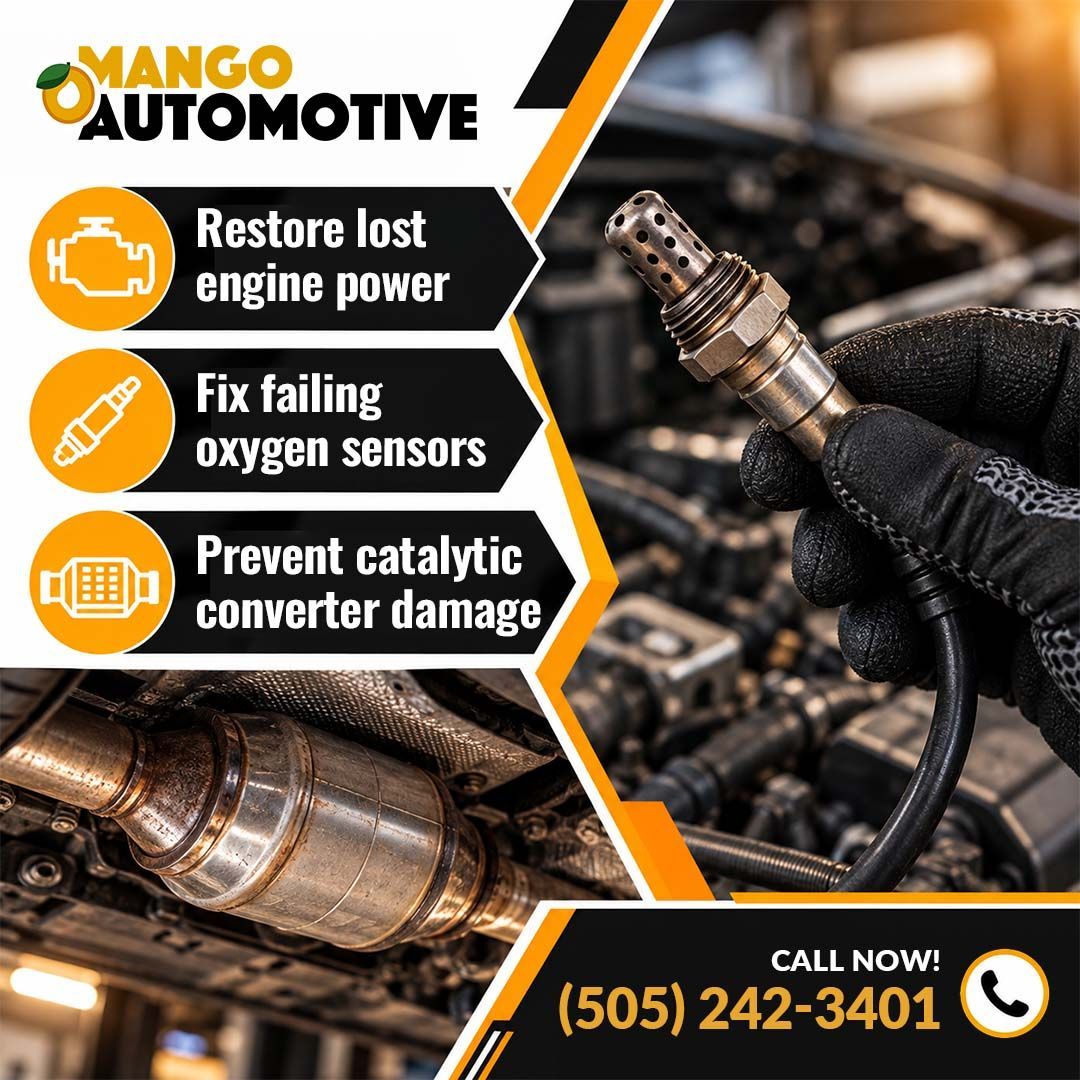
- Oxygen sensors – feed exhaust data to the computer so it can set the fuel mix correctly
- Ignition coils and spark plugs – deliver the spark that ignites fuel in each cylinder
- Mass airflow sensors – measure incoming air so the engine gets the right amount of fuel
- Catalytic converters – can restrict exhaust flow and choke power when clogged
Leaving any of these unresolved does not just mean a light on the dash. It usually means the engine is quietly burning fuel less efficiently and running with less power than it should, which is why it is worth having the code checked as soon as it appears rather than waiting it out.
How Do These Issues Show Up Behind the Wheel?
| Part | Common Symptom | Urgency |
|---|---|---|
| Ignition coil or spark plugs | Misfires, sluggish acceleration | Address soon. A severe misfire or rough running requires prompt professional advice. |
| Mass airflow sensor | Stalling, hesitation on acceleration | Assess promptly. If the car stalls in traffic or loses substantial power, stop driving when safe and seek professional advice. |
| Catalytic converter | Reduced acceleration, sluggish performance | High, often follows a neglected sensor issue |
The severity of the symptoms matters when deciding whether to continue driving. Severe power loss, stalling in traffic, a flashing check engine light accompanied by rough running, or other urgent warning lights can indicate a serious problem. Pull over somewhere safe, turn off the engine if appropriate, and seek prompt professional advice rather than continuing to drive normally.
Vehicle age can also influence maintenance and repair needs. According to
S&P Global Mobility, the average age of vehicles on U.S. roads reached 12.8 years in 2025. Older vehicles may require more frequent attention to ignition components, sensors, and exhaust systems, making timely diagnosis and maintenance important.
Will Fixing the Code Bring Back Full Power?
Repairing the problem identified during diagnosis can restore engine power and responsiveness when that problem is responsible for the performance loss. However, clearing a diagnostic code or replacing a part based on the code alone does not confirm that the underlying issue has been resolved. Technicians may need to inspect related components, test system operation, and check for additional trouble codes after the repair. The exception is when a smaller problem was ignored long enough to damage something bigger, like a spark plug issue that eventually fouls the catalytic converter. That's why a proper check engine light service in Albuquerque should include diagnostic testing and appropriate follow-up checks rather than relying on a code scan alone.
When Should You See a Mechanic in Albuquerque?
If your car feels noticeably weaker, hesitates when you accelerate, or the light has been on for more than a few days, it's worth talking to a mechanic in Albuquerque, rather than waiting it out. If you experience severe power loss, stalling, a flashing check engine light with rough running, or other urgent warnings, stop in a safe location and seek professional advice promptly. At Mango Automotive, our
automotive engine repair in Albuquerque covers everything from ignition components to sensor diagnostics, and we treat car engine maintenance as the best way to catch these issues before they cost mor.

Frequently Asked Questions
Can a check engine light come on without any noticeable power loss?
Yes. Some issues, like a minor EVAP leak, trigger the light without affecting how the car drives, while others directly impact performance.
How quickly should power loss be diagnosed?
As soon as you notice it. Continued driving on a misfire or bad sensor can damage the catalytic converter, turning a smaller repair into a much larger one. If the power loss is severe, the engine runs roughly with a flashing check engine light, or the car stalls, stop driving when safe and seeks prompt professional advice.
Can bad fuel cause the same symptoms as a sensor problem?
It can. Low-quality fuel can cause hesitation and rough idle that mimics a sensor issue, which is why a proper scan and any necessary follow-up tests matter before replacing parts.
Get Your Power Back
If your car feels like it's lost its punch, don't wait for it to get worse. Mango Automotive can perform diagnostic testing, identify the likely cause, and recommend repairs based on the findings. Follow-up checks can help determine whether the repair has addressed the performance issue. Call us at
(505) 242-3401 to schedule a diagnosis.