
A shake when braking usually starts at the front brakes: uneven rotors, pad deposits or a sticking caliper. Where you feel it and what to check first.

A history report lists what was reported. A pre-purchase inspection checks the car as it is today: leaks, codes, brakes, rust and past collision repair.
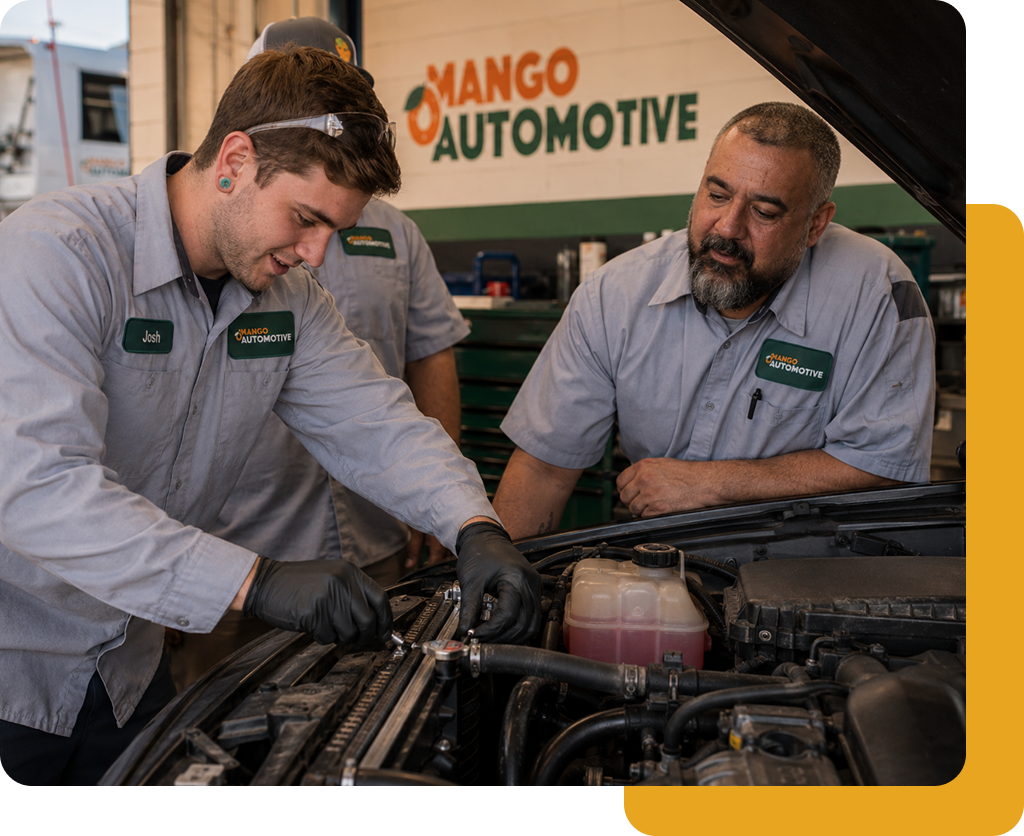
Low coolant, a stuck thermostat, a blend door or a clogged heater core: why a car heater blows cold air, what to check first and when to stop driving.

Falling fuel economy, an engine that runs more, charge swings or a hybrid warning: the signs of a failing hybrid battery, and why testing comes first.
Water-in-fuel light back after draining? Condensation, bad fuel, a filter that's due or a sensor fault may be why. What to do, from a Las Cruces diesel shop.

Diesel surging at cruising speed often traces to the fuel supply: a restricted filter, air in the lines, bad fuel or injectors. How a Yuma diesel shop checks.
A brake inspection checks pads, rotors, calipers and fluid. A brake diagnostic test reads ABS codes. When you need each, and where in Albuquerque's Heights.
Car leaking fluid? Color is a first clue to brake fluid, coolant, fuel or oil. Which leaks are urgent, and where to get help near Eagle Ranch.
Check engine light, knocking, burning smells or smoke? The engine warning signs Downtown Albuquerque drivers should act on, and how soon to see a mechanic.
A shake when braking usually starts at the front brakes: uneven rotors, pad deposits or a sticking caliper. Where you feel it and what to check first.
A history report lists what was reported. A pre-purchase inspection checks the car as it is today: leaks, codes, brakes, rust and past collision repair.
Low coolant, a stuck thermostat, a blend door or a clogged heater core: why a car heater blows cold air, what to check first and when to stop driving.
Falling fuel economy, an engine that runs more, charge swings or a hybrid warning: the signs of a failing hybrid battery, and why testing comes first.
Water-in-fuel light back after draining? Condensation, bad fuel, a filter that's due or a sensor fault may be why. What to do, from a Las Cruces diesel shop.
Diesel surging at cruising speed often traces to the fuel supply: a restricted filter, air in the lines, bad fuel or injectors. How a Yuma diesel shop checks.
A brake inspection checks pads, rotors, calipers and fluid. A brake diagnostic test reads ABS codes. When you need each, and where in Albuquerque's Heights.
Car leaking fluid? Color is a first clue to brake fluid, coolant, fuel or oil. Which leaks are urgent, and where to get help near Eagle Ranch.
Check engine light, knocking, burning smells or smoke? The engine warning signs Downtown Albuquerque drivers should act on, and how soon to see a mechanic.