
BLOG

Why Transmission Fluid Change Intervals Matter: Professional Auto Repair Insights from Yuma, AZ

Jesse Jackson • September 16, 2025

Share this article

Transmission fluid change at the right intervals protects your vehicle from expensive repairs and keeps your transmission operating smoothly for years. Following proper maintenance schedules prevents transmission failure and extends vehicle life considerably. Regular fluid changes maintain peak performance while protecting one of your vehicle's most critical components.

At Mango Automotive & Diesel, we provide transmission system services for Yuma drivers who need reliable maintenance and repairs. Our experienced auto repair technicians understand how Arizona's extreme heat affects transmission fluid and recommend appropriate intervals for local driving conditions. As one of the most trusted automotive repair shops in the region, we help vehicle owners maintain their transmissions through expert service and preventive care.

Transmission Fluid and Its Critical Functions

Transmission fluid serves multiple functions in your vehicle's transmission system. This hydraulic fluid lubricates moving parts, enables power transfer from the engine through the transmission to the wheels, and maintains the transmission temperature during operation.

Without adequate fluid levels and quality, your transmission cannot function properly. Transmission fluid performs these vital tasks:

  • Lubricates gears and internal components to prevent metal-on-metal contact
  • Serves as a hydraulic medium for clutch engagement and gear shifting
  • Absorbs and dissipates heat to cool the transmission
  • Prevents corrosion and protects seals from degradation
  • Transfers engine power to the drivetrain efficiently

Automatic transmissions use fluid pressure to shift gears smoothly. Manual transmissions use gear oil to keep parts moving without grinding together. Both types need clean fluid to work properly. The fluid also contains special additives that prevent foam formation, resist oxidation, and maintain proper viscosity across temperature ranges. These chemical properties break down over time, making regular replacement necessary for continued protection.

When transmission fluid deteriorates beyond its effective life, our auto repair team at Mango Automotive & Diesel can assess your system and recommend the appropriate service to restore peak performance.

Manufacturer Guidelines for Transmission Fluid Change Intervals

Transmission fluid change intervals vary based on your vehicle's make, model, transmission type, and driving conditions. Most manufacturers recommend fluid changes between 30,000 and 100,000 miles, but specific intervals depend on several factors that affect fluid degradation.

Standard Maintenance Schedules

Automatic transmissions typically require fluid changes every 60,000 to 100,000 miles under normal driving conditions. However, severe driving conditions may require more frequent service every 30,000 to 50,000 miles.

Manual transmissions generally need fluid changes every 30,000 to 60,000 miles, as manual transmission fluid typically experiences more contamination from clutch operation and gear engagement.

Continuously Variable Transmissions (CVTs) often require service every 60,000 to 100,000 miles, while some manufacturers have varying recommendations because of their specific working characteristics.

Severe Driving Conditions That Accelerate Fluid Degradation

Several conditions accelerate transmission fluid breakdown and require more frequent changes.

Operating conditions that demand shorter intervals include:

  • Frequent towing or hauling heavy loads
  • Stop-and-go city driving in hot weather
  • Driving in extreme temperatures
  • Commercial use or fleet applications
  • Mountainous terrain with frequent hill climbing
  • Dusty or dirty environments

Yuma's desert climate particularly challenges transmission fluid due to extreme summer temperatures. High heat accelerates fluid breakdown and increases the risk of overheating, making regular maintenance even more important for local drivers.

You can refer owner's manual for manufacturer-specific recommendations. When in doubt, an experienced auto repair shop in Yuma, AZ, can assess your transmission fluid condition and recommend appropriate service intervals based on your driving habits and local conditions. At Mango Automotive & Diesel, our auto repair specialists can help you develop a maintenance schedule that protects your transmission investment.

Warning Signs That Indicate Transmission Fluid Service Is Needed

Recognizing transmission fluid problems early prevents expensive transmission repairs and keeps your vehicle running smoothly. Several symptoms indicate that it is time for fluid service, and addressing these signs quickly protects your transmission from permanent damage.

Transmission Performance Problems

The first signs of transmission fluid problems usually appear when you're driving, as poor fluid condition directly affects how your transmission shifts and operates.

Slipping gears or delayed shifting occurs when fluid levels drop too low or fluid becomes contaminated. You may notice the engine revving without corresponding acceleration, or delays when shifting from park to drive or between gears.

Rough or jerky shifting indicates deteriorated fluid that can no longer provide smooth hydraulic pressure. This affects both automatic and manual transmissions, though symptoms manifest differently based on transmission type.

Difficulty engaging gears in manual transmissions often happens when gear oil becomes thick and dirty, making it hard to shift smoothly between gears. You might notice the gear stick feels stiff or requires more force to move into position.

Physical Signs of Fluid Deterioration

You can often identify transmission fluid problems by examining the fluid itself, as old or contaminated fluid changes appearance and smell noticeably.

Dark or burnt-smelling fluid indicates overheating and chemical breakdown. Fresh transmission fluid typically appears bright red or pink, while old fluid turns brown or black and develops an acrid odor.

Metal particles in fluid suggest internal wear and contamination. This appears as glittery specks or debris when checking fluid levels, indicating that internal components are experiencing excessive wear.

Unusual noises like grinding, whining, or humming during operation can indicate insufficient lubrication from low or degraded fluid. These sounds often become more noticeable during gear changes or acceleration.

Electronic Warning Systems

Modern vehicles include dashboard warning systems that monitor transmission health and alert you to potential fluid-related problems before they cause serious damage.

Transmission warning lights alert you to system problems that may include fluid issues. Modern vehicles monitor transmission performance continuously and alert drivers to potential problems before they cause major damage.

Check engine lights sometimes trigger due to transmission-related issues, including fluid problems that affect shift timing and operation. Diagnostic scanning can identify the specific codes related to the transmission function.

If you notice any of these warning signs, schedule transmission service immediately with a qualified automotive repair shop near you. Early intervention prevents minor fluid issues from becoming major transmission failures that require extensive repair or replacement. The experienced technicians at our auto repair shop in Yuma, AZ, can diagnose transmission problems quickly and recommend the most effective solutions.

Consequences of Neglecting Transmission Fluid Maintenance

Neglecting transmission fluid changes leads to progressively worse problems that eventually result in complete transmission failure. Understanding these consequences helps prioritize regular maintenance and demonstrates the importance of following recommended service intervals.

Heat Damage and System Overheating

When transmission fluid deteriorates, it loses its ability to protect against heat, creating a dangerous cycle where problems get worse over time.

Fluid breakdown occurs when transmission fluid degrades due to heat, contamination, and normal use. Old fluid loses its lubricating properties and ability to transfer heat effectively, creating a cycle of increasing damage.

Overheating damag e happens when the degraded fluid cannot cool the transmission properly. Excessive heat warps internal components, destroys seals, and causes metal parts to expand beyond their design tolerances.

Friction increase occurs as old fluid loses its lubricating ability, causing increased wear on clutches, bands, and other internal parts. This generates additional heat and accelerates the degradation process.

Internal Component Deterioration

Old transmission fluid causes specific parts inside your transmission to wear out faster, leading to expensive repairs that could have been prevented with regular maintenance.

Clutch pack failure results from inadequate lubrication and cooling. Automatic transmissions rely on clutch packs to engage different gears, and these components wear rapidly without proper fluid protection.

Seal deterioration accelerates with old, contaminated fluid. Damaged seals cause fluid leaks, which further reduce fluid levels and accelerate damage throughout the system.

Valve body problems occur when debris in old fluid clogs passages and affects shift timing. This creates erratic shifting, poor performance, and eventual system failure.

Filter blockage happens when contaminated fluid overwhelms the transmission filter's capacity. A blocked filter restricts fluid flow and can cause pressure problems throughout the transmission.

Progressive System Failure

Transmission problems typically start small but escalate quickly once fluid degradation begins. Minor issues like slightly rough shifting can progress to complete transmission failure within a relatively short time if left unaddressed.

The interconnected nature of transmission components means that failure in one area often causes problems elsewhere. This cascade effect makes early intervention through proper fluid maintenance far more effective than attempting auto repairs after problems develop. At Mango Automotive & Diesel, our automotive repair services can evaluate your system when transmission issues arise and provide solutions that prevent further damage.

Environmental Factors Affecting Transmission Fluid in Yuma

Yuma's desert climate creates unique challenges for transmission fluid that require adjusted maintenance schedules and special attention to cooling system performance.

Desert Heat Effects on Transmission Performance

Extreme summer temperatures in Yuma regularly exceed 110°F, creating additional stress on transmission cooling systems that impacts fluid performance. High ambient temperatures reduce the cooling system's effectiveness and increase operating temperatures throughout the transmission. This accelerated fluid breakdown occurs when transmissions operate at higher temperatures for extended periods, as heat causes chemical changes that reduce fluid performance more quickly than in moderate climates.

Increased evaporation becomes a serious concern in hot, dry conditions, lowering fluid levels faster than normal operation would suggest. Regular fluid level checks become more important in desert environments where small leaks or evaporation can quickly reduce fluid levels to dangerous points.

Dust and Contaminant Challenges

Desert dust finds its way into transmission systems through normal operation, accelerating filter clogging and fluid contamination that requires more frequent filter changes in dusty conditions. Air filtration becomes more critical as dirty engine air filters can affect engine performance and increase transmission workload, forcing the transmission to work harder than necessary.

Cooling system efficiency depends heavily on clean radiators and transmission coolers, but dust buildup reduces cooling effectiveness and increases operating temperatures throughout the drivetrain. This creates a compound problem where both contamination and overheating work together to degrade transmission fluid faster.

Recommended Adjustments for Local Climate

Shortened maintenance intervals may be appropriate for vehicles operating in severe Yuma conditions, as many manufacturers recommend adjusted intervals for extreme climate operation. Enhanced cooling systems through auxiliary transmission coolers can help vehicles that tow or operate in stop-and-go traffic during summer months, providing additional cooling capacity and extra protection against overheating.

Regular professional inspections at an automotive repair shop near you can catch problems early when extreme conditions accelerate wear patterns. Our auto repair shop in Yuma, AZ, is familiar with local challenges and can adjust recommendations accordingly to provide maximum protection.

Transmission Services in Yuma Provided by Mango Automotive & Diesel

Mango Automotive & Diesel offers automotive repair services designed to keep your vehicle running smoothly and reliably. Our experienced technicians provide expert care for all types of transmissions, from routine maintenance to complex repairs, making us one of the most trusted auto repair shops in Yuma, AZ.

Complete Transmission Fluid Services

We offer fluid maintenance services that keep your transmission operating at peak performance and extend its service life. Transmission fluid changes include draining old fluid, replacing the filter, and refilling with manufacturer-specified fluid. We use only high-quality fluids that meet or exceed your vehicle's requirements for proper protection and performance.

Transmission flushes provide thorough cleaning by replacing all fluid in the system, including fluid in the torque converter and cooler lines. This service removes built-up contaminants more completely than standard fluid changes.

Fluid analysis and testing help determine the condition of your transmission fluid and identify potential problems before they cause damage. Our auto repair technicians can assess fluid color, consistency, and contamination levels to recommend appropriate service.

Diagnostic and Repair Services

Advanced diagnostic capabilities and skilled technicians at our auto repair shop in Yuma, AZ, can identify and resolve transmission problems quickly and accurately. Computer diagnostic scanning identifies transmission problems using advanced equipment that reads manufacturer-specific trouble codes. This technology pinpoints issues accurately, reducing diagnostic time and ensuring proper repairs.

Road testing and performance evaluation allow our technicians to experience transmission problems firsthand and verify proper operation after service. We test shift quality, timing, and overall performance under real driving conditions.

Transmission rebuilds and repairs address internal problems when they develop. Our skilled technicians can rebuild transmissions to factory specifications using quality parts and proven procedures that restore reliable operation.

Trust Mango Automotive & Diesel for Expert Transmission Care

Regular transmission fluid maintenance represents one of the most important steps you can take to protect your vehicle's reliability and value. Following proper intervals prevents expensive failures and keeps your transmission operating smoothly for years to come.

At Mango Automotive & Diesel, we understand the unique challenges that Yuma's climate presents for transmission maintenance. Our experienced technicians provide professional automotive repair services tailored to local driving conditions and manufacturer specifications. As a leading auto repair shop in Yuma, AZ, we have built our reputation on delivering quality service and reliable results.

We use quality fluids and filters designed for your specific transmission, ensuring ideal performance and longevity. Our approach includes diagnostic testing, proper fluid selection, and thorough inspection of all transmission components to identify potential issues before they become major repairs.

Schedule your transmission service today and protect your investment. Call Mango Automotive & Diesel at (928) 344-3771 to book your appointment. Our automotive repair shop in Yuma, AZ, provides expert transmission maintenance that keeps your vehicle running smoothly and reliably.

All Posts

Auto repair bay with a gray SUV on a lift, hood open, and tool chests along the wall
By Mango Automotive • October 11, 2026
A shake when braking usually starts at the front brakes: uneven rotors, pad deposits or a sticking caliper. Where you feel it and what to check first.
Seven Mango Automotive team members in uniform standing together in a shop lobby
By Mango Automotive • October 11, 2026
A history report lists what was reported. A pre-purchase inspection checks the car as it is today: leaks, codes, brakes, rust and past collision repair.
Two Mango Automotive technicians working on an engine with the hood open
By Mango Automotive • October 11, 2026
P0300 means random or multiple cylinder misfires. What it feels like, why a flashing check engine light is urgent, the common causes and how it's tested.
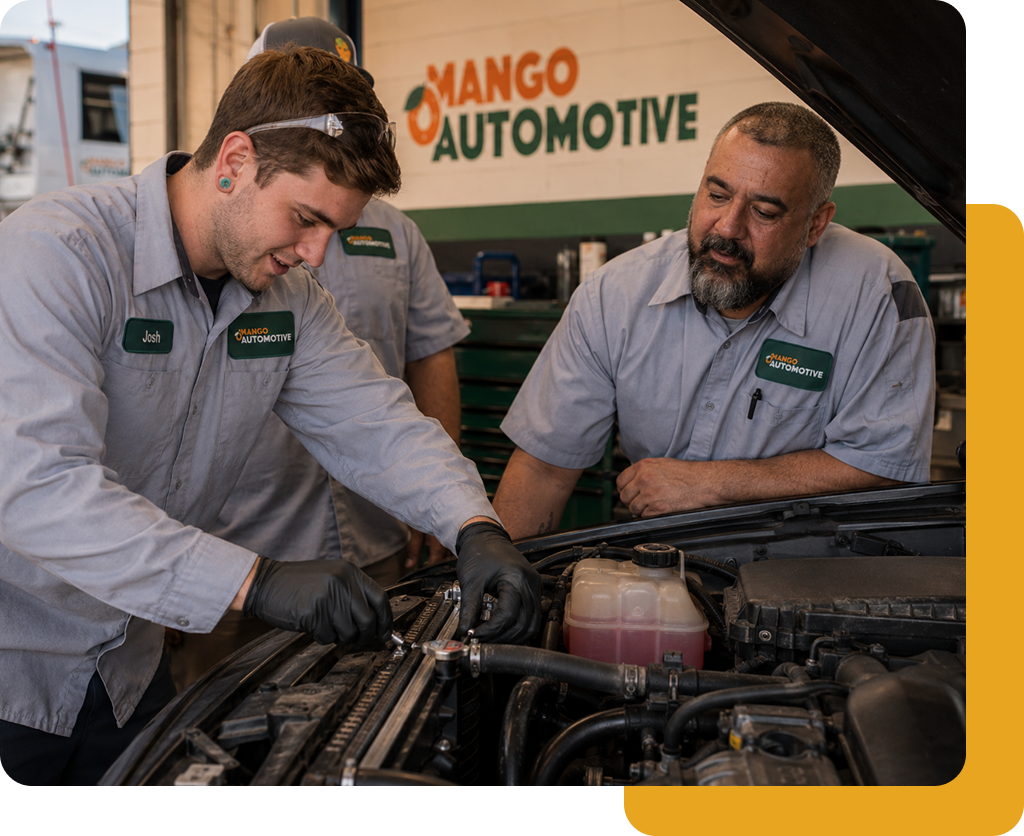
Two Mango Automotive technicians working under the hood of a vehicle, with the coolant reservoir in view
By Mango Automotive • October 11, 2026
Low coolant, a stuck thermostat, a blend door or a clogged heater core: why a car heater blows cold air, what to check first and when to stop driving.
Mango Automotive sign on the green building of the Cottonwood shop at sunset
By Mango Automotive • October 11, 2026
Falling fuel economy, an engine that runs more, charge swings or a hybrid warning: the signs of a failing hybrid battery, and why testing comes first.
Two Mango Automotive technicians working under the hood of a vehicle in the shop
By Jesse Jackson • October 1, 2026
Water-in-fuel light back after draining? Condensation, bad fuel, a filter that's due or a sensor fault may be why. What to do, from a Las Cruces diesel shop.
Mango Automotive & Diesel shop building at 3222 S Florence Ln, Yuma, Arizona
By Jesse Jackson • October 1, 2026
Diesel surging or hunting at cruise often traces to the fuel supply: a restricted filter, air in the lines, bad fuel or injectors. How a Yuma shop checks.

Mango Automotive logo: auto and diesel repair in New Mexico, Arizona and Texas
By Jesse Jackson • October 1, 2026
A brake inspection checks pads, rotors, calipers and fluid. A brake diagnostic test reads ABS codes. When you need each, and where in Albuquerque's Heights.
Mango Automotive sign on the green shop building at the Cottonwood location in Albuquerque
By Jesse Jackson • October 1, 2026
Car leaking fluid? The color points to brake fluid, coolant, fuel or oil. Which leaks make it unsafe to drive, and where to get them checked in Albuquerque.

Auto repair bay with a gray SUV on a lift, hood open, and tool chests along the wall
By Mango Automotive • October 11, 2026
A shake when braking usually starts at the front brakes: uneven rotors, pad deposits or a sticking caliper. Where you feel it and what to check first.
Seven Mango Automotive team members in uniform standing together in a shop lobby
By Mango Automotive • October 11, 2026
A history report lists what was reported. A pre-purchase inspection checks the car as it is today: leaks, codes, brakes, rust and past collision repair.
Two Mango Automotive technicians working on an engine with the hood open
By Mango Automotive • October 11, 2026
P0300 means random or multiple cylinder misfires. What it feels like, why a flashing check engine light is urgent, the common causes and how it's tested.
Two Mango Automotive technicians working under the hood of a vehicle, with the coolant reservoir in view
By Mango Automotive • October 11, 2026
Low coolant, a stuck thermostat, a blend door or a clogged heater core: why a car heater blows cold air, what to check first and when to stop driving.
Mango Automotive sign on the green building of the Cottonwood shop at sunset
By Mango Automotive • October 11, 2026
Falling fuel economy, an engine that runs more, charge swings or a hybrid warning: the signs of a failing hybrid battery, and why testing comes first.
Two Mango Automotive technicians working under the hood of a vehicle in the shop
By Jesse Jackson • October 1, 2026
Water-in-fuel light back after draining? Condensation, bad fuel, a filter that's due or a sensor fault may be why. What to do, from a Las Cruces diesel shop.
Mango Automotive & Diesel shop building at 3222 S Florence Ln, Yuma, Arizona
By Jesse Jackson • October 1, 2026
Diesel surging or hunting at cruise often traces to the fuel supply: a restricted filter, air in the lines, bad fuel or injectors. How a Yuma shop checks.
Mango Automotive logo: auto and diesel repair in New Mexico, Arizona and Texas
By Jesse Jackson • October 1, 2026
A brake inspection checks pads, rotors, calipers and fluid. A brake diagnostic test reads ABS codes. When you need each, and where in Albuquerque's Heights.
Mango Automotive sign on the green shop building at the Cottonwood location in Albuquerque
By Jesse Jackson • October 1, 2026
Car leaking fluid? The color points to brake fluid, coolant, fuel or oil. Which leaks make it unsafe to drive, and where to get them checked in Albuquerque.