
BLOG

What to Do When Your Check Engine Light Turns On: A Guide from Our El Paso Mechanics

Jesse Jackson • August 20, 2025

Share this article

Recognizing the Importance of Your Check Engine Light

Your check engine light serves as an early alert system for your vehicle. It signals that a system inside your engine or emissions control requires attention. Knowing what this light means can help you avoid more serious damage and unexpected breakdowns.

What This Indicator Means for Your Vehicle’s Health

The check engine light turns on when your vehicle’s computer detects a problem. Modern cars have sensors that monitor engine performance and emissions. If something deviates from normal operation, such as a loose gas cap, a faulty oxygen sensor, or spark plug issues, the light activates to warn you.

Ignoring this warning could lead to decreased fuel efficiency or damage to critical parts, increasing repair costs. An experienced mechanic can diagnose and repair these problems with professional equipment.

Steady or Flashing: What It Means

 What matters is whether the light is steady or flashing. A steady yellow or amber light usually means a minor problem or maintenance issue that needs attention soon. For example, it might signal that the emissions system is underperforming or the gas cap is loose.

 A flashing light signals a serious problem requiring immediate attention. This often means an engine misfire is occurring, which can cause damage to the catalytic converter or other parts if you keep driving. If you see this, it's best to stop moving and seek help from a certified auto mechanic near El Paso without delay.

Recognizing these signals can guide your decision on whether to continue driving or visit a repair shop right away. A full-service shop can inspect and repair the problem, helping you keep your vehicle running safely and efficiently.

Step 1: Assess Your Driving Conditions

Before making any decision, observe how your vehicle is responding after the check engine light turns on. This can help you determine the seriousness of the issue.

Is It Safe to Continue Driving?

If the light is steady and your vehicle feels normal, it’s generally safe to drive for a short distance. Minor issues like a loose gas cap often trigger a steady light without affecting performance. But if the light is flashing, that’s a sign of a more serious fault, such as an engine misfire. In that case, you should pull over and turn off the engine. Driving further could lead to damage and increase repair costs.

Noticing Unusual Vehicle Behavior

Watch for rough idling, hesitation when accelerating, or unexpected noises. These may point to engine or exhaust system issues that require immediate attention. Smells like burning oil or fuel are also a cause for concern. These signs mean it’s time to stop driving and reach out to a certified auto mechanic.

A professional inspection is the safest way to protect your car. You can visit one of the trusted full-service mechanic shops in El Paso, TX, for reliable and thorough service.

Step 2: Perform a Basic Visual and Physical Check

After noticing the check engine light, a quick inspection of your vehicle can provide helpful clues. This step may reveal issues you can address right away or signs that tell you it’s time to visit a professional.

Checking the Gas Cap and Fluid Levels

Start by inspecting your gas cap. A loose cap, cracked or missing, can cause the check engine light to turn on. Make sure it’s tightened completely. This alone can sometimes solve the issue after a few driving cycles.

Next, take a look at your vehicle’s vital fluids, especially engine oil and coolant. If levels are low, top them off before driving any further. A lack of oil or coolant can lead to overheating, friction, or other problems that affect performance and trigger warning lights.

Listening for Strange Noises or Smells

 Unusual sounds or smells can offer early signs of engine trouble. A knocking noise may point to a fuel system issue, while a squealing belt could mean wear or slippage. Burning odors often suggest leaking fluids or overheating parts. If you notice anything out of the ordinary, it’s time to book a visit for proper diagnostics from a certified auto mechanic.

Step 3: Use Technology to Gain Insights

Modern vehicles are equipped with onboard systems that track performance and detect issues in real-time. Accessing this data through diagnostic tools can help you understand what’s behind the check engine light.

How Diagnostic Tools Help Identify Problems

An OBD-II scanner connects to your vehicle’s internal system and retrieves trouble codes. These codes are generated when the vehicle’s computer detects irregularities in components such as sensors, fuel delivery, or emissions controls.

For example, if the oxygen sensor is failing, the scanner will provide a specific code pointing to that issue. Reading these codes doesn’t fix the problem, but it gives you a clear starting point for what needs attention.

Affordable Options for Vehicle Owners

 You don’t need expensive tools to get started. Basic OBD-II scanners are widely available and are easy to use with a smartphone or laptop. If the codes show serious faults or multiple system errors, it's wise to bring your vehicle in for a complete diagnostic check.

Step 4: Make the Right Decision About Next Steps

Once you've identified potential issues through visual checks or diagnostic tools, it's time to decide what action to take based on how your vehicle is performing.

Deciding Between Immediate Repair and Scheduled Service

 If your car runs smoothly and the check engine light is steady, you can typically schedule a service soon. Many drivers find that minor issues such as a loose gas cap or a mild sensor error don't require urgent repair. In such cases, booking a maintenance visit is a practical move.

However, if the light is flashing or you're experiencing symptoms like shaking, stalling, or fluid leaks, you should not continue driving. These signs can point to engine misfires or overheating, which can lead to serious mechanical damage if left unchecked.

Knowing When to Call a Certified Auto Mechanic

When symptoms go beyond what basic tools can assess, it’s time to contact a certified auto mechanic near El Paso. These professionals use advanced diagnostics to identify the root cause of complex problems.

Delaying this step often leads to more expensive repairs. If you're unsure about how serious the issue is, getting help quickly from our Montana Ave shop in El Paso gives you clarity and protects your vehicle from worsening damage.

Tips to Maintain Your Vehicle’s Engine Health After Repair

After your check engine light issue is resolved, consistent care keeps your vehicle running smoothly and helps you avoid future repairs.

Daily Habits That Support Engine Longevity

Simple habits play a big role in keeping your engine running well. Make it a point to check your oil and coolant levels regularly. These fluids help reduce friction and keep your engine from overheating. Skipping these checks can lead to bigger issues later on.

Avoid sudden acceleration or high speeds when your engine is still cold. Letting the car run for a short time after starting gives vital components a chance to reach operating temperature. This reduces wear over time.

Listen for unusual noises, monitor dashboard indicators, and respond promptly when something feels off. Taking small actions each day reduces the chances of another check engine light incident.

Scheduling Preventive Maintenance with Your Mechanic

 Routine service helps prevent breakdowns and supports overall performance. Follow your owner's manual: oil intervals on most modern cars run 5,000 to 10,000 miles, and engine air filters usually last 15,000 to 30,000 miles, sooner in dusty conditions.

A trusted technician at one of the full-service mechanic shops can help you stay on schedule. For peace of mind between visits, ask your technician for a maintenance plan based on your vehicle’s age and mileage. For long-term engine care, working with a certified auto mechanic near El Paso is a smart way to stay ahead of problems.

Mango Automotive’s Role When Your Check Engine Light Comes On

When your check engine light turns on, timely support from experienced professionals can make a major difference. At Mango Automotive, every step, from diagnosis to repair, is handled with accuracy and care.

Efficient Diagnosis Using Advanced Equipment

 Our technicians use professional diagnostic tools that read manufacturer-specific codes and live data. These scanners read your vehicle’s internal codes with precision, allowing us to pinpoint the exact source of the problem. Whether it's a sensor malfunction, emissions issue, or engine misfire, we identify it quickly and thoroughly. This level of insight helps prevent unnecessary repairs and makes sure that the actual problem is addressed.

You won’t be left guessing what’s wrong with your car. Our technicians take the time to find the actual cause before recommending a repair.

Transparent Communication and Repair Estimates

Before any repair begins, we will walk you through the findings and next steps. You’ll get a clear explanation of what the code means, what repair options are available, and what each one will cost. There are no hidden charges.

If you’re looking for a certified auto mechanic near El Paso who values transparency, Mango Automotive is ready to assist. Drivers come back because we combine technical skill with honest, respectful service. From minor fixes to complex engine issues, your vehicle is in capable hands.

Get Help from Mango Automotive Today

Don’t let your check engine light leave you guessing. Bring your vehicle to Mango Automotive, trusted by drivers throughout El Paso for fast, accurate diagnostics and reliable repairs. Whether it’s a small issue or something more complex, our certified team is ready to help.

Contact Mango Automotive at (915) 200-0250 to schedule your service. We’re here to keep you safe, confident, and back on the road—no surprises, just quality service.

All Posts

Mango Automotive technician running a computer diagnostic scan under the hood
By Mango Automotive • October 11, 2026
A shake when braking usually starts at the front brakes: uneven rotors, pad deposits or a sticking caliper. Where you feel it and what to check first.
Seven Mango Automotive team members in uniform standing together in a shop lobby
By Mango Automotive • October 11, 2026
A history report lists what was reported. A pre-purchase inspection checks the car as it is today: leaks, codes, brakes, rust and past collision repair.
Inside a Mango Automotive shop with vehicles in the service bays
By Mango Automotive • October 11, 2026
P0300 means random or multiple cylinder misfires. What it feels like, why a flashing check engine light is urgent, the common causes and how it's tested.
Mango Automotive technician in a branded cap working with a hand tool
By Mango Automotive • October 11, 2026
Heater warm only while driving, or cold with the gauge climbing? What low coolant, a stuck thermostat or blend door means, and when to stop driving.
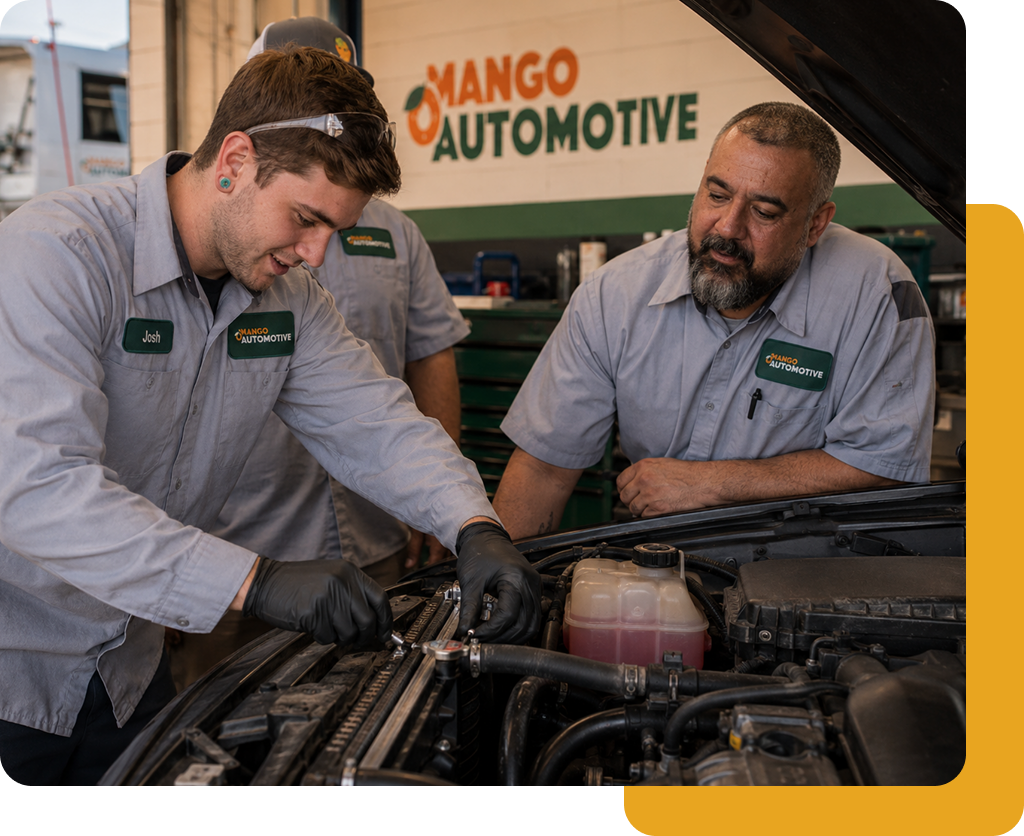
Two Mango Automotive technicians inspecting an engine bay together
By Mango Automotive • October 11, 2026
Falling fuel economy, an engine that runs more, charge swings or a hybrid warning: the signs of a failing hybrid battery, and why testing comes first.
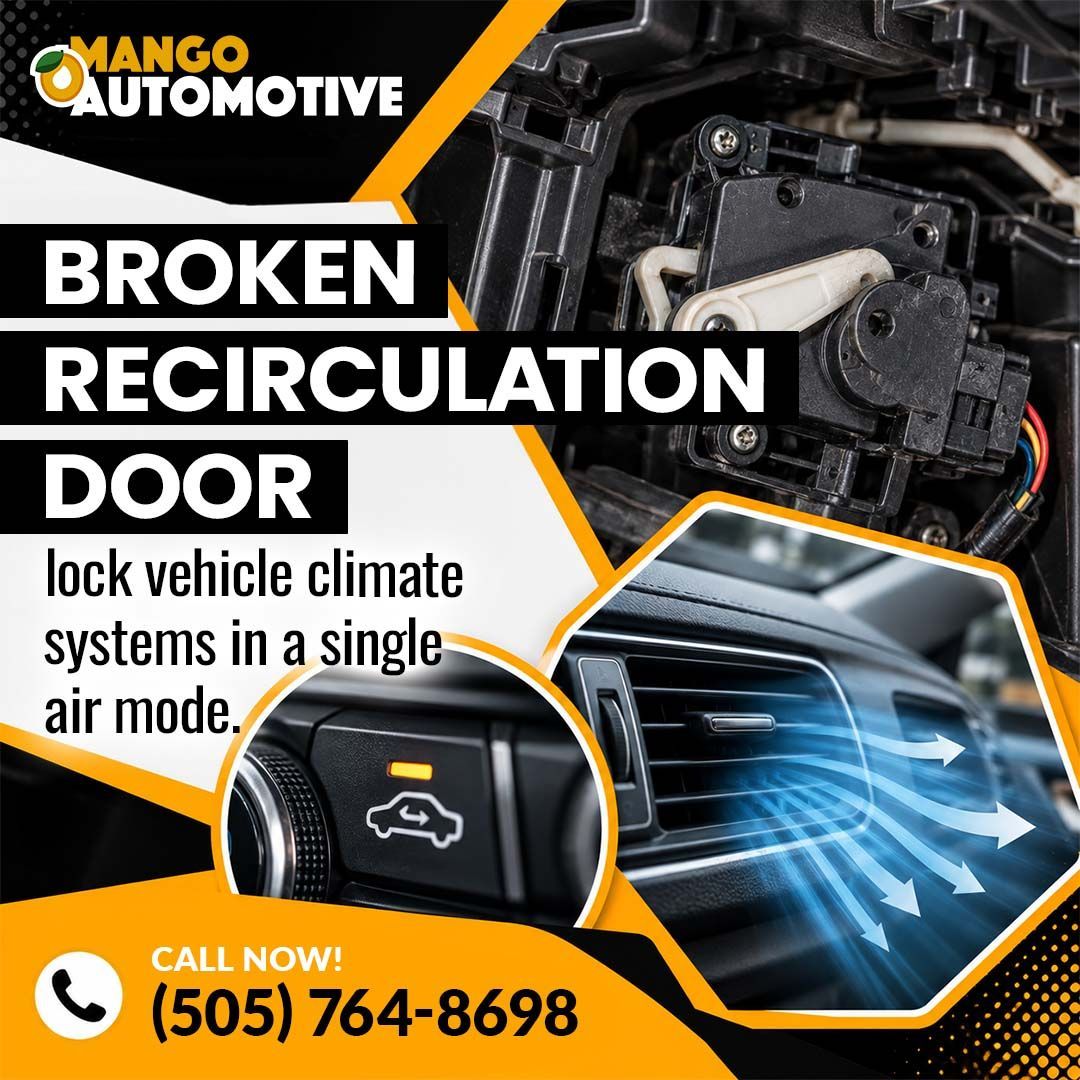
broken recirculation door- Mango Automotive (Downtown)
By Jesse Jackson • September 30, 2026
Why a car AC won't switch between fresh-air and recirculation: actuator, stuck door, wiring, or normal defrost behavior. Diagnosis in Downtown ABQ.
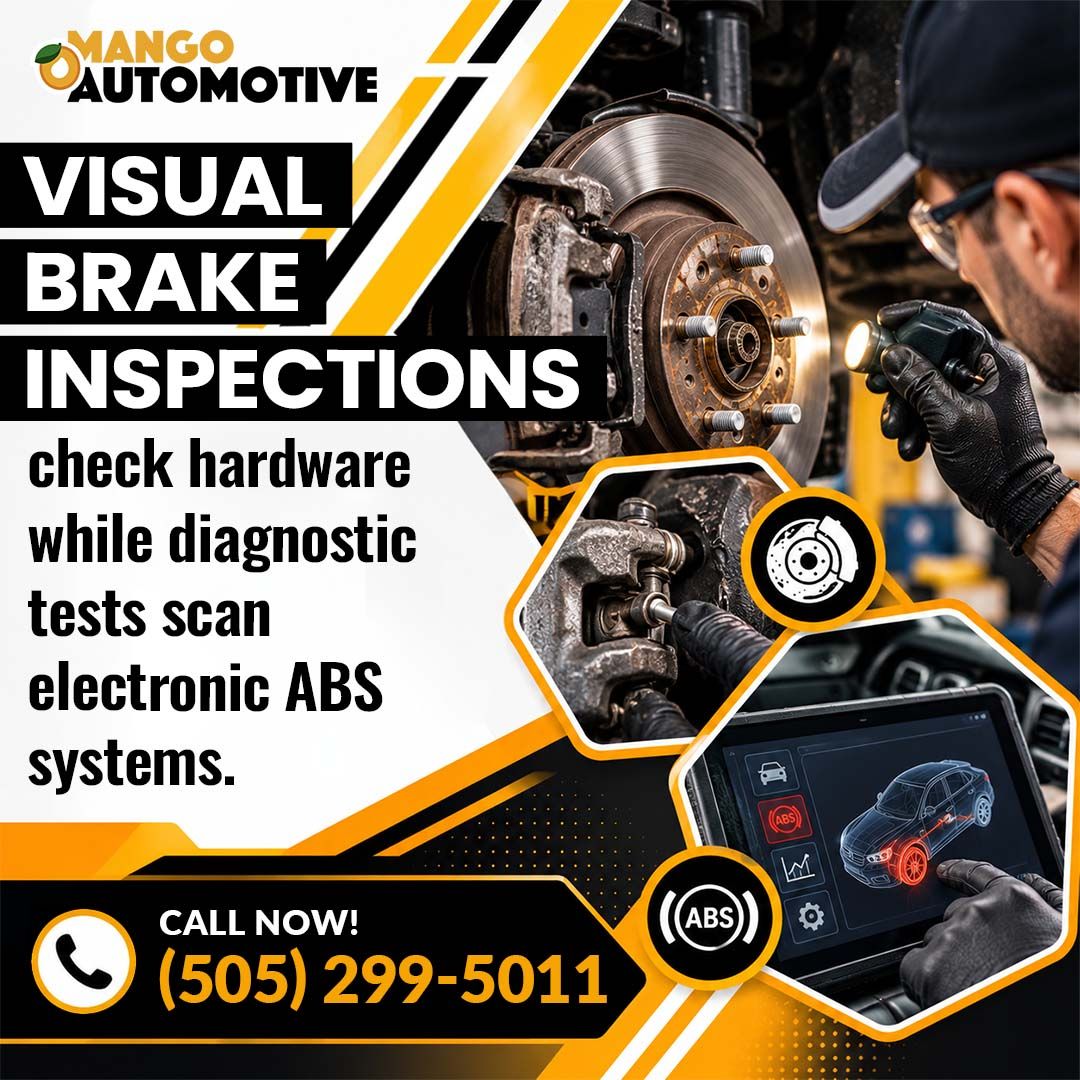
Visual brake inspections and ABS diagnostics, with mechanic inspecting a car brake.
By Jesse Jackson • September 30, 2026
A brake inspection checks pads, rotors, calipers and fluid. A brake diagnostic test reads ABS codes. When you need each, and where in Albuquerque's Heights.

Pickup Fuel System
By Jesse Jackson • September 29, 2026
A diesel pickup leaking fuel when the tank is full may signal a damaged seal or fuel line. Learn the causes and warning signs. Get expert help today!
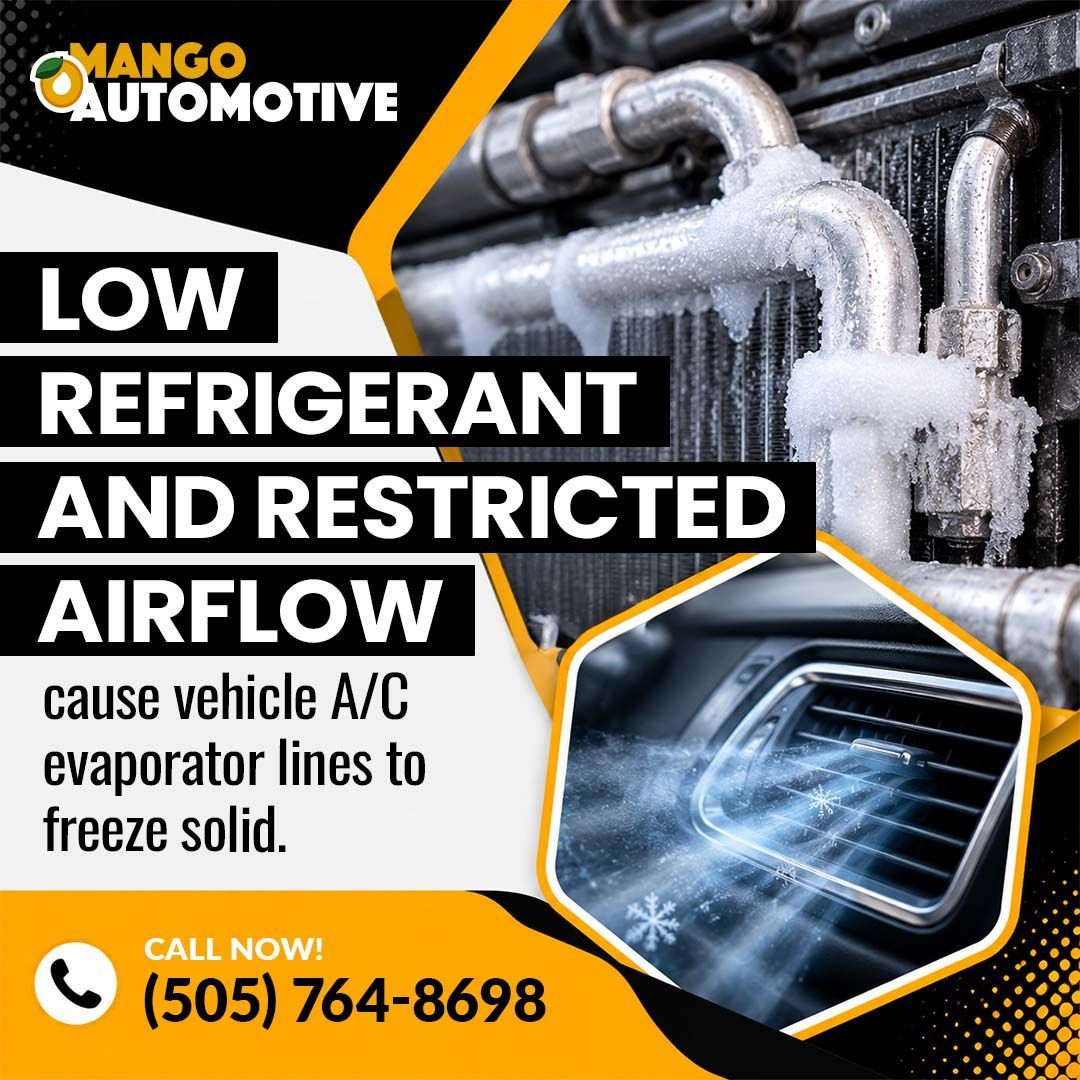
low refrigerant- Mango Automotive (Downtown)
By Jesse Jackson • September 28, 2026
Ice on AC lines means the evaporator is too cold, usually from low refrigerant or poor airflow. Causes, fixes, and why to stop running the AC.

Mango Automotive technician running a computer diagnostic scan under the hood
By Mango Automotive • October 11, 2026
A shake when braking usually starts at the front brakes: uneven rotors, pad deposits or a sticking caliper. Where you feel it and what to check first.
Seven Mango Automotive team members in uniform standing together in a shop lobby
By Mango Automotive • October 11, 2026
A history report lists what was reported. A pre-purchase inspection checks the car as it is today: leaks, codes, brakes, rust and past collision repair.
Inside a Mango Automotive shop with vehicles in the service bays
By Mango Automotive • October 11, 2026
P0300 means random or multiple cylinder misfires. What it feels like, why a flashing check engine light is urgent, the common causes and how it's tested.
Mango Automotive technician in a branded cap working with a hand tool
By Mango Automotive • October 11, 2026
Heater warm only while driving, or cold with the gauge climbing? What low coolant, a stuck thermostat or blend door means, and when to stop driving.
Two Mango Automotive technicians inspecting an engine bay together
By Mango Automotive • October 11, 2026
Falling fuel economy, an engine that runs more, charge swings or a hybrid warning: the signs of a failing hybrid battery, and why testing comes first.
broken recirculation door- Mango Automotive (Downtown)
By Jesse Jackson • September 30, 2026
Why a car AC won't switch between fresh-air and recirculation: actuator, stuck door, wiring, or normal defrost behavior. Diagnosis in Downtown ABQ.
Visual brake inspections and ABS diagnostics, with mechanic inspecting a car brake.
By Jesse Jackson • September 30, 2026
A brake inspection checks pads, rotors, calipers and fluid. A brake diagnostic test reads ABS codes. When you need each, and where in Albuquerque's Heights.
Pickup Fuel System
By Jesse Jackson • September 29, 2026
A diesel pickup leaking fuel when the tank is full may signal a damaged seal or fuel line. Learn the causes and warning signs. Get expert help today!
low refrigerant- Mango Automotive (Downtown)
By Jesse Jackson • September 28, 2026
Ice on AC lines means the evaporator is too cold, usually from low refrigerant or poor airflow. Causes, fixes, and why to stop running the AC.